


 Shkruar nga Diplomatico | Pamfleti.net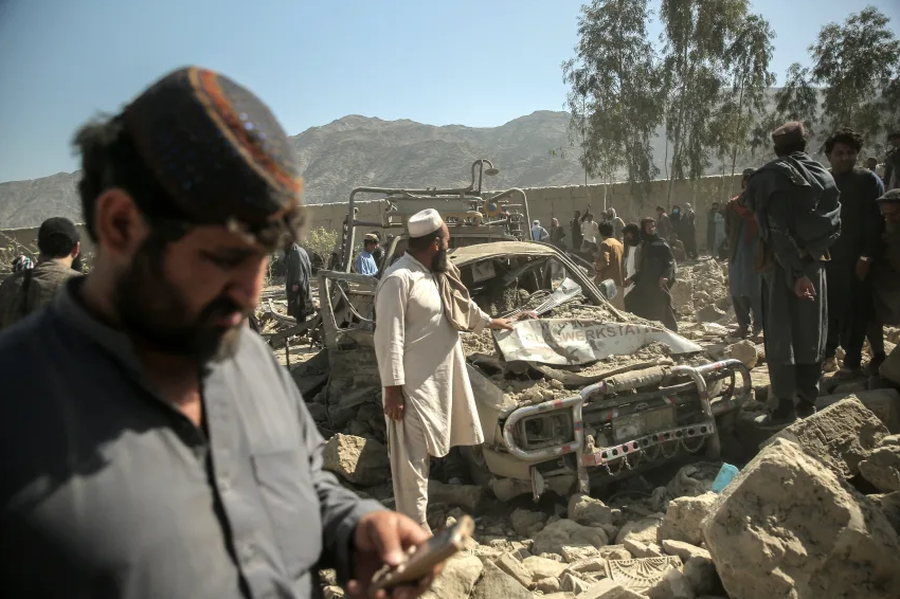
Islamabad jets strike Kabul and southern Afghanistan, Taliban speak of aggression; South Asia on the brink of major destabilization…
South Asia has woken up to a new geopolitical reality. Pakistan has officially declared “open war” on Afghanistan, launching airstrikes on the capital Kabul and other strategic areas like Kandahar.
Pakistani Defense Minister Khawaja Asif's strong statement that "patience has a limit" marks the most dangerous point in relations between the two countries since the Taliban's return to power.
Bombings were heard overnight in several neighborhoods of Kabul, while local sources reported strikes on facilities suspected of being linked to the Taliban regime's security infrastructure.
Islamabad claims the operations are a response to ongoing attacks by armed groups that it says operate from Afghan territory against Pakistani targets.
Official Kabul denies the accusations and describes the offensive as a blatant violation of national sovereignty.
At the heart of the conflict lies the disputed border demarcation along the so-called Durand Line, a colonial legacy that has produced tensions, mistrust and occasional armed clashes for decades. What was once considered a manageable border crisis is now taking on the form of an interstate conflict with unpredictable consequences.
Casualty figures remain unclear and politicized. Pakistani authorities say dozens of Taliban fighters have been killed in airstrikes, while the Afghan side claims losses among Pakistani forces in ground clashes along the border.
In the absence of independent verification, propaganda and controlled information are taking the place of transparency, making it difficult to separate fact from political narrative.
This escalation is not an isolated incident. For months, relations between the two countries have been strained by mutual accusations of harboring militants, cross-border attacks, and a lack of security cooperation.
For Pakistan, the rise in domestic attacks attributed to Afghanistan-based groups is a direct threat to national stability.
For the Taliban, the airstrikes constitute an open challenge to their authority and proof that Kabul's international isolation is translating into strategic vulnerability.
International reactions have been immediate but cautious. The UN has called for restraint and a return to dialogue, while regional powers are watching with concern developments that could destabilize an area already fragile by economic crises, radicalism and geopolitical rivalries.
A protracted conflict between Pakistan and Afghanistan risks creating new waves of refugees, strengthening extremist groups, and opening a security vacuum with influence beyond their borders.
For Albania and our region, this crisis is a reminder that frozen tensions can quickly explode in the absence of a sustainable architecture of security and dialogue. It also demonstrates that the era of hybrid and proxy conflicts is giving way to more direct state-to-state clashes.
Unless intervened with intensive diplomacy and international pressure, the "fire on the Durand Line" could turn into a new global hotbed, with consequences that will be felt far beyond Kabul and Islamabad./ Pamphlet






Pa merak, se ju vjen Vellai i Madh Mason tju ndihmoje! Ai di te sheshoje muhabetet eshte Master of Puppets! Kjo zone, Iran-Afganistan-Pakistan duhet te jete nen konflikt. Pasi keshtu tubacioni i naftes/gazit qe flitet se do lidhe Iranin me Kinen te mos zhvillohet. Nuk te le rehat Cifuteria!