


 Shkruar nga Pamfleti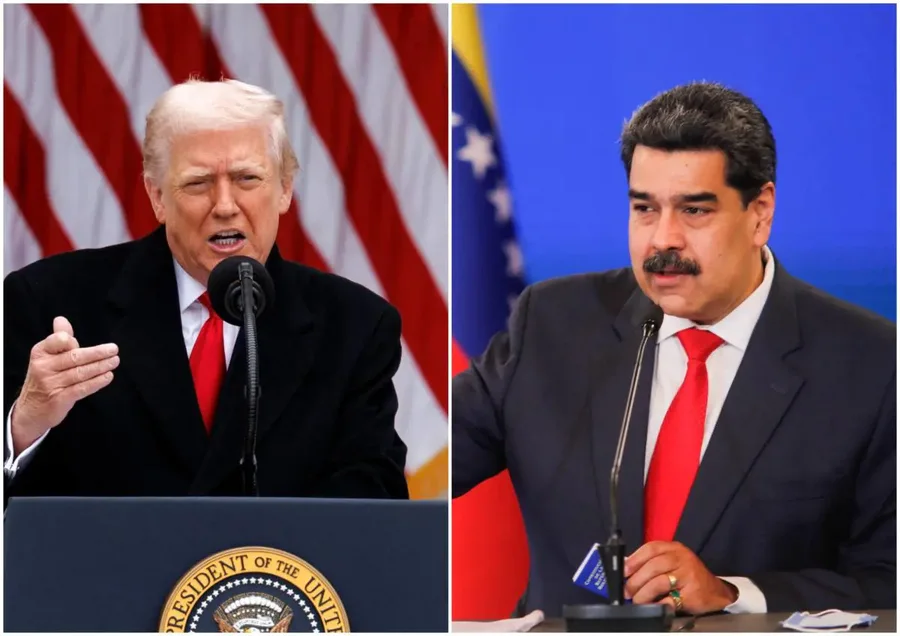
US President Donald Trump confirmed information from the New York Times, Miami Herald and Wall Street Journal, which in recent days had written about the existence of a phone call with Maduro regarding the future of Venezuela and Maduro himself.
Despite refusing to provide details about the call, which he described as neutrally as possible as "neither good nor bad," Trump sought to reassure those present and listeners: an invasion of Venezuela is not imminent. Yet, between the rewards, sanctions and military pressure, Maduro has little to celebrate.
Trump's ultimatum
According to inside sources in the American press, the Trump-Maduro phone call took place on November 21 and ended with the White House leader issuing an ultimatum to Hugo Chavez's successor. Specifically, Trump told Maduro that he still had time "to save himself and those closest to him," promising him safe conduct for his family abroad, provided he resigned.
Organizers of the call, the first since Trump took office, had intended to pave the way for a meeting between the two leaders. But Maduro's demands, which included "global immunity" from any legal proceedings and a proposed leadership change rather than regime change, would have disrupted the delicate negotiating framework.
After that call, unsatisfied with Maduro's refusal, Trump first announced the closure of Venezuelan airspace and then reportedly refused a request for a phone call from the Venezuelan leader. A stance similar to that of Mexico. The ultimatum was delivered; Maduro had the final say on whether to implement it or not.
Maduro's dilemma
Maduro and the military leadership do not seem to be afraid of US warships off the coast of Venezuela, and this is not because they are underestimating the firepower of the US Navy. They believe that Trump is bluffing and that the November 21 ultimatum was one of his classic "pre-ultimatums", like the ones he has issued dozens of times to Vladimir Putin to force him to negotiate over Ukraine, only to do nothing after the fatal deadline passed.
Poker bluff or not, what is certain is that non-military pressure on Venezuela is at its highest level: the inclusion of the Maduro family and their officials and family members on the terrorist lists of the US Treasury and State Departments not only opens the door to dramatic special operations on the ground, but above all, deprives them of access to traditional and non-traditional channels of global finance.
In fact, the maximum pressure sanctions campaign has rendered Venezuela untouchable. As if that weren't enough, the ring of fire is morphing into a full-scale naval blockade: in recent days, a Chinese oil tanker heading to Venezuelan ports to refuel was forced to turn back by the US Navy fleet.
Officially treated as a terrorist and deprived of his income, Maduro may be considering a way out. That is, assuming he can convince Trump to accept a change in leadership, given that Washington appears to be seeking regime change.


Lini një Përgjigje