


 Shkruar nga Pamfleti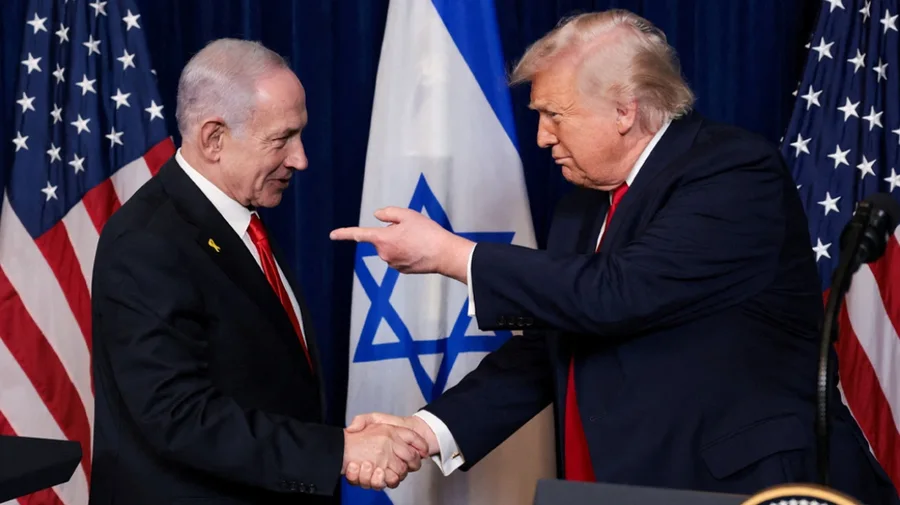
The imminent deal between the United States and Iran appears to be putting Benjamin Netanyahu in a difficult position, as Axios reveals the behind-the-scenes details of his communication with Donald Trump and the concerns prevailing in Israel...
On Thursday evening, Donald Trump held a phone conversation with Benjamin Netanyahu, conveying a development that, according to Axios, the Israeli prime minister did not want to hear: The United States was very close to signing a deal with Iran.
"This is the deal. It's a very good deal, and it's time for the war to end," Trump reportedly told Netanyahu, according to a senior US official.
This development seems to be far from the expectations of the Israeli prime minister, who from the beginning believed that the conflict could even lead to regime change in Tehran. Four months before the elections in Israel, his political opponents accuse him of accepting Trump's initiatives and turning Israel into a "subservient ally" of the US.
During the phone call, Netanyahu reportedly admitted that he had no way to stop the deal from being signed. As a U.S. official told Axios, “he understood that the deal was moving forward and he couldn’t stop it.”
Although officials in both Washington and Tehran state that the negotiations are at an advanced stage, they emphasize that they are not yet complete.
Israel's plans and Trump's intervention
As tensions with Iran escalated in recent days, Netanyahu reportedly considered launching broad strikes on energy infrastructure and other critical targets. However, Trump reportedly blocked these plans at the last minute.
Since then, the Israeli prime minister appears to have a more limited role in recent developments, seeking information from his allies in Washington about the progress of the negotiations.
Trump's tweet on Thursday, in which he claimed a deal had been reached, surprised Israel. When the phone call followed about an hour later, Netanyahu did not react harshly or express serious objections, according to US sources.
On the contrary, he reportedly stated that he trusts Trump to ensure that the final agreement will take into account the two countries' shared concerns regarding Tehran's nuclear program.
Reserves in Israel
Although the Israeli government avoids public criticism of the American president, behind the scenes strong reservations are being expressed about the agreement.
The main concern is the possibility that Iran will use the end of the conflict to buy time without making substantial concessions regarding its nuclear program. At the same time, it is estimated that easing pressure on Tehran could strengthen the Iranian government economically through increased revenues from oil exports.
Israeli Defense Minister Israel Katz stated that Trump is acting on the basis of American interests, but stressed that Israel expects the joint "red lines" regarding the nuclear program, ballistic missiles, and pro-Iranian organizations in the region to be maintained.
Points of friction and Lebanon's role
Katz also reiterated that Israel retains the right to act independently if it assesses that Iran is moving closer to securing nuclear weapons.
Meanwhile, Israeli officials worry that the anticipated ceasefire in Lebanon could limit their freedom of action against Hezbollah, as Washington may require prior coordination for future military operations.
A US official said the US recognizes Israel's concerns, stressing that no country is being asked to give up its right to self-defense. He also expressed confidence that all parties will ultimately participate in the peace process.
New concerns emerged on Friday, when Iranian state media claimed the deal would immediately provide Tehran with billions of dollars.
According to US sources, Israel sought clarification from the White House, which responded that the relevant reports misinterpreted the terms of the agreement. The US assured that any benefits for Iran would be contingent on the prior fulfillment of certain commitments by the Iranian side.
At the same time, the situation in Lebanon remains a factor that could affect the implementation of the agreement. Israeli forces continue to be present in areas of southern Lebanon, while tensions with Hezbollah persist.
US officials have made it clear that any attack by Hezbollah on Israel or continued military support for the organization by Iran would constitute a violation of the terms of the agreement.
For Benjamin Netanyahu, accepting an agreement that ends the war without achieving the main strategic objectives set by his government constitutes a significant political and geopolitical blow. /Adapted from Pamphlet by Axios/






Keto jane perralla. Izraeli i ka futur unazen ne hunde gjithe kastes politike perendimore dhe i terheq nga te doje vet. Askush nuk i beson keto dokrra