


 Shkruar nga Pamfleti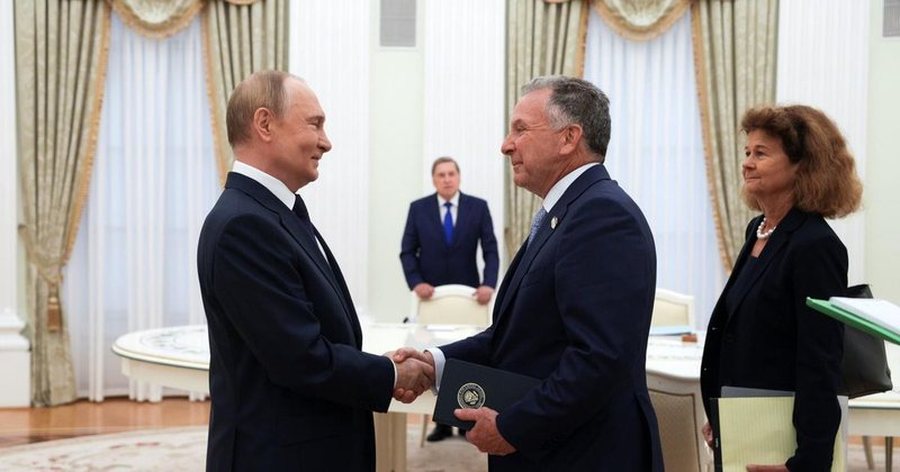
The "Witkoff-gate" scandal is becoming even more complicated, after Russian President Vladimir Putin's advisor, Yuri Ushakov, stated that the leak of the rumored conversation with American envoy Witkoff may have occurred due to the use of WhatsApp.
Ushakov admitted that he sometimes conducts work communications through the app, adding that such conversations “could have been overheard.” He noted that the Kremlin’s secure communication lines almost never suffer leaks, but in the case of WhatsApp the situation is quite different, hinting that the leak was unlikely to have come from the conversation participants themselves.
The irony lies in the fact that a Kremlin official was communicating through an app officially banned in Russia, while the use of Meta platforms by Russian officials is considered unacceptable according to Moscow's official line.
If the call did indeed take place on WhatsApp and could have been intercepted, the situation raises three possible scenarios:
The application has a backdoor, something that Meta categorically denies.
Ushakov's device may be infected with spyware.
He used an insecure connection and is now avoiding responsibility by blaming the platform.
The scandal is raising major questions about the security standards of communications within the Kremlin, but also about the nature of conversations between Moscow and Trump administration emissaries.
Who betrayed Steve Witkoff?
Because someone must have done it, and they must have had significant resources to do it. The identity of that person or persons holds at least some answers to questions about the apparent tensions within the deep state, the deepest levels of government and its branches in the United States. It may also offer insight into the internal struggle that awaits the Republican Party in the wake of Donald Trump’s (presumed) 2028 presidential election.
The White House emissaries' bold negotiations with Russia are certainly setting off a confrontation, potentially entirely internal to America and its apparatus. And now some signs of the conflict may be starting to emerge from abroad as well.
Just as Trump was sending his trusted and all-powerful business partner Witkoff to Moscow last night, Bloomberg published a remarkable piece of news. These are the transcripts of two intercepted phone conversations about the Ukraine negotiations and Witkoff’s own role. In the first, the US president’s envoy reaches out to Yuri Ushakov, Vladimir Putin’s national security adviser. It’s Tuesday, October 14, shortly after the Gaza ceasefire agreement. The American suggests to his Russian counterpart that Putin call Trump by Friday, before the US president hosts Volodymyr Zelensky at the White House. Witkoff also advises Ushakov on what Putin can say to curry favor with Trump at the beginning of the call (“congratulate the president on his achievements” regarding Gaza).
Then Witkoff outlines some elements of a deal for Ukraine: “I know what’s needed for a peace deal: Donetsk and maybe a territory swap somewhere.” Witkoff’s idea is very similar to the proposal Putin presented to Trump at the Anchorage summit in August: Ukraine would give up the parts of Donbas it still controls (about 5,000 square kilometers), in exchange for Russia withdrawing from some extremely limited territory it occupies elsewhere in the country.
Reinforced by this message, Ushakov himself and Putin’s envoy, Kirill Dmitriev, spoke two weeks later in a second wiretap published by Bloomberg. Ushakov notes that based on Witkoff’s position, in light of a Russian-American document on Ukraine, “we need the maximum (...) otherwise what’s the point?” Dmitriev, Putin’s envoy for the talks with Witkoff, agrees: “I think we just draft this document based on our position and pass it around informally.”
In essence, Witkoff appears anything but impartial between Russia and Ukraine and even seems to have empowered Moscow's negotiators to feel legitimate in their intransigence. And that's not all. It is also clear from the calls that the so-called 28-point "peace plan" prepared in Miami by Witkoff and Dmitriev had in fact already been drafted in Moscow.
But who could have eavesdropped on these actors, and who could have had an interest in trying to so severely damage Witkoff's credibility? It's impossible to say, but several factors leave room for speculation.
Just days before Bloomberg published the wiretaps, Reuters wrote: “The administration’s discussions with Dmitriev (Putin’s envoy, ed.) are worrying some in the intelligence community, a U.S. official familiar with the matter said.” And again: “Dmitriev has previously used his role at the (Russian) sovereign wealth fund to lobby several Western governments and companies, even amid sanctions. The CIA — according to Reuters — has declined to comment on the (American, ed.) intelligence community’s concerns about Dmitriev.”
It seems clear that the American foreign policy establishment and its deep state are not at all comfortable with the role of a private, informal, and shadowy businessman like Witkoff in their dealings with Dmitriev and Russia. And the American intelligence community certainly had the means to conduct such audacious wiretapping. Ukrainian intelligence likely has the means as well, but especially at this time, Kiev has no interest in releasing revelations that could only irritate Trump and further alienate him from Ukraine, drawing him even closer to Putin.
It remains to be seen whether, assuming the leaks come from sectors of the US intelligence community itself, there is political cover for them. Traditionally, they have never acted without it. Secretary of State Marco Rubio was certainly surprised by Witkoff's Russian moves when the "peace plan" was released and immediately noted publicly that the text was largely Moscow's own material.


Kesaj i thone pune gabelesh gjelle qensh.