


 Shkruar nga Harold Thibault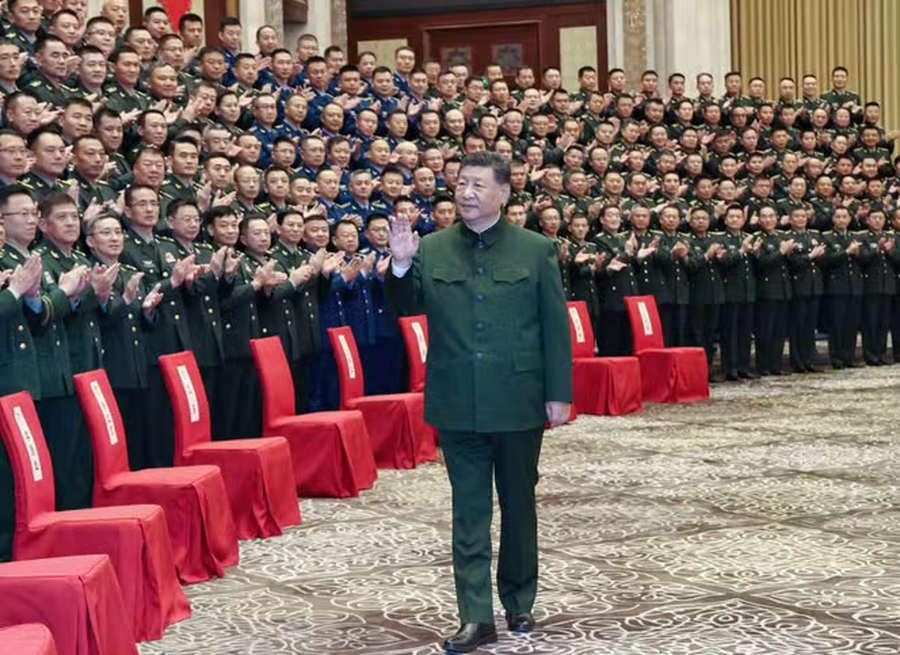
As the Chinese Communist Party, gathered in plenary session, was working on its new 5-year plan, the Ministry of Defense announced investigations for corruption or abuse of power against 9 of the highest-ranking members of the People's Liberation Army...
For four days, from Monday, October 20 to Thursday, October 23, some 315 senior officials of the Chinese Communist Party (CCP) gathered at the highly official Jingxi Hotel in western Beijing to discuss the country’s plans for the next five years. Topics discussed included technological self-sufficiency in the face of American constraints, military modernization, and supporting consumption to stabilize the economy.
However, a key piece of information was not found in the attendance at this closed-door political meeting, but in the number of absences: 16% of the 376 members and deputies of the CPC Central Committee, appointed in 2022, now under the absolute dominance of Xi Jinping, were absent. The only possible reasons for missing a plenum are health concerns or purges.
The latter always prove stronger, although Xi Jinping, at the head of the state, the CCP and the army for 13 years, has had plenty of time to eliminate factions that might resist him. He has even excelled in this field like no one before him since the end of Maoism.
To the point that many of the top officials are identified by the period of their careers during which they had contact with the future leader, for example when he was a local official in Fujian, a province located opposite Taiwan, or in Zhejiang south of Shanghai, before he was called to national responsibility, and they are behind him.
Despite this connection, heads continue to roll. The tone of the plenum was set on Friday evening, October 17, two days before it opened, when the Ministry of Defense announced investigations for corruption or abuse of power against nine of the highest-ranking officers of the People's Liberation Army (PLA).
Among them was He Weidong, the deputy commander of the Chinese army, if we do not count the supreme leader Xi Jinping, but also the general responsible for "political work", that is, absolute loyalty, essential if the PLA was to intervene in defense of the nation in the event of a conflict with the outside world, but also to defend the regime, as was the case against the Tiananmen Square protesters in 1989.
The commander of the Eastern Theater, responsible for preparations in case a decision was made to attack Taiwan, also stepped down. General He Weidong was replaced on Thursday by the PLA's chief of discipline, Zhang Shengmin, as vice chairman of the Central Military Commission.
But this body, which before the Xi Jinping era was supposed to have seven members, including representatives from the three armed forces, now has only four people, including the president.
Crazy speculation
Many moves are fueling wild speculation among some observers of the black box that is the CCP. Especially in the midst of a third term, which has sought to remove rules limiting presidential power to ensure a balance between factions. And at a time when the economic slowdown is being felt very concretely in the daily lives of the Chinese people.
But Jon Czin, who was long one of the CIA's top China monitors before serving as China director on the US National Security Council between 2021 and 2023 under Joe Biden, urges us not to be mistaken.
“During his early terms, it made sense for Xi to attack his rivals, other centers of power within the military. Then a change, which has confused many, is that he is now attacking those who should have been his protégés. However, I do not see this as a sign of weakness, but rather as evidence of his continued dominance,” says Czin, now a senior fellow at the Brookings Institution in Washington.
Tristan Tang, an analyst with the Taiwan-based China Defense Affairs Research Project, notes that all of the recent purges had a common thread in military appointments. “The central problem is that they recommended unsuitable people to President Xi,” he argues, after reading through all the official military statements and articles. They may have been bribed in exchange for positions, a practice long endemic within the PLA, or they may have developed their own chain of loyalty, when there can only be connections to the “core,” namely Xi Jinping.
These internal problems are seen as an obstacle to the Chinese military's preparation for external challenges, as tensions with the United States rise and Xi Jinping has demanded that the military be capable of carrying out an operation in Taiwan by 2027, the year that will mark the PLA's centennial, without prejudging a decision to attack or not, with Beijing still asserting its preference for a political solution.
China's ability to cripple its own ranks
These permanent purges also serve to demonstrate that the leader’s trust is never guaranteed and that he always holds the upper hand, alone. These campaigns began in the months and years after Mr. Xi came to power in the fall of 2012, with the disgrace of former vice-chairmen of the Central Military Commission, in an initial show of force. They resumed in earnest in 2023 with investigations and arrests within the entire force responsible for missiles, and by extension nuclear deterrence, and then with the fall, in 2024, of two successive defense ministers.
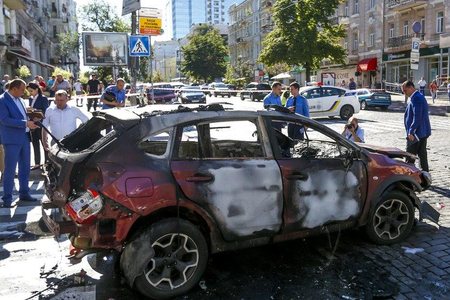
Each time, the months-long absences were conspicuous. China had managed to appoint one of its officials to head Interpol, despite the reluctance of the international police organization's member states to cede such a position to an authoritarian country. However, it was Beijing that, in 2018, in inexplicable circumstances, disappeared Meng Hongwei, then based at the headquarters in Lyon, before sentencing him to 13 years in prison.
The same failure of a new foreign minister after just seven months in office, the former ambassador to Washington, Qin Gang, in 2023, left foreign diplomats baffled by China’s ability to mutilate its own ranks. He was said to have a mistress and a child hidden in the United States. In September of this year, the agriculture minister until last year was given a suspended death sentence, a sentence that is usually commuted to life imprisonment.
With each of these disappearances, the regime's image of seriousness and stability is affected internationally. But they also contribute to reaffirming the determination and personal power of Xi Jinping, who often repeats to the Chinese Communist Party that one must know how to "turn the sword against oneself."
The Russian military's unpleasant surprises at the start of its invasion of Ukraine in 2022, with its outdated tanks and expired rations, did not escape Beijing's attention.
The number of people targeted has become a public indicator.
The Chinese president opened the year with a seminar for the extremely powerful Central Commission for Discipline Inspection, the CCP’s investigative body. He said corruption was not only still present but was on the rise, risking raising questions about the effectiveness of the country’s mechanisms. “Corruption is the biggest threat to our party,” Mr. Xi declared on January 6, as the body boasted that it had removed forty-seven officials above the rank of vice minister in 2024 alone.
This endless battle, over thirteen years, has sown terror in the ranks of the public sector and the business community, with businessmen who interacted with or supported officials who are also under investigation.
It atrophies the initiative of local officials in a system that boasts of its skill in implementing development policies, but is nevertheless popular among a segment of the public who harbor resentment against officials suspected of profiting at the expense of ordinary people.
The number of people targeted has become a public indicator. Authorities imposed administrative sanctions against 889,000 officials in 2024, a 45% increase. / Adapted from Le Monde /



Lini një Përgjigje