


 Shkruar nga Pamfleti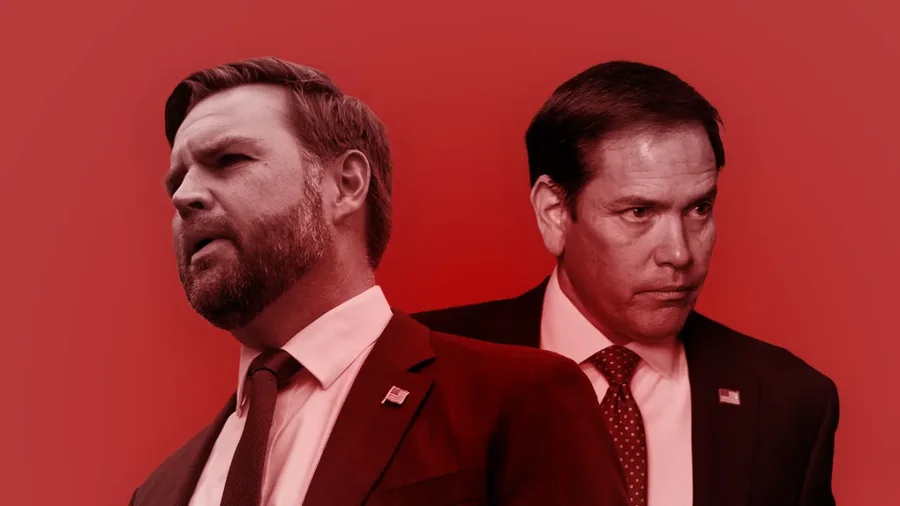
Amid international crises, falling polls and tensions within Republicans, the battle for Donald Trump's political legacy is becoming increasingly clear in Washington.
A statement by Marco Rubio in the White House briefing room has been enough to ignite speculation about the political future of the Republican Party and the race for the post-Donald Trump era.
During a call with reporters last week, the US secretary of state was asked by a correspondent for a Christian network what his message of hope was for Americans. Rubio responded in a tone that many in Washington interpreted as more than just institutional.
" We want to continue to be the place where anyone, from any part of the world, can achieve anything. American history is a history of continuous improvement. Each generation has left the next more secure and prosperous ," he declared.
The video quickly spread on social networks. Rubio himself published it on his profile, accompanied by images of himself, Donald Trump and even Ronald Reagan. Elon Musk immediately shared the post, despite his not always smooth relations with Rubio. Meanwhile, the deputy chief of staff of the White House, Dan Scavino, also published a humorous video where Rubio appeared as a "DJ" in the conference room, using footage from a wedding.
For many American analysts, the scene resembled more the launch of a presidential campaign than a routine appearance by a Secretary of State.
The Washington Post wrote that the atmosphere was reminiscent of the start of Rubio's presidential campaign in 2015. And every time his name returns to the spotlight, the question automatically returns: who will be Trump's political heir?
So far, the frontrunner is Vice President JD Vance. However, the relationship between him and Rubio is publicly presented as excellent. Rubio has stated that if Vance runs for president, he will be the first to support him.
But in American politics, public statements rarely tell the whole story.
Washington sources say Vance is actively moving to strengthen ties with Republican donors, particularly through fundraising for the upcoming midterm elections. This is considered a typical preparatory phase for a presidential candidacy. Rubio, on the other hand, remains more constrained by the post of secretary of state, a role traditionally more technical and less political.
A US presidential race requires billions of dollars and powerful funding networks. For this reason, according to US media, Rubio may need to spend some time in the private sector to build the economic base of a possible candidacy.
However, people close to him insist that he is not currently building a campaign, but is simply carrying out his duties as America's top diplomat. Although no one in Washington rules out the possibility that the situation could change quickly if political support for Rubio grows.
At this stage, Vance and Rubio are also sharing the challenges of the Trump administration. Vance has been placed in charge of a federal fraud task force and played a role in the negotiations with Iran in Pakistan, which ended without a deal. Rubio has been less at the center of these developments, but sources close to him say he spends a lot of time in the “SCIF,” the security room where the most sensitive national security issues are monitored.
The problem for both is that their popularity is being directly affected by the decline in support for Donald Trump. Recent polls show a rise in concerns about the economy, prices and war, while divisions within Republicans over foreign policy and international conflicts are deepening.
In this climate of uncertainty, the race for Trump's political legacy seems to have begun much earlier than expected. And while the American president continues to dominate the Republican scene, figures like Rubio and Vance are trying to build their profile for the day when the Republican Party will have to think about the post-Trump era. / Adapted from "Corriere Della Sera"




trump ka mbaruar, por edhe keta dy idiote jane ne fund