


 Shkruar nga Pamfleti
In the context of war and Western sanctions, the sea route between Russia and Iran is taking on new military and economic importance.
Powerful orange explosions and thick columns of black smoke filled the sky as Israeli warplanes struck an Iranian naval command center in the port of Bandar Anzali. Israel said it had also destroyed several Iranian naval vessels, calling the operation "one of the most significant strikes" in its military confrontation with Iran.
However, the March attack (documented in footage released by the Israeli military) did not take place in the Persian Gulf, considered the most strategic area for Iran, but in the Caspian Sea, hundreds of kilometers to the north. This region, often overlooked by international attention, is gaining new importance as a trade corridor connecting Russia with Iran.
For two allied countries embroiled in conflict and under heavy Western sanctions, the Caspian Sea provides a convenient route for both open and covert trade. According to American officials, this route has helped Iran maintain its military and economic capabilities in the face of US pressure.
U.S. sources say Russia is sending drone components to Iran via the Caspian Sea, helping Tehran rebuild its offensive capabilities after losing about 60 percent of its drone arsenal in recent fighting. The officials spoke on condition of anonymity because of the confidential nature of military assessments.
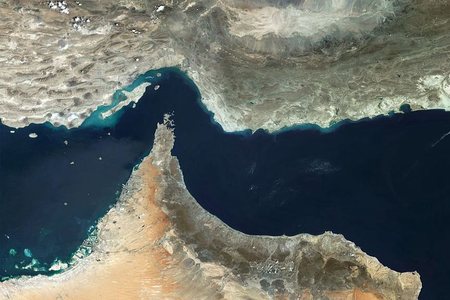
At the same time, Russia is supplying Iran with goods that would normally pass through the Strait of Hormuz, which is currently controlled by the US Navy. Iranian authorities say efforts to open alternative trade routes are progressing rapidly. Four Iranian ports on the Caspian Sea are working around the clock to bring in wheat, corn, livestock feed, sunflower oil and other vital goods.
Mohammad Reza Mortazavi, head of the Food Industries Association of Iran, told state broadcaster IRIB that Iran is actively redirecting basic food imports through the Caspian Sea.
Russian trade data also shows a significant increase in maritime traffic in the region in recent months. Vitaly Chernov, head of analysis at PortNews Media Group, said that about two million tons of Russian grain that previously went to Iran via the Black Sea is now being transported via the Caspian Sea due to the risk of Ukrainian attacks.
"Against the backdrop of instability in the Middle East, routes through the Caspian Sea to Iran look much more attractive ," he said.
Alexander Sharov, drejtues i organizatës RusIranExpo, e cila ndihmon eksportuesit rusë të gjejnë treg në Iran, vlerësoi se volumi i mallrave që kalojnë nëpër Kaspik mund të dyfishohet gjatë këtij viti. Sipas tij, kriza në Hormuz mund të bindë edhe kompani që më parë hezitonin të përdornin këtë korridor për shkak të sanksioneve.
Deti Kaspik, më i madh se Japonia dhe i konsideruar liqeni më i madh në botë, mbetet një zonë e vështirë për t’u monitoruar. Sipas grupeve që ndjekin trafikun detar, shumë anije që lëvizin mes porteve ruse dhe iraniane fiknin qëllimisht sistemet e gjurmimit satelitor.

Ndryshe nga Gjiri Persik, SHBA-ja nuk ka mundësi të ndërhyjë ndaj anijeve në Detin Kaspik, pasi qasja lejohet vetëm për pesë shtetet bregdetare.
“Nëse kërkon vendin ideal për shmangien e sanksioneve dhe transferimin e pajisjeve ushtarake, ai është Deti Kaspik”, u shpreh Nicole Grajewski, eksperte për Iranin dhe Rusinë në universitetin Sciences Po në Paris.
Ndërsa Rusia dhe Irani flasin hapur për tregtinë e produkteve bujqësore, bashkëpunimi ushtarak trajtohet me shumë më tepër kujdes.
Dërgesat e dronëve tregojnë afrimin e thellë ushtarak mes Moskës dhe Teheranit. Ekspertët vlerësojnë se komponentët rusë nuk janë vendimtarë në konfliktin e Iranit me SHBA-në dhe Izraelin, por ndihmojnë në forcimin e arsenalit iranian të dronëve. Nëse këto furnizime vazhdojnë, Irani mund të rindërtojë shpejt kapacitetet e humbura.
Në vitet e mëparshme, tregtia ushtarake ka funksionuar në të dy drejtimet. Irani furnizonte Rusinë me dronë për luftën në Ukrainë, ndërsa Rusia dërgonte pjesë këmbimi dhe teknologji ushtarake drejt Iranit.
Kjo nevojë u zvogëlua pas korrikut 2023, kur Rusia nisi prodhimin vendas të dronëve Shahed në një fabrikë në Tatarstan, me licencë iraniane.
Në gusht, ushtria ukrainase deklaroi se kishte fundosur një anije ruse në portin Olya, në veriperëndim të Detit Kaspik, duke pretenduar se ajo transportonte komponentë për dronët Shahed nga Irani. Ukraina e cilësoi portin si një qendër të rëndësishme të furnizimeve ushtarake për luftën ruse. Moska pranoi vetëm se anija ishte “dëmtuar”.
Departamenti Amerikan i Thesarit e kishte sanksionuar më parë anijen dhe kompaninë ruse MG-Flot, duke e akuzuar për transportim raketash balistike me rreze të shkurtër nga Irani drejt Rusisë.
Për Rusinë dhe Iranin, rëndësia strategjike e Detit Kaspik nuk është e re. Të dy vendet kanë mbi dy dekada që planifikojnë krijimin e një korridori tregtar nga Deti Baltik deri në Oqeanin Indian, përmes Rusisë perëndimore dhe basenit të Kaspikut, me synim shmangien e rrugëve tregtare të kontrolluara nga Perëndimi.
However, many of these projects have remained largely on paper. The plans include modernizing the merchant fleet, building new ports and railway lines, but experts doubt whether Russia and Iran still have the financial resources needed to carry them out, due to the costs of wars and sanctions.
Another problem remains the low water level in some parts of the Caspian Sea, which makes navigation difficult.
For Russian President Vladimir Putin, the Caspian Sea represents a delicate strategic balance. Russia wants to support Iran, especially now that it has fewer allies in the Middle East, but overt military assistance could sour relations with US President Donald Trump and with Arab partners important to Russia's energy trade.
Even for the US, the Caspian Sea presents a unique diplomatic and military challenge.
"For American policymakers, the Caspian Sea is a geopolitical void; almost as if it doesn't exist," said Luke Coffey of the Hudson Institute.
He noted that the countries surrounding the Caspian Sea are divided between different US command structures: Azerbaijan and Russia are covered by the European Command, while Iran, Kazakhstan and Turkmenistan are covered by the Central Command. Even in the US State Department, these countries are handled by three different offices.
The importance of the Caspian Sea became more apparent to the US and Europe after the full Russian invasion of Ukraine in 2022. Russia again used ships in the Caspian to launch missiles at Ukrainian targets, just as it had done previously in Syria.
Analysts also noted an increase in so-called “dark ship” traffic, when ships disable mandatory tracking signals. In the early stages of the war in Ukraine, Iran used the Caspian Sea to supply Russia with ammunition and later with domestically produced Shahed drones.
In January 2025, Russia and Iran signed a broad cooperation treaty. European officials say the two countries continue to share military technology and tactics.
During the war, Russia improved the design and performance of drones, initiating domestic production. Experts believe that these technological developments were later shared with Iran.
However, it remains unclear how much military equipment Russia has sent to Iran since the conflict began. The volume of trade through the Caspian Sea cannot fully replace traffic through Hormuz, especially oil exports, which account for the bulk of Iran's revenue.
"Russia and Iran have found ways to circumvent sanctions. And that's exactly why Israel bombed the port. Because it realized that through this small but very important trade route, Russia can provide significant assistance to Iran ," said Anna Borshchevskaya, an expert on Russian policy in the Middle East at the Washington Institute. / Adapted from "Pamphlet", from "The New York Times".





Lini një Përgjigje