


 Shkruar nga Pamfleti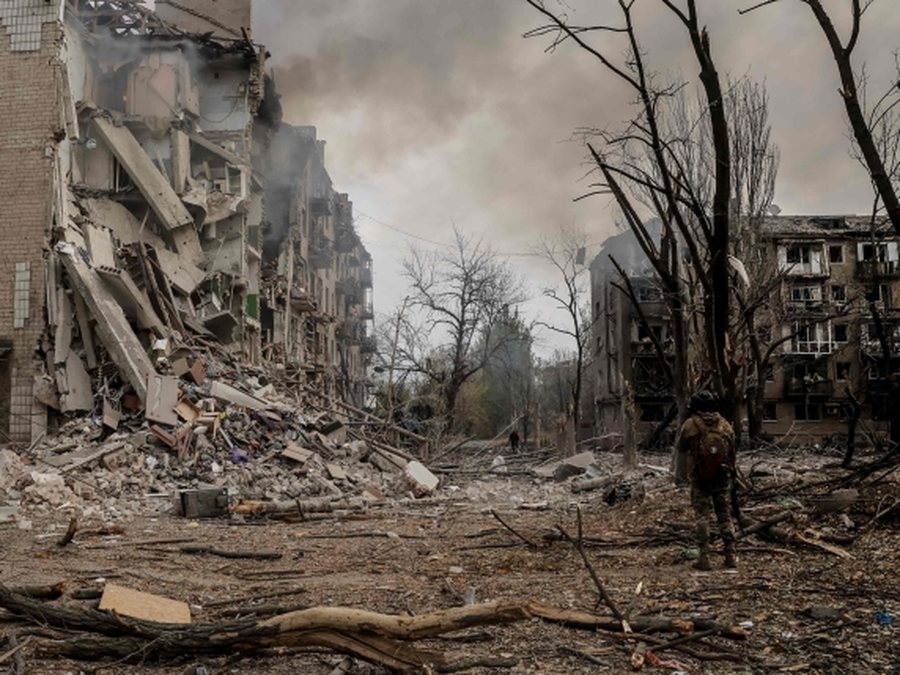
Western diplomats make no secret of their skepticism about a possible deal with Putin as the war drags on and Russian losses mount.
Voices from Washington speak of "a breakthrough" if Donetsk were to be brought under Russian control, but a European diplomat was blunt: " Giving it to Putin is like cutting off a limb in exchange for nothing ."
Frozen Throne
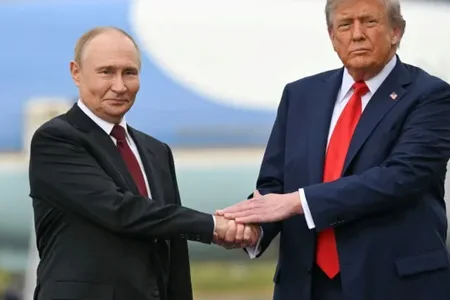
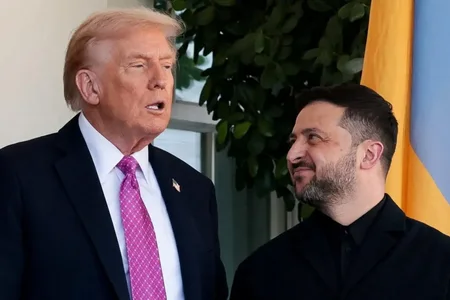
Since April, when Putin refused to stop fighting and demanded total control over Crimea and the four eastern regions - Donetsk, Luhansk, Zaporizhzhia and Kherson - which he has never fully occupied, his position has changed somewhat. But the reality on the ground remains unchanged: neither the meeting in Alaska between Trump and Putin in August, nor the one between Zelensky and the US president in September, brought any change.
Why then should Ukraine surrender after a decade of war? Is this a rational act or just another Putin trick? And what peace can be guaranteed by meeting Trump's demands?
The Russian summer offensive failed.
The Russian summer offensive is drawing to a close, without achieving any of its declared objectives. Pokrovsku, which has been under threat for more than a year, has not fallen. Likewise, Kramatorsk, Kostyantynivka, Kupiansku and Chasiv Yari remain in Kiev’s hands. Donetsk has more Russophiles than other regions, but speaking Russian does not mean being pro-Russian. And this is a divide that Moscow often deliberately ignores.
Since January, according to Kiev, Russia has lost 640,000 to 877,000 soldiers, including 137,000 to 228,000 dead. In October, losses rose to 1,438,000, with up to 480,000 dead. Even if these figures are exaggerated, no territorial gain justifies this cost.
According to The Economist, at current rates, it will take Russia until June 2030 to take full control of the four regions it claims.
A war of people and technology
Drone technology and precision weapons have changed the rules of the game, but one fact remains: to attack, you need three times the strength of the defender. Although Russia has learned to use small units in the "kill zone", to hold positions it needs people and logistics.
Yes, Ukraine also suffers from fatigue and a lack of recruits, but Russia is not invulnerable either. Initially, Moscow offered huge bonuses to attract recruits and outnumbered Ukraine by 10-15 thousand soldiers per month. But coffins and graves are not easily hidden. And not everything works with mercenaries either: the Wagner case and the Prigozhin rebellion proved this. Even “Catherine the Great” would have been forced to give up serfdom to keep the Cossacks under control.
The economy as a boomerang
The Ukrainian economy has suffered greatly from Russian missiles, but has responded with cheap drones and domestic production. Russia remains the larger economy, but it is not a “paper tiger” as Trump called it, nor a “locomotive” as he sold it to Zelensky.
Beijing is not guaranteed to be a supporter. Russia's industrial strength remains very small compared to its Ukrainian allies. Europe does not want to fight, but if forced, Putin's hybrid war could backfire. Even without the Tomahawk missiles. / Adapted from "Pamphlet" by "Corriere della Sera"


Lini një Përgjigje