


 Shkruar nga Pamfleti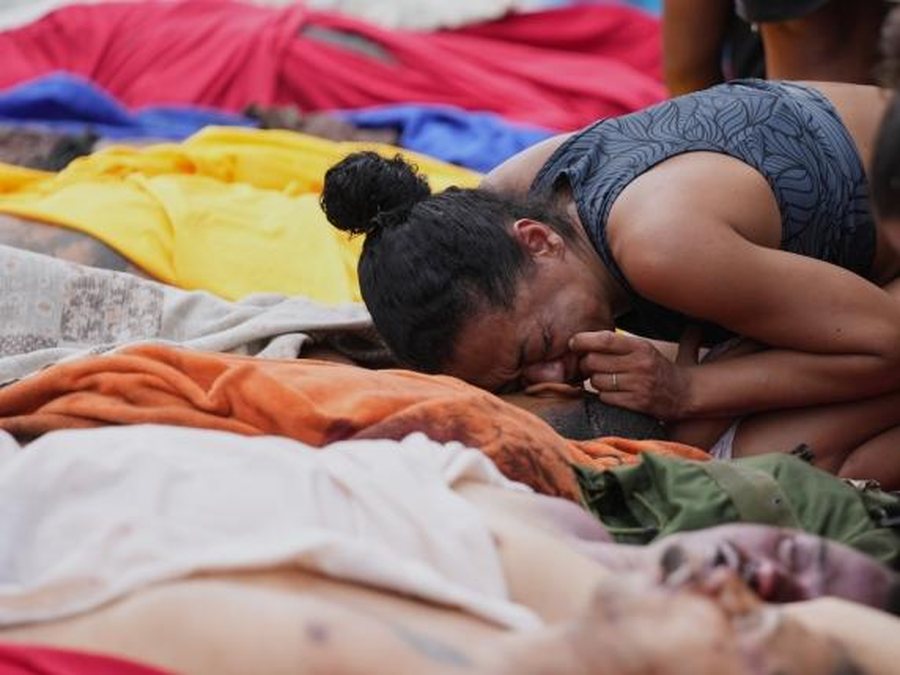
In the favelas of Complexo do Alemão and Complexo da Penha, in the north of Rio de Janeiro, the Special Police Forces, together with other local police forces, carried out a massacre without even knowing who actually killed them. They wanted to dismantle the Comando Vermelho, the mafia that has ruled Rio for almost half a century. I know the principle: "Everyone in those sewers is an accomplice; if you want to hit drug trafficking, you have to hit them all."
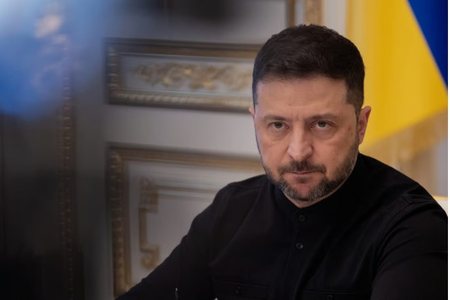
With this reasoning, they shot anyone with a gun, anyone who ran away, anyone who was near the weapons and crates of cocaine. The result? 130 dead (but there will be many more), about a hundred arrested and about 90 long guns seized. Meanwhile, the fugitive leader of the Comando Vermelho, the group that controls crime in Rio, Edgar Alves de Andrade, known as Doca, is at large, having fled as soon as the operation began. An operation, ordered by the governor of Rio state, Cláudio Castro, a Bolsonaro, with a single goal: to demonstrate his similarity to Nayib Bukele, president of El Salvador.
To arrest all the "scum", put them in prison, kill them and clean up the ghettos. Is this really the way to fight the cartels? No. It's the way to settle scores with them, like a conflict between powers within the same territory.
Brazil is divided between two main mafia groups: Primeiro Comando da Capital (PCC) and Comando Vermelho (CV). The PCC is a mafia organization from São Paulo: with rigid hierarchies, it is clearly inspired by the Italian mafias, from which it has adapted its methods, rituals and operations.
In the 1990s, the founders, while in prison, studied Italian clans and connected with their Italian collaborators to create an organization. The Red Command, on the other hand, has a structure similar to the gang, the guerrilla: groups that federate among themselves, gangs subject to rules established from time to time by the leader. The PCC governs São Paulo, the West Center (Mato Grosso, Mato Grosso do Sul), southern Brazil and part of the Northeast, controlling the routes from Bolivia and Paraguay.
The Red Command dominates Rio de Janeiro, the Amazon (Amazonas, Pará, Acre) and part of the Northeast. These are gigantic criminal organizations, among the largest on the planet. According to the Brazilian Forum of Public Security (FBSP), total profits (ranging from oil management, theft, gambling, betting and football) are estimated at 43 billion dollars, 16 billion dollars for the Red Command and 27 billion dollars for the PCC. Other studies, based only on bank transactions, estimate the figure at around 27 billion dollars.
Figures comparable to a national budget. Brazilian mafia organizations have created a kind of "Lusitanian Commonwealth": the PCC invests in Portugal, the Red Command in Angola and Mozambique, but are gradually leaving, exporting cocaine to Oceania. If the Portuguese began the colonization of Brazil in the 1500s, today Brazilian cartels are colonizing Portugal. But the CV has not always followed the same path.
Fernandinho Beira-Mar and Marcinho VP (the latter described as its "real king") are in prison, but their charisma, especially that of Marcinho, still makes them de facto leaders. Prisons in Brazil are real cities (Brazil has 835,000 prisoners!): without negotiating with the cartels, management would be unthinkable. Doca, the boss who escaped the raid, is an advocate for the militarization of favela residents.
"Give everyone a gun" was his way of making the Commando look scary, but it allowed Castro to legitimize an even more violent invasion than usual. When Nem (Antônio Bonfim Lopes) was in charge, the strategy was different: demilitarization, leaving guns only for small cells. Thus, building a system in which drugs, while still an important segment, did not cause hostility, acting as "oil" to support the community. Nem feared precisely violent raids like Tuesday's, which have always happened, but have never been so publicized and with such open brutality (BOPE has always hidden its violence). This one is being called the worst in history.
Politicians failed to take advantage of the phase managed by Nem: they should have attacked the economic and financial system linked to drug trafficking. They didn't do it then and they don't do it now. Entering a favela and shooting people immediately communicates "order"; invading the banking or construction system would have meant sabotaging the country's fastest-growing economy and, consequently, losing consensus.
This is the unresolved and insoluble issue. Attacking the army, attacking the economic sector is impossible. Komando Vermelho and the PCC control football players' agents, oil companies, mining companies and transport companies; they change votes, invest in petrol, hotels and restaurants. Castro, like Bukele in El Salvador, uses the war on drug trafficking to create a permanent state of emergency and legitimize a state where people can be shot and arrested. /Adapted from Corriere/



Lini një Përgjigje