


 Shkruar nga Pamfleti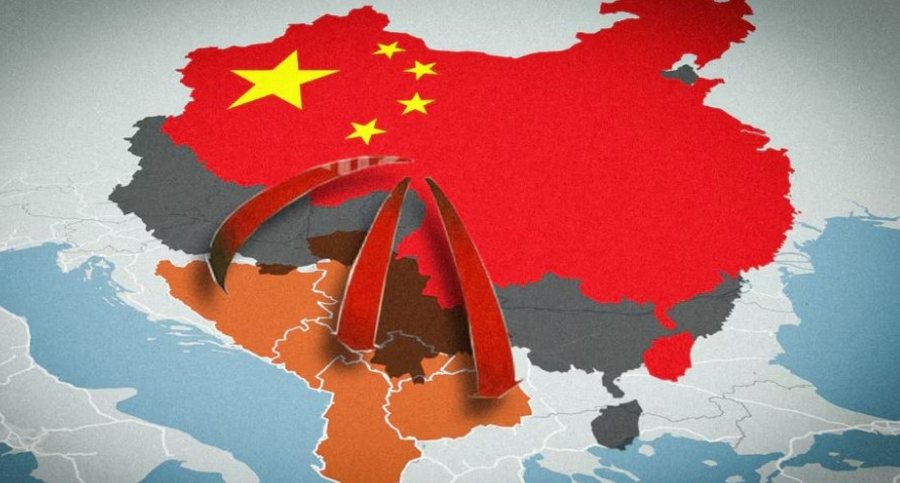
Beijing's educational programs are reshaping perceptions among Balkan youth, as soft power extends beyond infrastructure.
As China's large investments come under scrutiny across Europe, Beijing is turning to a softer form of influence in the Balkans: scholarships, university exchanges, and young students sharing life in China with audiences in their own countries.
This includes China-funded study opportunities, which offer tuition scholarships, monthly stipends, and access to fast-growing universities. Many of these students have also shared their experiences on social media, where they have a sizeable following, while others have appeared in the media or at official Chinese institutions.
“I applied [to the Chinese language course] for fun, because it was a new language that I had never learned,” Era Kërnaja, a 24-year-old from northern Albania who is now studying computer science at the Kunming University of Science and Technology, in Yunnan province, China, told Radio Free Europe (RFE/RL).
"If someone asked me a question three years ago, I would have said that China is communism, a closed country, that's it. But now my [opinion] has changed 360 degrees," she said.
While Beijing is best known in the region for billions of dollars in infrastructure projects, loans, and technology partnerships, education has emerged as a softer channel through which China is shaping perceptions.
This is particularly pronounced among younger generations, who polls show are more open to Beijing's portrayal of itself as a benevolent and responsible power.
"I wanted to change the opinion that Albanians have about China and tell them not to believe everything you see," said Kërnaja, who since 2023 - when she started living in China - has started posting about her experience on her TikTok account and now has more than 8,000 followers.
For Beijing, analysts say, these programs serve a long-term purpose: cultivating personal networks, favorable narratives, and future professionals who have direct experience of China and are willing to share it in their own countries.
This soft power push constitutes an important complement to China's growing political and economic influence in the Balkans and could bring more open audiences to China's efforts to expand its economic reach and advance its interests.
"Beijing has an interest in sending as many international students and scientists to China as possible ," Stefan Vladisavljev, an expert on Beijing's role in the Balkans at the BFPE Foundation, a Belgrade-based think tank, told REL.
"It [China] is trying to position itself as a provider of development [and] being present in Europe is a very important aspect of global outreach."
The experience of Kërnaja reflects a broader trend developing in the Balkans, where Chinese educational opportunities have also sparked interest in countries like Albania and Kosovo, which remain strongly pro-Western in their political orientation, due to historical American support for their statehood and democracy.
Albania and Kosovo – linked by shared political, linguistic, and cultural ties – are more difficult places for Chinese penetration in the Balkans.
Beijing's regional influence has generally extended from Serbia, where Belgrade has attracted billions of dollars in investment and built deep political ties.
Serbia stands out as China's most advanced educational partner in the region, with three Confucius Institutes supporting Chinese language learning in dozens of schools. In the Institute's 20-year history in Serbia, the number of participants has grown from a few dozen to several hundred each year, and educational cooperation has been strengthened by several new agreements between the two countries signed in 2018.
"If China has a stronghold in the Western Balkans, it also has a stronghold in Europe," Vladisavljev said.
But Chinese soft power, mainly through educational programs and social media outreach, is also scoring some early successes elsewhere in the region.
The Confucius Institute in Albania, where Kërnaja learned Chinese and received guidance on applying for her scholarship, is one of the most visible channels of educational exchange within the University of Tirana.
It describes itself as a “non-governmental, non-profit educational institute” co-organized with Beijing Foreign Studies University, offering Chinese language lessons and cultural programs. It also offers scholarships and helps students apply to various levels, including individual universities or at the federal and national levels within China.
These institutes exist everywhere in the Western Balkans, except for Kosovo, whose independence is not recognized by China and consequently has no official representation from Beijing.
Confucius Institutes are under increasing scrutiny across Europe, with some governments closing them down due to concerns about academic freedom and political influence.
But, across much of the Balkans, they are increasingly seen by young people as valuable launching pads for pursuing economic and educational opportunities.
How is China exploiting the West's retreat to expand its presence in the region?
Ekspertët që ndjekin angazhimin kinez në rajon thonë se historitë dhe përvojat personale të ndara nga studentë vendas që studiojnë në Kinë kanë ndikim dhe duket se po ndjekin një model të kopjuar nga vende të tjera perëndimore, përfshirë Shtetet e Bashkuara.
“Kina po merr një faqe nga libri i vendit që e ka bërë më së miri fuqinë e butë – Shtetet e Bashkuara”, tha Vlladisavljev.
Bursa, shkëmbime dhe të dhëna të kufizuara
Angazhimi arsimor i Kinës në Ballkan ndërtohet mbi një mozaik programesh: bursa të Qeverisë kineze, grante të lidhura me institutet Konfuci, marrëveshje në nivel universitetesh dhe kurse trajnimi afatshkurtra.
Meqë programet ndryshojnë shumë sipas vendit dhe vitit — dhe meqë institucionet kineze dhe ato ballkanike nuk publikojnë të dhëna gjithëpërfshirëse — nuk ka një regjistër të qartë publik që të tregojë se sa studentë ballkanikë kanë studiuar në Kinë ndër vite.
Radio Evropa e Lirë gjeti se disa studentë shqiptarë që studiojnë në Kinë janë shfaqur gjithashtu në mediat shtetërore kineze, përfshirë Radio Kina Ndërkombëtare (CRI), që është botimi shqip i transmetuesit kryesor shtetëror kinez (CGTN), ku kanë ndarë rrëfime shumë pozitive për përvojat e tyre.
Sondazhet e opinionit publik në Shqipëri, përfshirë Barometrin e Sigurisë së Shqipërisë, tregojnë se pikëpamjet ndaj Kinës mbeten kryesisht neutrale, megjithëse perceptimet pozitive janë rritur lehtë vitet e fundit.
Ndërkohë, pavarësisht mungesës së bashkëpunimit institucional në Kosovë, studentë individualë – shpesh nga diaspora e shpërndarë në Evropë dhe Amerikën e Veriut – kanë gjetur rrugën drejt Kinës dhe ndajnë përvojat e tyre me popullsinë e re në vend.
Vlera Kelmendi, e lindur në Kosovë dhe e migruar në Norvegji, i tha televizionit lokal kosovar ATV, në një intervistë në vitin 2025, se zgjodhi Kinën nga kureshtja, duke përshkruar një përvojë shumë pozitive atje.
Kelmendi, e cila refuzoi të fliste për REL-in, dokumenton jetën e saj në Kinë në llogarinë e saj publike në TikTok me më shumë se 16 mijë ndjekës, duke arritur audienca në Kosovë, ku opinioni publik ndaj Kinës mbetet kryesisht negativ.
Në anën tjetër, ndonëse nuk ka kurse zyrtare kineze në Kosovë, zyrtarët në Institutin Konfuci në Tiranë thanë se kanë vërejtur interes në rritje nga studentët e Kosovës.
“Do të donim shumë të shihnim studentë nga Kosova që të mësojnë gjuhën kineze”, i tha Radios Evropa e Lirë, Zheng Baoguo, drejtori i Institutit Konfuci në Tiranë.
“Do të përpiqemi maksimalisht të krijojmë mundësi për ta, nëse ata janë të gatshëm.”
Më pak se dy orë larg Kosovës, Kadir Ismajli, një student 26-vjeçar nga Maqedonia e Veriut, pati një rrugë shumë më të drejtpërdrejtë drejt Kinës.
Ndërsa fillimisht po kërkonte të studionte diku tjetër, studenti me nacionalitet shqiptar tha se mori një bursë shtetërore kineze për një diplomë master në provincën Yunnan, ku mori ndihmë edhe nga ambasada në procesin e aplikimit.
Like others, Ismajli has built a following on TikTok of more than 31 thousand people, where, among other things, he posts about his life in China.
"I started TikTok for business, but when I see something interesting here, I post it ," he said.
"At home, people tell me that we didn't know what China was really like."
Over the past decade, about 100 Macedonian students have studied in China through language programs and full study programs.
A study on Chinese influence in North Macedonia, conducted by the Skopje-based organization Estima, found that “the perception of China’s reputation in North Macedonia is a mixed picture that tends to be more positive among people who have had direct experience and interaction with China and Chinese actors.”
According to Estima data from 2005, the number of Chinese scholarships for North Macedonian students has been increasing.
Chinese language education programs are also penetrating other Western Balkan countries.
Montenegro has had a Confucius Institute since 2015 and has sent more than 100 students to China during that period, according to a report by the Center for European Policy Analysis.
In Bosnia and Herzegovina, there is a formal agreement for educational exchanges with China, and Chinese-funded programs continue to grow, especially through the University of East Sarajevo, where more than 170 students have participated in exchange programs in China.
Among this group is Ana Jasarevic, a 23-year-old who studied at the Chinese language department of the University of East Sarajevo.
She spent last year at Wuhan University with several other colleagues from the faculty.
“When we arrived, it was a bit of a culture shock because it’s completely different,” she said. After graduating, she now says she plans to enroll in a master’s degree program in China.
“I liked it there, although I understand that many people don't like the way it works,” she said. “I've been to many cities, I've traveled around the country, and I've felt safe everywhere . ” / REL








Lini një Përgjigje