


 Shkruar nga Martin Kear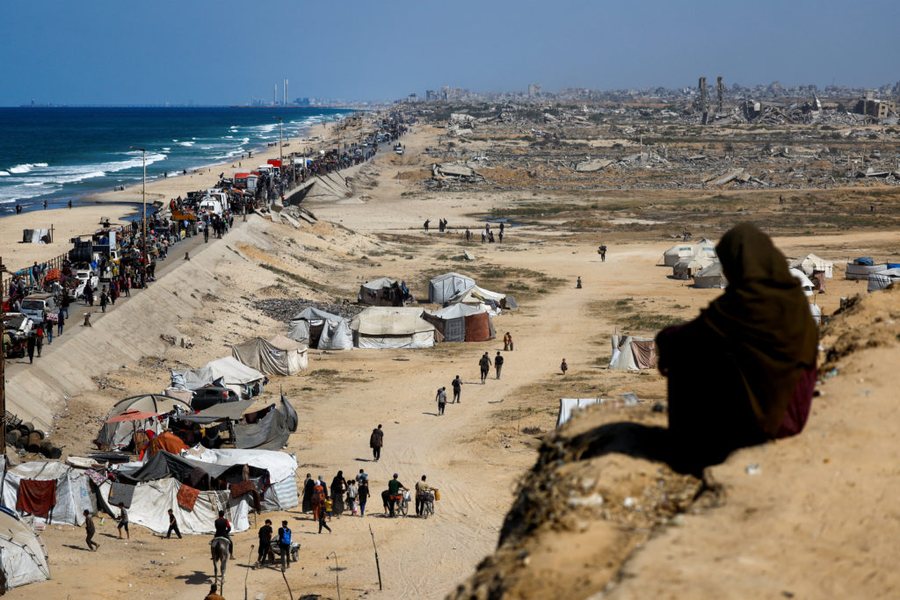
Since neither Hamas nor Fatah were able to guarantee the security of the Palestinians, this created a security vacuum. And some of the clans took advantage of this by transforming themselves into paramilitary organizations...
Despite the euphoria surrounding the ceasefire between Hamas and Israel, Gaza is still ravaged by violence.
More than twenty Palestinians have been killed in recent days in clashes between Hamas and members of various clans. Hamas is said to have executed blindfolded men in a public square.
As the Israeli army withdraws to the pre-agreed ceasefire lines, Hamas members are beginning to reassert their control. However, powerful clans are also jockeying for position, some linked to Hamas's ideological rival, the West Bank-based Fatah movement, and some backed by Israel.
But who are these clans? What role do they play in Gaza? And how much of a threat do they pose to Hamas?
Who are the clans?
Family clans have existed in Palestinian society for centuries. In recent decades, they have begun to play a key role in Palestinian politics.
The clans are mostly family groups in different parts of Gaza. One of the largest and most heavily armed is the Dughmush clan in Gaza City, led by Mumtaz Dughmush. This clan was immediately targeted by Hamas after the ceasefire.
The al-Majayda clan also has influence in parts of Khan Younis. Hamas forces raided their neighborhood earlier this month, killing several family members. However, this week, the clan publicly supported Hamas' efforts to regain control of Gaza.
It is important to note that these clans and their relationships with Hamas and Fatah are dynamic and constantly evolving. Members of Hamas and Fatah also belong to clans. This often leads to clashes over territory and control, with loyalty to the clans often trumping loyalty to the movement.
As Israeli historian Dror Ze'evi notes, any attempt by Hamas or Fatah to disarm the clans would be seen as an insult and would meet with serious opposition.
A long history of entrenched power
Following the 1948 war that led to the creation of Israel and the Palestinian al-naqbah (or Nakba), an estimated 750,000 Palestinians fled Israel to the Gaza Strip, the West Bank, and neighboring Arab states.
This was the time when clans began to take on traditional roles as intermediaries and patrons. Their organized structures made them in the best position to provide welfare and assistance to a shattered Palestinian society.
Ndërsa rendi dhe ligji, siguria dhe pavarësia financiare u përmirësuan në territore në dekadat pasuese, palestinezët filluan të mbështeteshin më pak në mbështetjen e tyre. Kjo solli një rënie të fuqisë dhe ndikimit të tyre.
Megjithatë, kjo ndryshoi gjatë Intifadës së Parë (1987–93) dhe Intifadës së Dytë (2000–05), kur shoqëria palestineze u zhyt përsëri në krizë. Kjo ishte veçanërisht e vërtetë në Rripin e Gazës, i cili njihej si dhoma e motorit të rezistencës së organizuar palestineze.
Intifada e Dytë, në veçanti, e ndryshoi ndjeshëm rolin e klaneve, pasi Izraeli shkatërroi pjesën më të madhe të forcave të organizuara të sigurisë palestineze dhe infrastrukturës në territore.
Meqenëse as Hamasi dhe as Fatahu nuk ishin në gjendje të garantonin sigurinë e palestinezëve, kjo krijoi një boshllëk sigurie. Dhe disa nga klanet e shfrytëzuan këtë duke u transformuar në organizata paraushtarake. Përsëri, kjo ishte veçanërisht e vërtetë në Rripin e Gazës, ku përpjekjet e Izraelit për të shtypur rezistencën palestineze u ndjenë më intensivisht.
Kur përfundoi Intifada e Dytë, klanet e Gazës ruajtën një sasi të konsiderueshme ndikimi politik dhe fuqie ushtarake. Pasi Hamasi fitoi zgjedhjet e vitit 2006, disa klane të lidhura me Fatahun u përpoqën ta pengonin atë të merrte pushtetin.
Aq të rrënjosura ishin këto klane saqë kur Hamasi më në fund mori kontrollin e Gazës në vitin 2007, lëvizjes iu desh një vit për t'i sjellë në mënyrë efektive klanet më të fuqishme nën autoritetin e saj . Edhe atëherë, kjo ishte më shumë një armëpushim sesa një fitore për Hamasin.
Izraeli mbështet rivalët e Hamasit
Ky status quo mbeti deri në sulmet terroriste të Hamasit ndaj Izraelit më 7 tetor 2023. Hakmarrja e Izraelit për këto sulme shkatërroi Rripin e Gazës, duke i grabitur edhe një herë gazanët nga çdo lloj sigurie dhe mbrojtjeje.
Tani, me tërheqjen e pjesshme të trupave të Izraelit, është krijuar një tjetër boshllëk sigurie. Dhe shumë klane duket se janë të etura ta mbushin atë, disa me ndihmën e Izraelit.
Në qershor, kryeministri izraelit Benjamin Netanyahu pranoi se qeveria e tij po armatoste disa klane, banda dhe milici në Gaza, të tilla si Forcat Popullore , të udhëhequra nga Yasser Abu Shabab.
Arsyetimi i Netanyahut ishte se çdo kundërshtim ndaj Hamasit ndihmonte Izraelin dhe shpëtonte jetën e ushtarëve. Gjithashtu, kjo i vinte përballë palestinezët kundër palestinezëve, duke ushtruar presion shtesë mbi Hamasin.
Pasi armëpushimi hyri në fuqi, Hamasi filloi të shënjestrojë ata që i quajti “bashkëpunëtorë dhe tradhtarë”, një referencë e dukshme për ato klane dhe bandat që bashkëpunonin me Izraelin.
Ndërkohë, Forcat Popullore kanë refuzuar të dorëzojnë armët . Një duzinë milicish të tjera të reja thuhet se janë shfaqur gjithashtu në të gjithë Rripin e Gazës ditët e fundit, përfshirë një të udhëhequr nga Hossam al-Astal, i cili tha:
Hamas always bet that there would be no alternative to replace them in Gaza, but now I'm telling you that today there is an alternative force to Hamas. It could be me or Abu Shabab or anyone else, but alternatives exist today.
While this violence between Hamas and rival groups does not directly affect the ceasefire that ended the war, it is evidence that Israel is still trying to interfere with Gaza's security and exert its control.
But the peace plan negotiated by US President Donald Trump looks increasingly untenable, given his call for Hamas to disarm. Trump said this week that if Hamas refuses to disarm, "we will disarm it [...] possibly by force."
The peace plan also calls for Hamas to withdraw from Palestinian politics, to be eventually replaced by the Palestinian Authority, which currently administers parts of the West Bank. However, Netanyahu has consistently rejected a Palestinian Authority takeover of Gaza.
This uncertainty over Gaza's future governance opens up the possibility that the most powerful clans could become alternative centers of political power, as they did during the Second Intifada. This time, they could do so under the auspices of Israel's military occupation.
This would further fragment Gaza and weaken any Palestinian Authority efforts to reunite the territories under a single governing structure. It would also make a future Palestinian state uncertain.
Hamas, too, will not go away quietly. And that is a very real risk to peace and security in Gaza, especially if Hamas sees any resistance to its authority from the clans as little more than a proxy war with Israel. / Adapted from The Conversation /




Lini një Përgjigje