


 Shkruar nga Luigi Manconi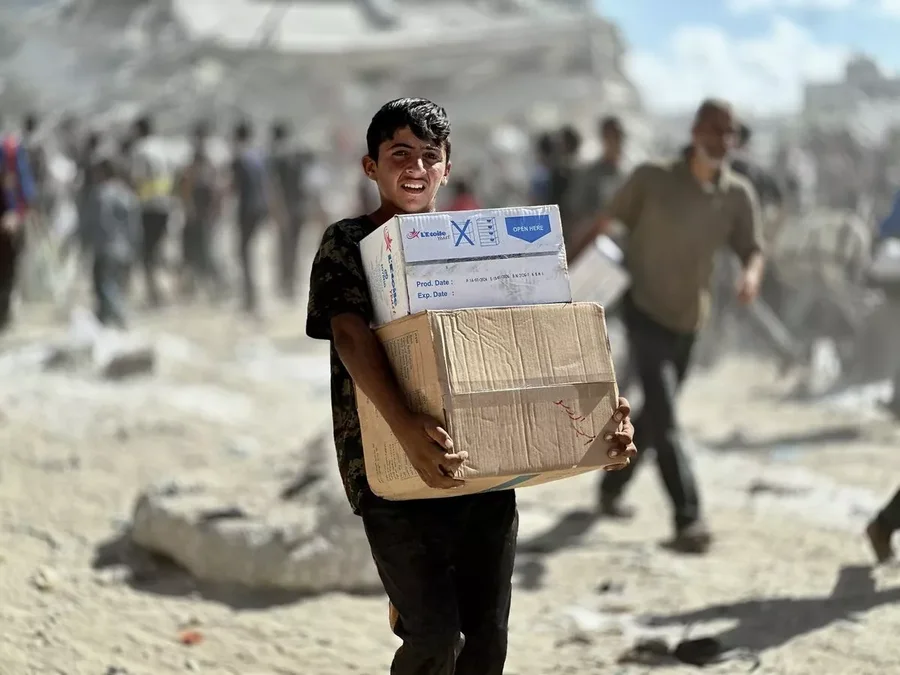
War, humanity's most tragic invention, requires intelligence and conscience.
I think that the left and all supporters of the Palestinian cause, abandoning any inferiority complex, should immediately declare that the ceasefire currently in force between Israel and Palestine is a good and just thing and that, in order to achieve it, Trump's role must be defined. This is an elementary duty towards historical truth, but not only that: it is also an important moral issue.
War, humanity's most tragic invention, requires intelligence and conscience. And it involves a laborious and painful process of taking responsibility.
If, therefore, Trump's action to impose the ceasefire was decisive, his responsibilities remain enormous: in allowing the brutal actions of the Israelis to continue to this day and even beyond; and in unconditionally supporting the war crimes and crimes against humanity committed by the IDF; and in promoting, at the international level, a militarization of relations between peoples, exalting their warlike component as never before in this part of the century: to the point of changing the name of the Department of "Defense".
But precisely because this is a historic day and an occasion for joy as well as mourning, for salvation and not just tears, perhaps it is useful to examine things more deeply.
No one can know how the situation will evolve or deteriorate, not even Palestine: one can only be happy about the lives saved and the suffering in this current period of time, but in the long run, it is difficult to be so. It is possible that the prospect of two peoples and two states and the even more desirable one of a federal state for Israelis and Palestinians will resume, perhaps very slowly, but it will resume. However, the fire that burns beneath the soil of that land is far from extinguished.
In Mathieu Kassovitz’s film, La Haine (Hate), the story of three young men from the suburbs of Paris (one of whom is Jewish), offers a relentless analysis of the reasons and roots that lead to the outbreak of violence. By investigating the social and cultural processes that shape individual revolt, it takes a look at the main historical dynamics that underlie it: colonialism, poverty, and ghettoization. All of this, in the long run, comes to a head and culminates in the outbreak of war.
War is the moment when competition and rivalry between human beings lose all capacity for mediation and compromise, abandoning politics and diplomacy, to transform into absolute violence. It is the moment when the opponent becomes the enemy, and the object of the quarrel is the extermination of the other. Literally, his disappearance.
Hatred finds its perfect form and its perfect target. The cruelty of that conflict becomes even more acute the more it manifests itself as a fratricidal war. And, then, few seem to remember that Jews and Arabs are both Semitic peoples, belonging to the same linguistic stock. And that, as some authoritative Israeli historians write, that eternal clash between the two can be interpreted as a protracted civil war.
Especially since, in all conflicts to the death, the stakes are the control of territory in a very small area and demography is destined to play a decisive role. And there is already talk of a fierce but bloodless "civil war" within Israel and a fierce and bloody civil war in Palestine, the dove of Hamas militias continues a massacre against opponents. Drawing loosely from the disciplines of psychology, we can say that hatred presupposes two circumstances: panic about a threat, real or perceived, and the desire to bring harm to those who represent the same threat. And this, clearly, is expressed most violently in the space of proximity.
Two examples, while incomparable to each other and to what is happening in the Middle East, can nevertheless offer us some lessons: the civil war in South Africa and that in Rwanda were internal wars, which produced an incalculable number of indelible wounds and incurable scars. However, they led to a subsequent development that, through reconciliation strategies and the practice of restorative justice, brought about significant changes. Of course, hatred has not disappeared, but its most powerful causes have been deactivated and its most brutal manifestations have been contained within the democratic system and the rules of the rule of law; and Rwanda today looks completely different from the one that, thirty years ago, had witnessed a million victims.
Contemporary man, after Dostoevsky and Nietzsche, cannot help but have a tragic concept of existence. He cannot imagine a world in peace and harmony, even though it is very precious that so many people desire it and work to bring it closer.
I doubt that humanity can eradicate hatred, but collective mobilization, shared pain, the anger of the meek, flotillas and that good old mass demonstration, which did so much against, ezepeacheegiaz in those of Tel Aviv, continues to represent the world's second superpower./ Adapted from "Pamphlet" by "La Repubblica"




Lini një Përgjigje