


 Shkruar nga Irena Beqiraj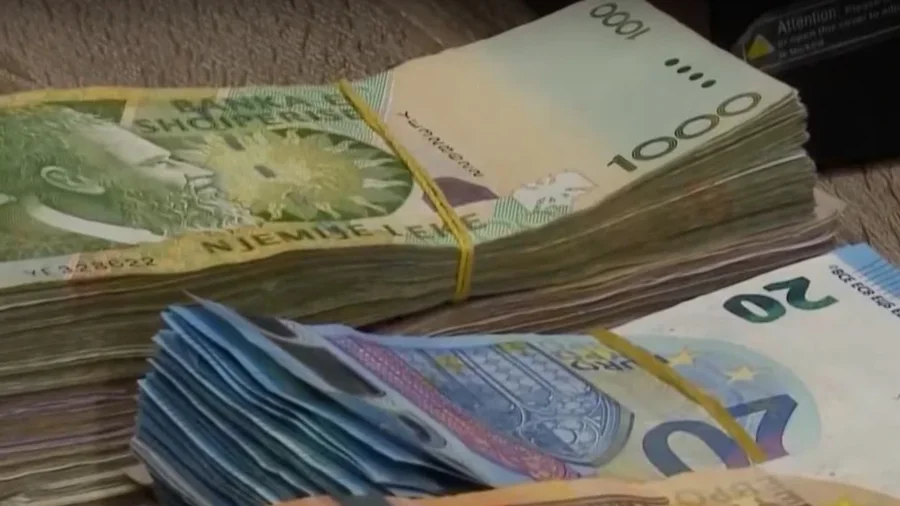
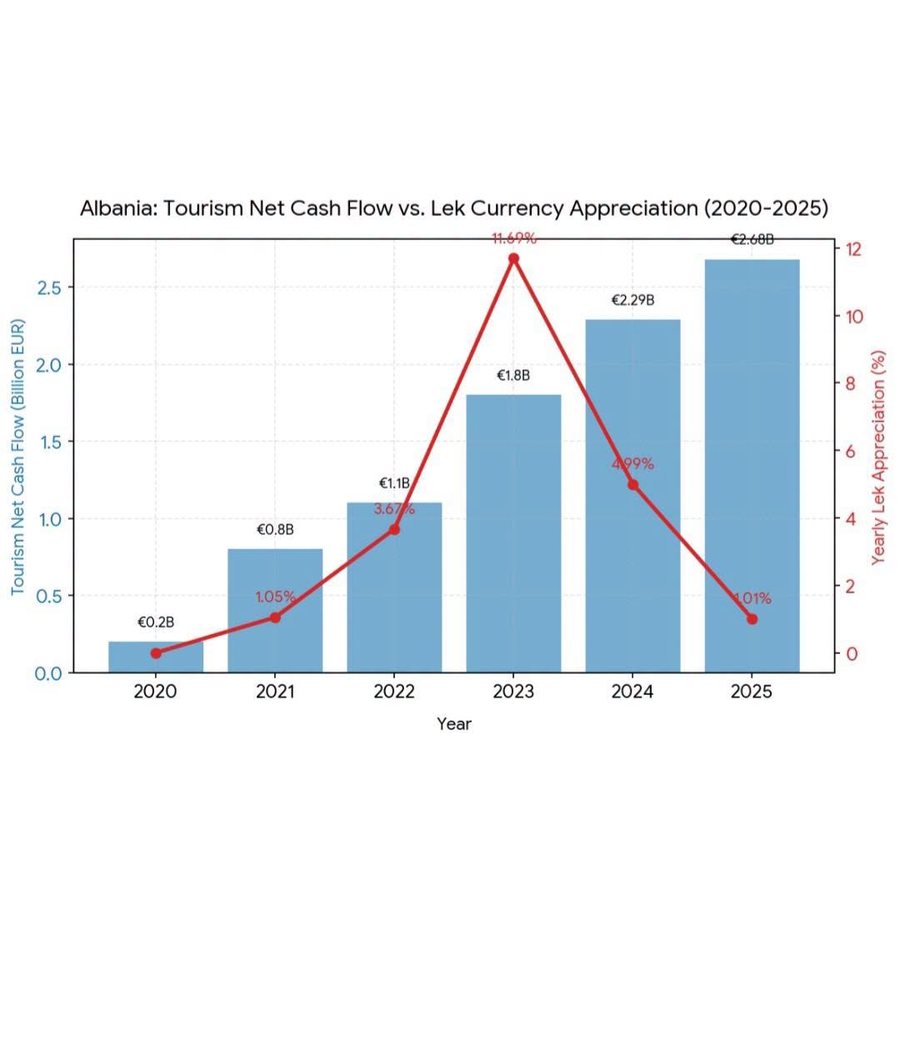
Econometric analysis shows that in the years 2020 - 2025, 25% to 40% of the appreciation of the lek remains unjustified by tourism revenues, foreign direct investment, or remittances flowing through official channels.
Albert Einstein said: "Not everything that counts counts, and not everything that counts counts."
This expression came to mind while I was summarizing these lines about the overvaluation of the lek, or as the Bank of Albania calls it, the overvaluation of the lek.
Can tourism revenues explain the appreciation of the lek?
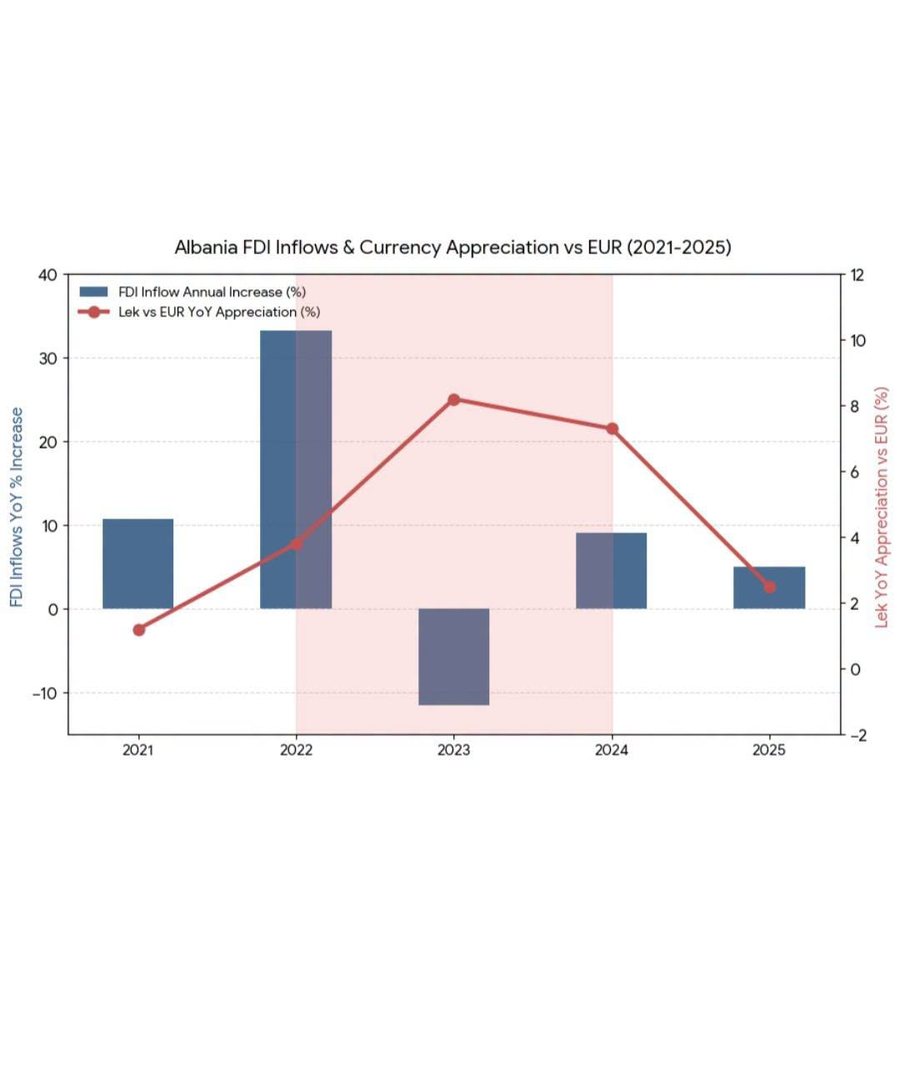
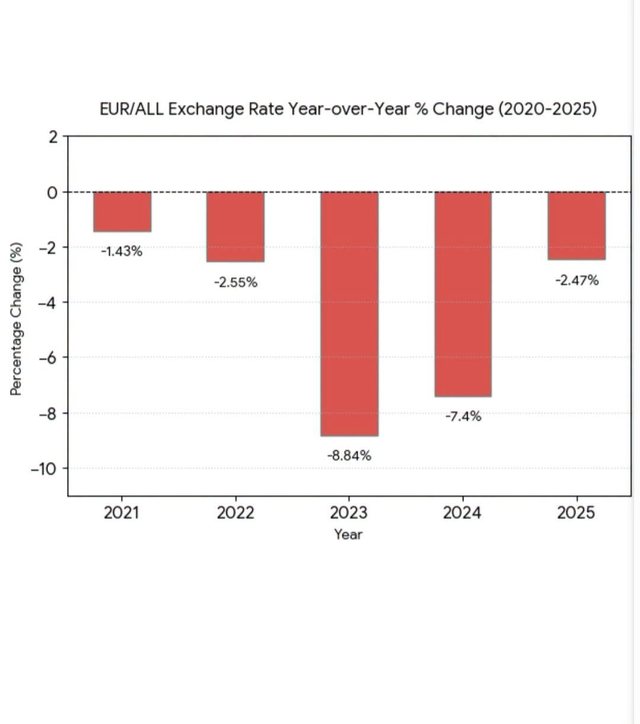
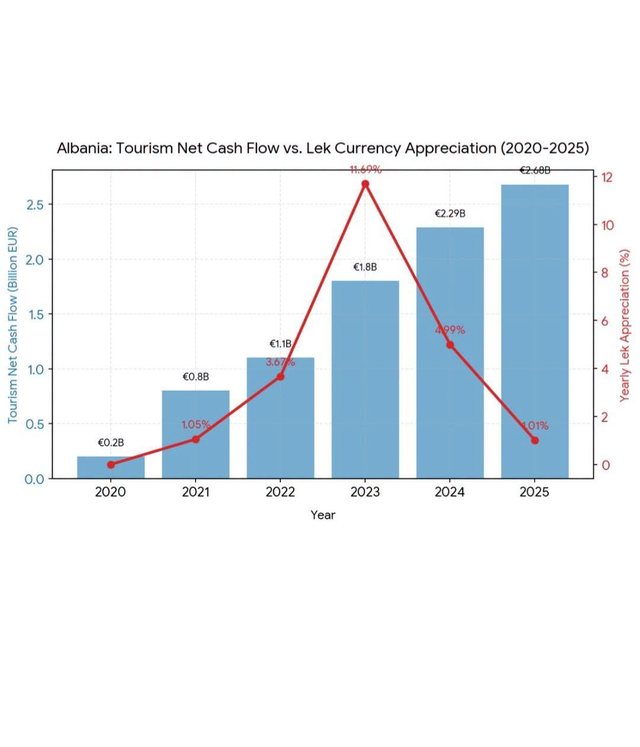
While the largest appreciation of the lek was observed in 2023, the flows from tourism and the annual appreciation of the Albanian Lek (ALL) against the Euro (EUR) from 2020 to 2025 are low.
According to the Bank of Albania's econometric modeling, only 23% of the overall volatility and structural appreciation of the lek during the period 2020-2025 is directly attributable to tourism revenues.
What about the flow of foreign direct investment?
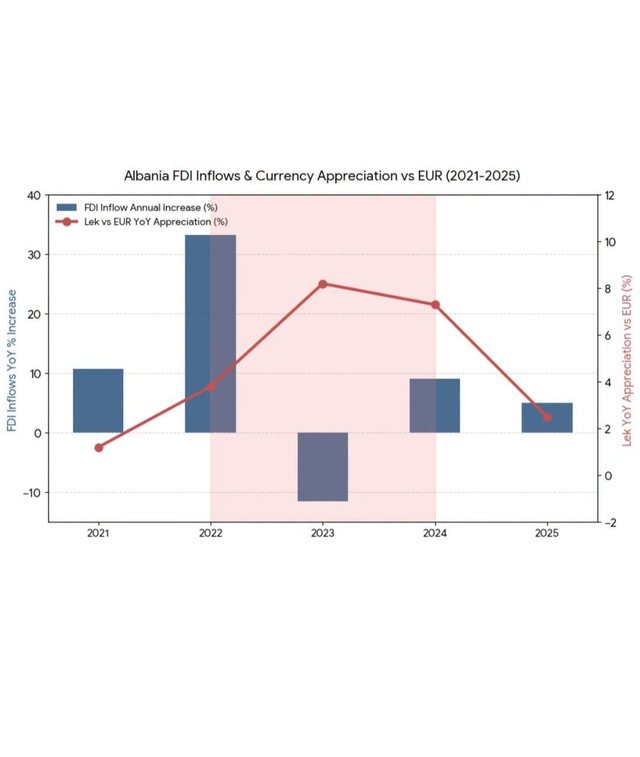
The Pearson correlation coefficient between the annual growth (YoY) % of Foreign Direct Investment (FDI) flows and the annual appreciation of the Albanian Lek (ALL) against the Euro (EUR) from 2020 to 2025 is negative -0.3588.
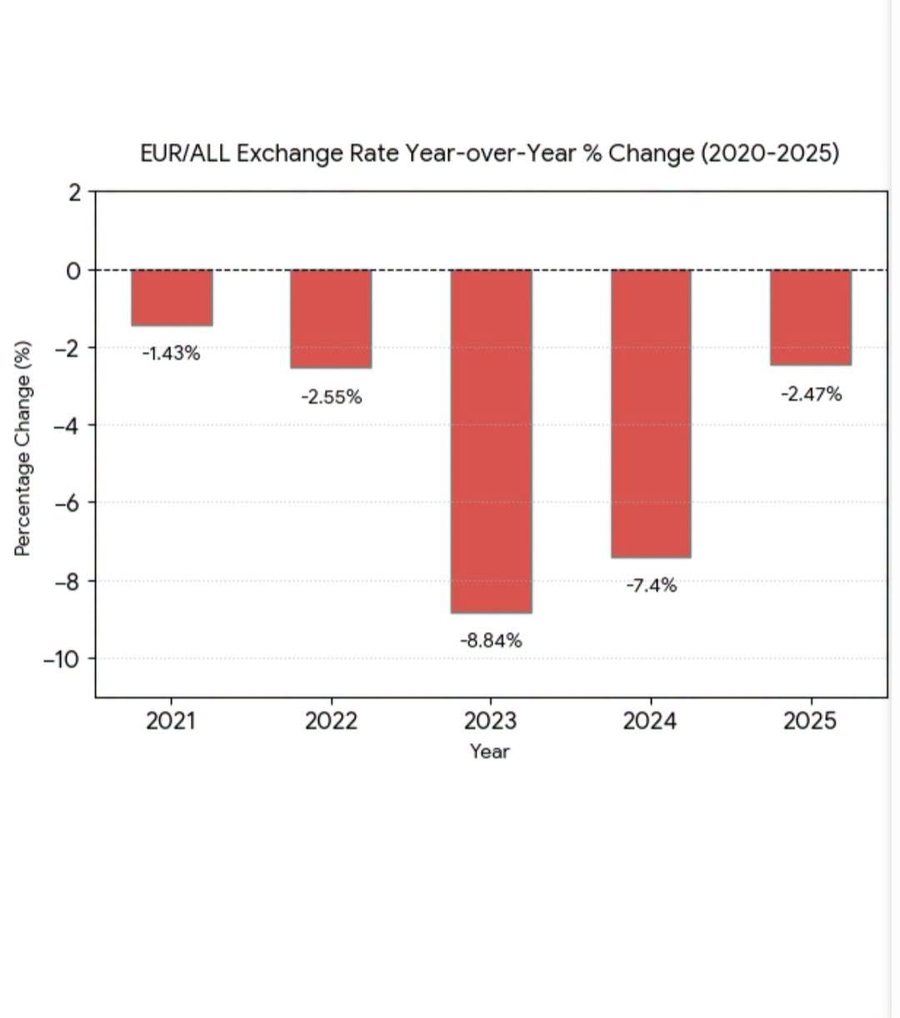
This weak negative correlation between the rate of acceleration of FDI growth and the rate of acceleration of currency appreciation during this specific period indicates that the acceleration of Lek appreciation has been statistically decoupled from the rate of percentage growth of FDI.
What's left? Remittances or shipments!
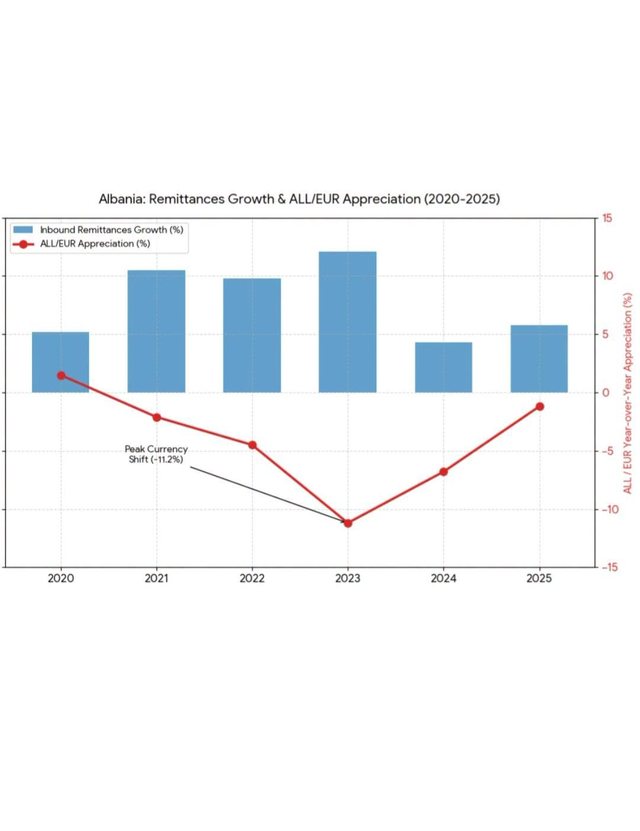
The only positive correlation of around 0.75 is observed between the annual growth (YoY) % of remittance flows and the annual appreciation of the Albanian Lek against the Euro (EUR).
But unfortunately, their specific weight in the addition to the money supply cannot fully explain the experienced appreciation of the lek.
So, econometric analysis shows that in the years 2020 - 2025, 25% to 40% of the overvalued lek remains unjustified by tourism revenues, foreign direct investment, or remittances flowing through official channels.
While the official figures of the real economy do not fully justify the appreciation of the lek, it means that there is an unofficial real economy that is supplied with flows in foreign currency, even though it is not counted, but which is worth addressing when talking about the strengthening of the lek.
-The devil is in the details!
Although the Bank of Albania does not openly oppose the government, when it talks about the strengthening of the lek, it calls it overvaluation.
If we refer to currency as a security, its valuation depends on Purchasing Power Parity (PPP).
It is undervalued when the price of a currency is lower than economic fundamentals justify;
Fairly valued (in equilibrium): when the market exchange rate accurately reflects its real economic value based on supply and demand and purchasing power;
Even overvalued when the currency is traded more expensively than economic fundamentals and purchasing power justify.
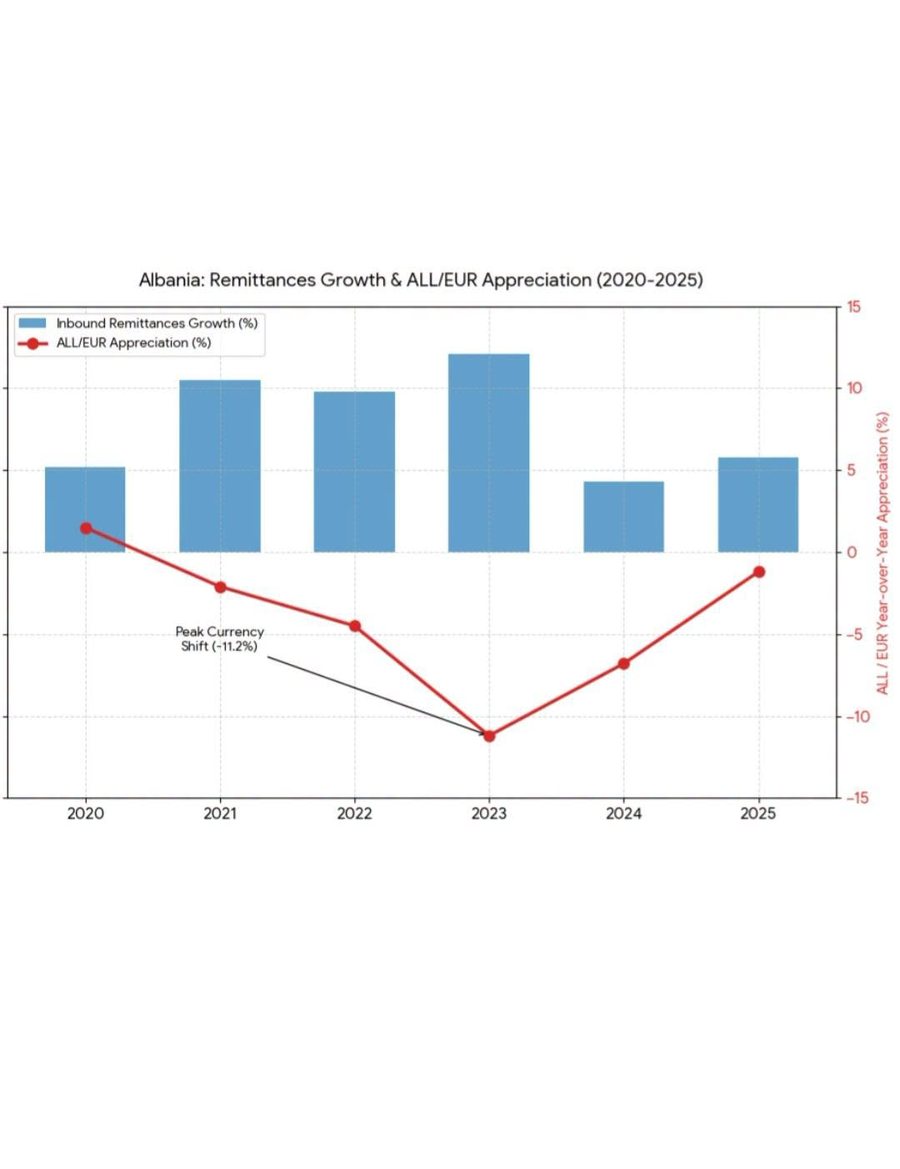
Meanwhile, all economists who understand the effects of overvaluation on welfare and the economy in the long term should be concerned.
Any economist free from state duties is within his right to attribute this overpricing to any additional undeclared factor, and to demand intervention to change the situation.
While every economist who exercises state duties has the duty not only to listen but also to argue with measurements why the lek is overvalued and what has led to this overvalued value, which must definitely be balanced?!



Lini një Përgjigje