


 Shkruar nga *Demir Murat Seyrek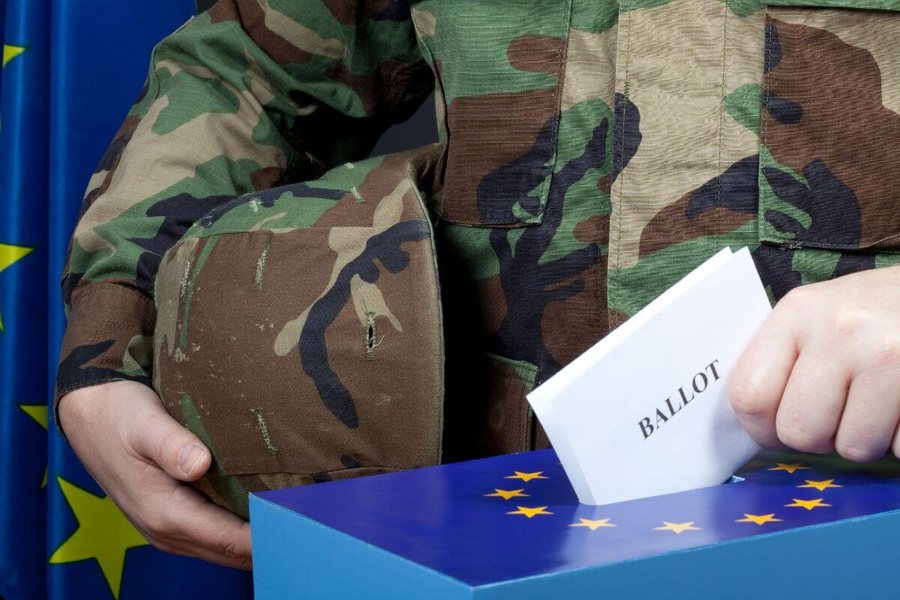
The erosion of democracy and the rise of extremist parties threaten Europe from within. If the European Union allows these trends to deepen, it risks handing Moscow victory without a single shot being fired...
Europe faces its most serious existential threat since the Cold War. The prospect of war is stronger than it has been for decades. This new reality, combined with growing doubts about US support in the event of a Russian attack, has prompted European countries to increase defense spending and launch EU-wide initiatives aimed at reducing dependence on Washington and strengthening resistance to the looming Russian threat.
This renewed focus on military preparedness is essential, but insufficient. Europe’s security depends not only on weapons but also on the resilience of its democracies. Russia’s aggressive posture is rooted in its fear of liberal democracy and the rights it upholds. Freedom poses a greater threat to authoritarian regimes than military might. Autocrats are inherently wary of democratic systems because their values directly challenge the authority of systems built on fear rather than the will of the people.
To counter Russia, preserving democracies is as important as investing in defense. Military strength without democratic integrity leaves Europe vulnerable from within. Defending democracy is as vital as tanks or missiles in ensuring long-term security.
Extremism and the rollback of democracy
The decline of democracy is widespread across Europe. Far-right parties lead opinion polls in France and Germany, while fundamental freedoms are under serious attack in several EU member states, including Hungary and Slovakia.
The threat from the far-right is particularly acute in the EU’s two largest member states. The Alternative for Germany (AfD) continues to grow in Germany, while in France, the prospect of a far-right president in 2027 is increasingly likely. However, this threat is not being treated with the same urgency as that from Russia, despite its potential to shake the foundations of the EU. It is not only a threat to democracy, but also to the Defence Readiness Roadmap 2030.
The far-right’s stance on Russia is, at best, ambiguous. In France, the leader of the National Rally, Jordan Bardella, has tried to distance himself from Marine Le Pen’s pro-Russian stance, but his views on defending Europe against Moscow remain unclear. In Germany, the AfD’s ties to Russia are even more troubling, with recent allegations that some party members were involved in spying on the German military on behalf of Moscow.
The threat is not limited to France and Germany. The EU Rule of Law Report 2025 identifies serious concerns in several member states regarding judicial independence, media freedom and corruption. These are not isolated governance issues, but warning signs of a democratic backsliding. When courts are under pressure, journalists are silenced and public institutions are weakened, democracy erodes from within. This fragility is precisely what hostile countries like Russia exploit. Europe cannot afford to ignore these developments as internal anomalies; they are strategic imperatives.
The decline of democracy is also evident in EU candidate countries, including Serbia, Turkey, and Georgia. Turkey, home to NATO’s second-largest army, illustrates this paradox: its defense industry is booming, yet its democracy is in free fall, symbolized by the imprisonment of the main opposition party’s presidential candidate, Ekrem İmamoğlu, earlier this year. This poses a profound dilemma for Europe: how to reconcile strategic realism with democratic values. In reality, there is no such compromise. Europe’s security and its democracy are inseparable. Strong democracies with credible defenses are the only sustainable response to authoritarian threats. This is not idealism; it is realism.
The free world against authoritarian regimes
The defining struggle of our time is not just military; it is a contest between the free world and authoritarian regimes. The outcome will shape not only the future of Europe but also the future of the international order. To triumph, Europe must act decisively to strengthen democracy. Three priorities stand out.
First, Europe needs a common strategy to confront extremism and extremist ideologies. Existing initiatives such as the EU Knowledge Centre are valuable, but Europe needs more platforms to bring together pro-democracy actors to move beyond theoretical discussions into concrete action.
Second, public awareness needs to be strengthened, especially among young Europeans. Many take democracy for granted. Innovative education, digital engagement and cultural initiatives can help convey the fact that democratic erosion is not an abstract danger, but a direct threat to their freedom and future.
Finally, the European Democracy Shield must evolve beyond a symbolic committee. Its recommendations must be debated and implemented across all institutions, national parliaments, political parties and civil society. Democracy must become a shared strategic priority, not a secondary concern overshadowed by military planning.
Peace in Europe has long been taken for granted, and so have our freedoms. However, democracy is not self-sufficient. It requires constant vigilance and resilience in the face of internal and external threats. The main political parties, civil society and citizens alike must recognize that the struggle for democracy is not theoretical. It is a defining test of our time.
If Europe fails to protect democracy from within, it risks losing the very values and freedoms that define it. /Adapted from Epc.eu/
*Dr. Demir Murat Seyrek is an Associate Professor at VUB and the Brussels School of Government and an Academic Fellow at the European Policy Center.




Lini një Përgjigje