


 Shkruar nga Lorenzo Santucc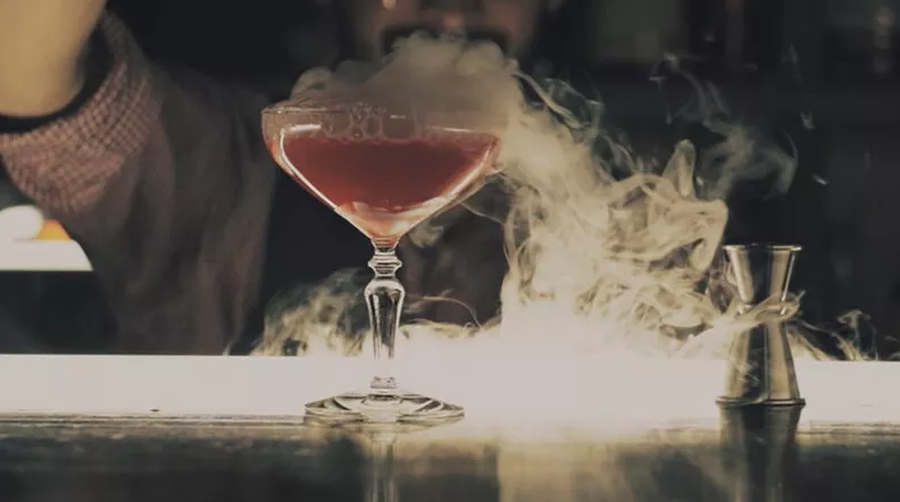
Formally, the ban remains in force, but after the opening of the first alcohol store in the capital in 2024, two more will open in Jeddah as well as in a Saudi Aramco complex in early 2026. The aim to become a center of international tourism may soon require further relaxations from the strict dictates of Islamic law.
In 1951, the British vice-consul in Jeddah, Cyril Osman, was assassinated by Mishari Bin Abdulaziz Al Saud, the son of the Saudi king. The prince was his guest and asked for an alcoholic drink, but was already visibly upset, so Osman refused to give him another. The prince left the party in a rage, then returned with a pistol and shot him dead. The following year, 1952, King Abdulaziz bin Abdul Rahman Al Saud decided to legally ban alcohol in Saudi Arabia.
Seventy-three years later, the ban officially remains in place, although more and more things are changing. The Kingdom of the House of Saud seems to have realized that it must break free from this taboo if it truly wants to open up to the world and focus heavily on tourism.
In January 2024, the first liquor store opened in Riyadh's As Safarat neighborhood, home to embassies and consulates. Initially reserved for non-Muslim diplomats, the PAK was later extended to all foreigners with a premium residence permit (provided they were non-Muslims), the Saudi green card designed for entrepreneurs and investors.
There are still restrictions at these establishments: registration and government authorization are required to purchase alcohol; only those at least 21 years old are admitted; third parties cannot be sent to purchase for you; appropriate attire must be worn; and drinking alcohol is only allowed in designated areas.
The restrictions also include the amount of alcohol that can be purchased: you cannot exceed 240 points per month, while 1 liter of alcoholic beverage is worth 6 points, 1 liter of wine 3 points, and a liter of beer 1 point.
Two new liquor stores are set to open in 2026, one in Jeddah, designed specifically for diplomats visiting the port city. The other is in the eastern province of Dhahran, inside the Saudi Aramco complex, for staff at the national oil giant.
But discussions have already begun regarding future facilities, one of which is reportedly in the planning stages and is expected to be entirely dedicated to alcoholic beverages. All this without repealing or changing any laws.
Flogging, imprisonment, fines and deportation from the country remain the consequences for those who violate rules on the consumption and sale of alcohol. Saudi authorities claim this is a way to combat the illegal trade.
Diplomats arriving in Saudi Arabia hide bottles of alcohol inside their checked bags, which are not subject to regular checks. But Saudis themselves drink secretly, too.
They are few, very few in fact: 97 percent of the population claims not to drink alcohol (however, official data is lacking), even though some studies find significant amounts of alcohol in the blood of drivers who die in road accidents.
There are also those who are determined to try it. For example, it is unclear what prompted some of them to drink aftershave as if it were a drink. The fact is that between 2002 and 2006, at least 35 people in the Kingdom died from methanol poisoning.
These cases were not isolated, but rather sparked a debate to understand the reasons why so many people seek refuge in alcohol, as well as to try to educate the younger generation. The answers varied - from lack of discipline to the desire to have fun - all of which can be summed up as a betrayal of Islam.
However, Saudi Arabia's goals require turning a blind eye to the rigid dictates of religion. Crown Prince and Prime Minister Mohammed bin Salman wants to transform Saudi Arabia, diversifying its hydrocarbon-based economy and promoting reforms.
The goal is to make the Kingdom an international epicenter. The Vision 2030 project is both a manifesto and a strategic program that MbS aims to achieve to attract as many people from abroad as possible.
The goal is to attract 100 million tourists each year by the end of the decade, but since similar figures have been recorded for two years, the ambition has been increased to 150 million visitors per year.
Major events will be held in this part of the Persian Gulf, starting with Expo 2030 and the 2034 FIFA World Cup. The question being asked in Riyadh today is whether it still makes sense to impose Islamic principles on foreigners.
And the answer they seem to be giving is “No.” There is no real reason why they shouldn’t tap into a market that could potentially generate $2.5 billion in revenue per year.
For a power as big as Saudi Arabia, it's a small change, but it would provide a significant boost to the hospitality and tourism sector. Look at what's happening across the border.
In the United Arab Emirates, non-Muslims are allowed to drink alcohol in specially designated areas, but doing so in public is still prohibited and severely punished. The same rules apply in Oman.
Saudi Arabia may not want to copy a new Dubai on its territory. Certainly at first glance, the Saudi approach echoes that of other countries, but Riyadh seems determined to limit alcohol sales only to tourist areas, namely the resorts that will be built along the Red Sea coast as part of Vision 2030.
These are “oases” where foreigners can feel at home. Perhaps this is a prelude to what Saudi Arabia could one day become, a place where drinking alcohol will be allowed everywhere and for everyone.
Until then, what Lawrence Osborn writes in his book, Saints and Drunkards, remains true: "A Muslim alcoholic gives me hope that the human race can save itself." / Prepared by Pamphlet


Lini një Përgjigje