


 Shkruar nga Pamfleti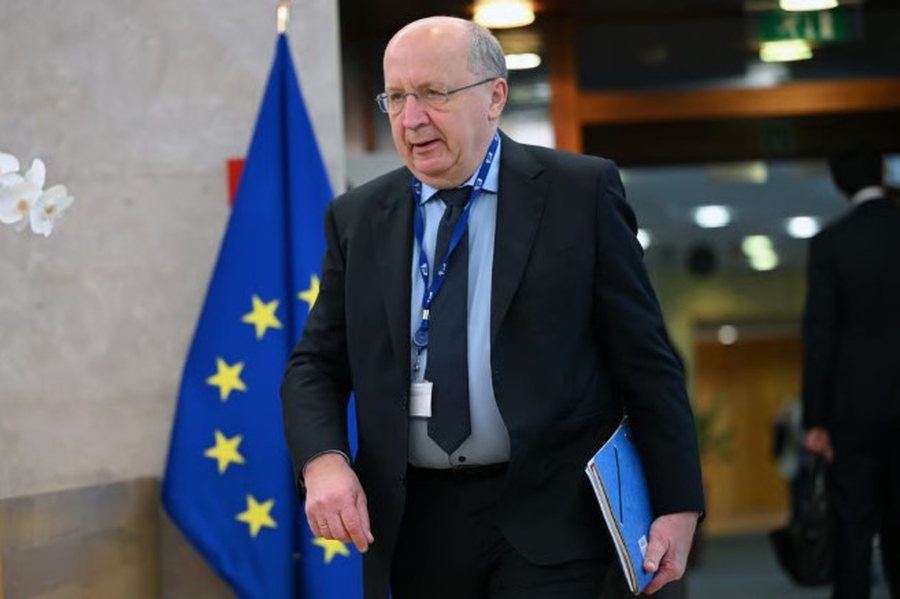
European Defense Commissioner Andrius Kubilius is proposing the joint financing of strategic capabilities currently provided mainly by the United States, amid concerns about Washington's commitment to NATO...
The European Union is considering a new initiative to develop joint military capabilities with the aim of reducing dependence on the United States in the field of defense, Politico reported.
According to three European Parliament officials, the European Commissioner for Defense, Andrius Kubilius, is analyzing a scheme that would allow participating countries to jointly finance strategic capabilities such as aerial refueling, a service currently provided mainly by the US.
The initiative envisages governments voluntarily dedicating a portion of their increased defence budgets, approved last year by NATO member states, to the development of equipment and systems that support military operations. The EU could then assist in the procurement process for interested countries.
Currently, the US provides the bulk of NATO's so-called "strategic enablers." These include military command and control systems, space intelligence, satellite reconnaissance, and logistical platforms for field operations.
In a statement on Tuesday, Kubilius suggested that member states agree to use a portion of their national defense funds to replace these American capabilities. He estimated that the total cost of this process could reach around 500 billion euros.
"It is absolutely clear that we will not be able to finance this from the next long-term EU budget," Kubilius said.
Concerns about European dependence on the US have increased after reports that Washington has presented NATO allies with a list of military assets it no longer wants to make available to the alliance. The list includes long-range surveillance drones and KC-135 aerial refueling tankers.
According to Kubilius, Europe must find ways to develop joint projects in the field of conventional defense, especially in sectors where reliance on American capabilities remains high.
The idea was discussed last week in a private meeting in Brussels with 16 MEPs from the European Defence Union Group, which promotes closer integration of defence policies in the EU. According to sources, the project is still in its early stages and it remains unclear whether it will take the form of a legal proposal or a more informal initiative.
However, the initiative is expected to face several challenges. Some European capitals remain wary of a greater role for Brussels in military procurement, while the US may object to losing a share of the European arms market. Another challenge is the rapid development of these capabilities in the face of security threats, especially from Russia.
The European Council on Foreign Relations (ECFR) argued in a report published last week that the European Commission should immediately start purchasing priority capacities and in parallel develop a medium-term industrial strategy for the most complex technologies.
"If development does not start now, Europe will continue to depend on American systems even in the mid-2030s," the report says.
The cost of replacing American capabilities remains a major obstacle. The Kiel Institute estimated last month that replacing American systems for command and control, satellite reconnaissance, communications, navigation, artificial intelligence, electronic warfare and strategic airlift would cost Europe at least 200 billion euros and take more than a decade.
Other experts estimate that fully replacing non-nuclear US military capabilities on the continent could cost up to $1 trillion.
Dutch MEP Reinier van Lanschot, from the Green group and one of the supporters of the European Defense Union, stated that joint strategic capabilities are essential for building a more independent European defense.
The European Commission did not immediately respond to Politico's request for comment.




Lini një Përgjigje