


 Shkruar nga Pamfleti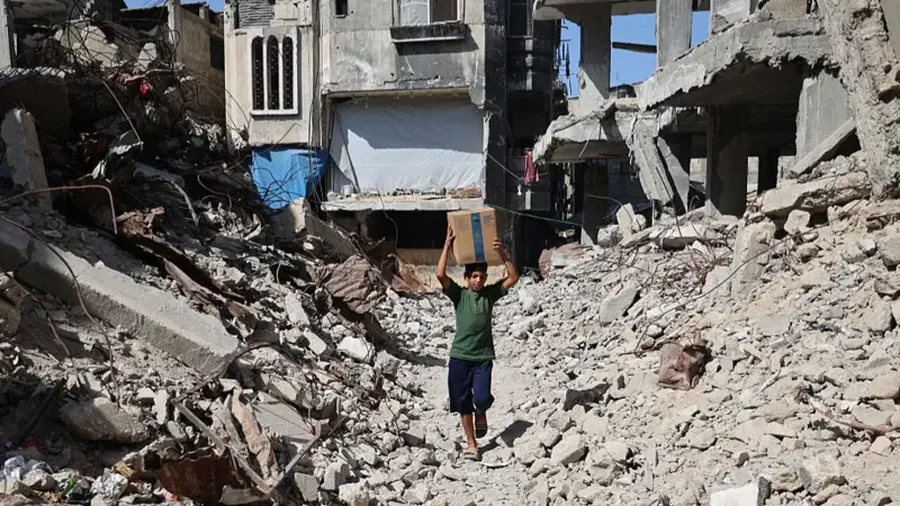
In the Gaza Strip today, a US-brokered ceasefire collapsed in practice, amid renewed bombings, airstrikes and escalating rhetoric from both sides. Israel carried out heavy attacks on the towns of Rafah and Beit Lahia, killing and wounding Palestinian civilians, while claiming that the action was in response to Hamas gunfire and anti-tank grenades fired at Israeli troops in the Rafah area. Hamas, for its part, denied any such incident and accused Israel of a deliberate escalation to undermine the ceasefire agreement.
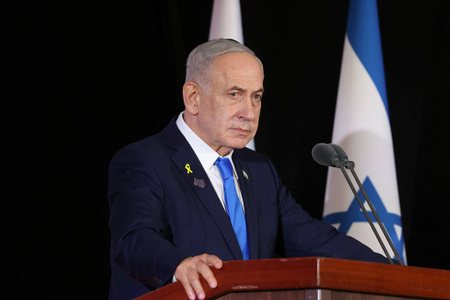
Prime Minister Benjamin Netanyahu ordered "strong action" across Gaza and convened a meeting of the defense minister and intelligence chiefs to plan strikes on what he called "terrorist" targets. The Israel Defense Forces (IDF) said it was destroying tunnels and eliminating threats in Rafah, describing today's violence as a clear violation of the agreement. Israeli defense officials warned that if Hamas continued its attacks, the response would be increasingly harsh, while political signals from the government showed a loss of patience with the peace deal.
The Civil Defense Agency in Gaza reported that at least 11 people were killed in airstrikes, including six in the northern part of the territory. The situation on the ground is increasingly dire, while the Rafah crossing, the only point connecting Gaza to the world via Egypt, remains closed with no set reopening date. The Israeli decision came after an announcement by the Palestinian embassy in Cairo that Rafah would open on Monday – a hope that has now been dashed.
On the other hand, Hamas stated that it had located the body of an Israeli hostage and was ready to hand him over if conditions on the ground allowed. But it warned that the ongoing bombing made any such transfer increasingly impossible. The IDF interpreted this as a violation of the agreement, accusing Hamas of holding the hostages' bodies as a bargaining chip.
In Israeli politics, voices against the ceasefire have increased. Hard-line ministers such as Amichai Chikli and Avi Dichter say coexistence with Hamas is impossible, while the opposition led by Yair Golan has accused the Netanyahu government of failing to establish "new rules of the game."
Tensions escalated further after the US State Department statement accused Hamas of planning an imminent attack on Palestinian civilians in Gaza. Hamas described the claim as false and in line with Israeli propaganda.
In this context, the ceasefire – presented as a step towards peace – is showing itself to be in agony. From clashes on the ground, from political interventions, to diplomatic gamesmanship between powerful allies and regional actors, the situation in Gaza is turning into a crisis that is consuming itself. Civilians remain the silent voice of this tragedy: the victims of a peace declared but never respected.






Lini një Përgjigje