


 Shkruar nga Jordyn Dahl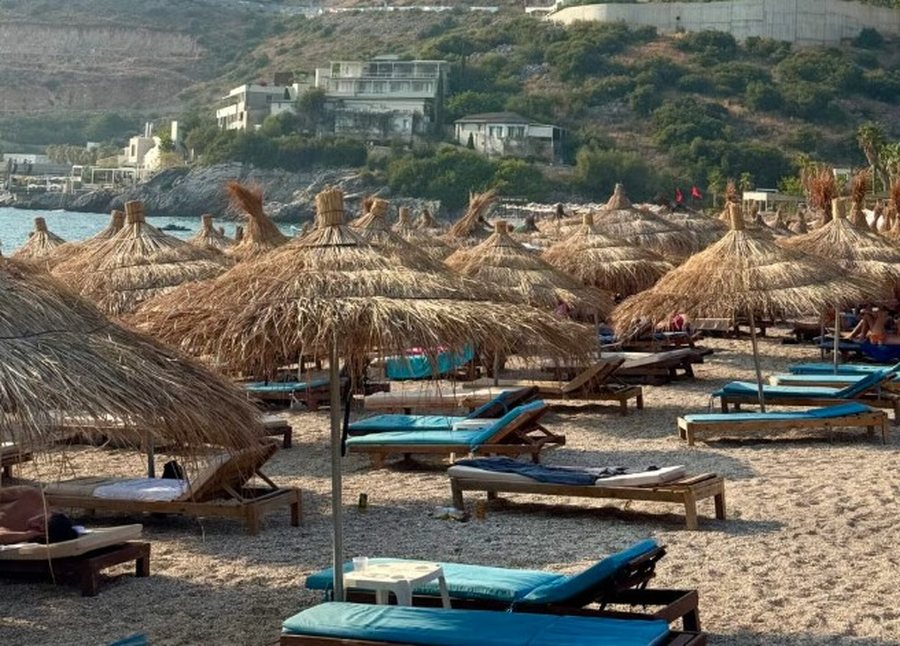
Average spending per visitor increased by 20 percent in 2024...
Three and a half hours south of the capital Tirana, a winding road leads down to a 300-meter beach with crystal blue waters and pebbly sand.
Here, on the edge of the Ionian Sea, visitors can rent a sunbed for 10 euros, assuming they find parking along the unpaved road and don't mind being a short distance from their neighbor.
Ten years ago, the place was a hidden gem for locals who set up camp on the beach for free. Now, both sides of the road are lined with construction sites, and a major developer promises to turn the once-quiet village into a luxurious hideaway for the world's elite.
Jala's sharp transition from a natural and somewhat undiscovered paradise to a hot tourist destination is a microcosm of Albania's growing popularity and the accompanying social and environmental problems the country is facing.
While most of the world was still in lockdown due to the Covid pandemic, Albania opened its doors to visitors in July 2020. Tourists, eager to see something other than their home, quickly answered the call, with over 5.6 million traveling to Albania in 2021, a 114 percent increase compared to 2020.
But it wasn’t just the open borders that attracted people. Other European tourist destinations, such as Italy, Spain and Portugal, were becoming increasingly expensive; Albania offered world-class nature and beaches at a much lower cost. In 2020, a night in a seaside hotel with breakfast in August could cost just 30 euros, and sun loungers started at 3 euros.
While some travelers found their way to Tirana and its beaches through word of mouth, social media brought the idea of a vacation to Albania to life. In 2024, Albania had more than 3.8 million Instagram posts with over 106 billion views, overtaking neighboring and long-established destinations like Italy and Greece.
What had been a steady stream of visitors has turned into a flood. In 2023, a record 10 million tourists arrived, a 35 percent increase year-on-year, according to data from the National Institute of Statistics. In 2024, 11.7 million tourists visited the country, another record representing a 15 percent increase, according to Tourism Minister Mirela Kumbaro. This year, the government is hoping for more than 15 million, all in a country with a population of just 2.7 million.
With visitors now generating around 8 percent of the country's gross domestic product and creating tens of thousands of jobs, one of the poorest countries in Europe cannot easily kick the tourism habit.
Europeans make up the majority of visitors, with Germans, Italians, Poles and French topping the list. Unlike other European destinations such as Italy or France, Albania is a smaller country where visitors can explore the mountains and beaches in a single day.
It also lives in people's minds as "wild and free and something you don't have in Europe," said Denada Jushi, an Albanian journalist who has covered the country's rise as a tourist destination.
Government officials seeking to turn Albania into a major tourist destination have exempted international hoteliers from corporate income tax for 10 years if they build four- or five-star hotels. The tax initiative was introduced in 2019 but was extended earlier this year until 2027.
However, critics warn that the beaches lack sufficient space to accommodate the visitors that such resorts would bring to the area and that nature is being destroyed in the name of tourism.
Already, the soon-to-open Vlora Airport in the south of the country has sparked controversy over its proximity to a protected area. At the same time, the channeling of water from the interior of the country to coastal resorts to meet demand has angered activists and locals, sparking protests.
Thrill seekers can still find less developed parts of Albania to explore, but the days of ultra-cheap travel to the country are largely over.
Average spending per visitor rose 20 percent year-on-year in 2024, with tourists spending 5 billion euros that year. Experts and businesses argue that more demand means more pressure on supply chains and rising costs from importing goods.
And as costs rise, locals who once frequented the beaches and nature are being driven out. But it's not just higher prices that are making people worried.
"Waste is becoming a big, very big problem everywhere. None of the municipalities are able to keep up or do recycling," said Arben Kola, a tourist guide and environmentalist.
Several Facebook groups dedicated to tourism in Albania feature posts from visitors complaining about litter along the roads or on the coast, along with complaints about construction and high prices.
Albania used to be “something wild, just camping, youth, fun and nature,” said Jushi, the journalist. “Now it’s like Monaco. There’s no place for locals.”/ Adapted from “Pamphlet” by “Politico”




Lini një Përgjigje