


 Shkruar nga Pamfleti
In this communication, the interested party asks about the availability of the data and its price. The response explains that a complete database of “e-Albania” could be purchased for 0.05 Bitcoin, while Albanian identity card data for 0.01 Bitcoin...
A few days ago, the United States Department of Justice announced the seizure, with court authorization, of four domains as part of efforts to disrupt cyber activities and international suppression operations carried out by Iran's Ministry of Intelligence and Security (MOIS).
The seized domains – Justicehomeland[.]org, Handala-Hack[.]to, Karmabelow80[.]org and Handala-Redwanted[.]to – were used by MOIS to conduct psychological operations against regime opponents. These included claiming responsibility for cyberattacks, publishing stolen sensitive data and calling for the assassination of journalists, dissidents and Israelis.
As an example, US authorities state that the domain Handala-hack[.]to was used to claim responsibility for a devastating malware attack in March 2026 against a US-based multinational medical technology company.
Assistant Attorney General for National Security, John A. Eisenberg, stated that Iran has used these domains to publish personal data of dissidents and journalists, to incite violence against Jewish communities, and to spread propaganda against the United States.
According to the FBI, the investigation showed that the four domains were linked through data publishing sites, the use of Iranian IP addresses, and a common operating model. This model included destructive cyberattacks and so-called “faketivist” operations, which use stolen data for psychological influence.
According to court documents, after the start of the US-Iran conflict on February 28, 2026, the domains handala-hack[.]to and handala-redwanted[.]to published personally identifiable information of targeted individuals.
On March 11, 2026, the “Handala Hack” group claimed through the domain handala-hack[.]to that it had carried out a devastating attack on an American medical technology company, describing it as retaliation for ongoing attacks on the “Axis of Resistance” infrastructure.
On March 9, 2026, through the domain handala-redwanted[.]to, the names and personal data of approximately 190 individuals affiliated with the Israel Defense Forces (IDF) or the Israeli government were published, accompanied by threats that they were being monitored and that consequences would soon follow.
Më 6 mars 2026, përmes domain-it handala-hack[.]to, u publikuan emra dhe të dhëna konfidenciale të personave që pretendohej se punonin për IDF, duke pretenduar se edhe pajisjet personale të tyre ishin komprometuar dhe duke bërë thirrje për reagim nga mbështetësit e “Boshtit të Rezistencës”.
Po atë ditë, grupi pretendoi se kishte vjedhur 851 gigabajt të dhëna konfidenciale nga anëtarë të komunitetit hebre hasidik Sanzer, përfshirë dokumente financiare dhe korrespondencë të brendshme, duke paralajmëruar publikime të tjera.
Hetimi i FBI-së zbuloi gjithashtu se një adresë emaili e lidhur me këtë grup është përdorur për të dërguar kërcënime me vdekje ndaj disidentëve iranianë dhe gazetarëve në SHBA dhe jashtë saj, përfshirë oferta shpërblimi për kryerjen e akteve të dhunshme.
Ndërkohë, domain-et Justicehomeland[.]org dhe Karmabelow80[.]org identifikohen si faqe zyrtare të një entiteti të rremë “hacktivist” të përdorur nga MOIS. Sipas dokumenteve, më 15 korrik dhe 9 shtator 2022, këto faqe morën përgjegjësinë për publikimin e dokumenteve të vjedhura nga institucionet qeveritare shqiptare.
Motivi i këtyre publikimeve lidhet me vendimin e qeverisë shqiptare për të mbështetur organizatën opozitare iraniane “Muxhahedinët e Popullit” (MEK), e cila ka mbështetur në të kaluarën rrëzimin e qeverisë iraniane.
Analiza e sulmit kibernetik ndaj Shqipërisë
Dokumentet e FBI paraqesin një analizë të detajuar të sulmit kibernetik ndaj sistemeve qeveritare shqiptare, duke përfshirë përkufizime teknike, rrjedhën e sulmit dhe vlerësimin e shkaqeve të mundshme.
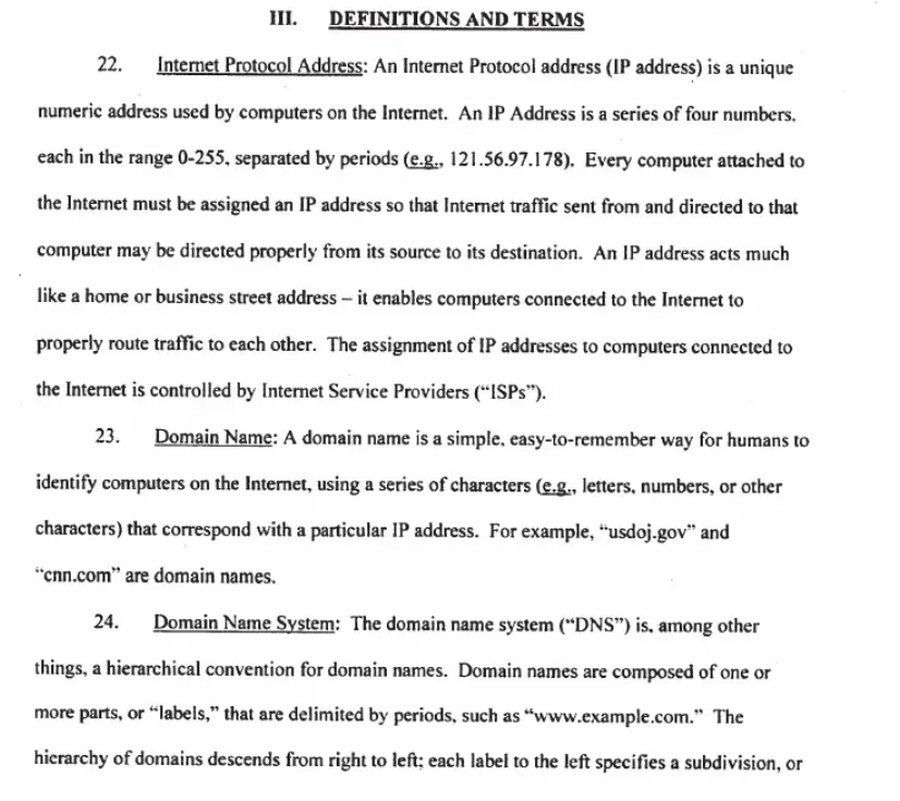
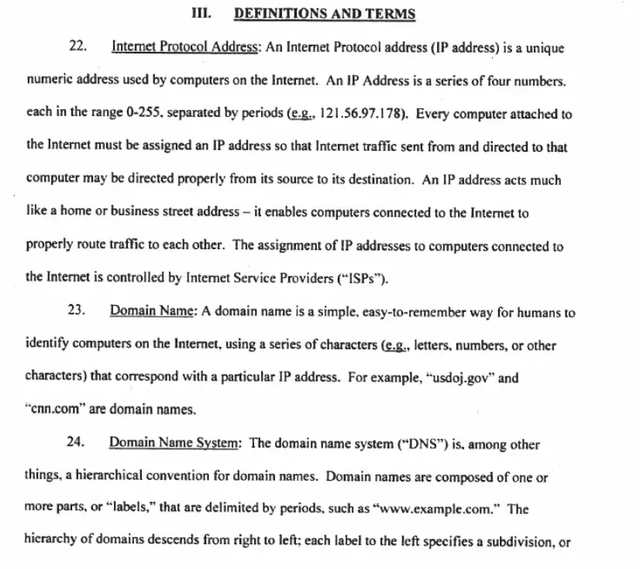
Në pjesën e përkufizimeve, dokumenti shpjegon se adresa IP është një identifikues numerik unik për çdo pajisje të lidhur në internet, ndërsa emrat e domain-it (si “example.com”) shërbejnë si forma më të thjeshta për përdoruesit për të identifikuar këto adresa. Sistemi i emrave të domain-it (DNS) organizon këto emra në mënyrë hierarkike.
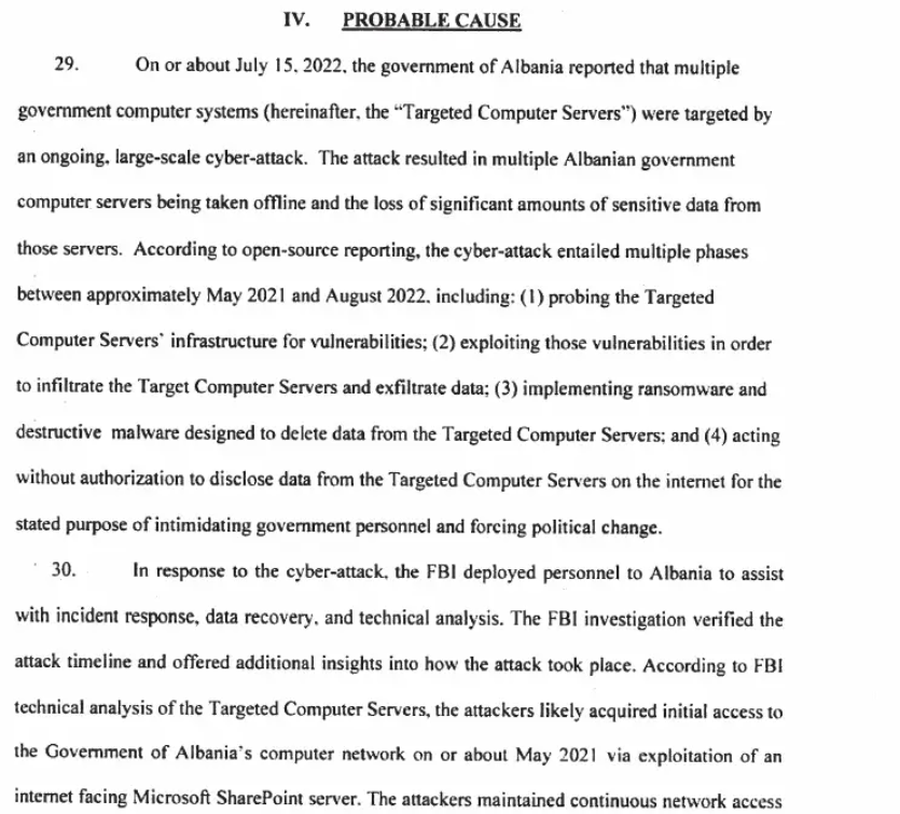
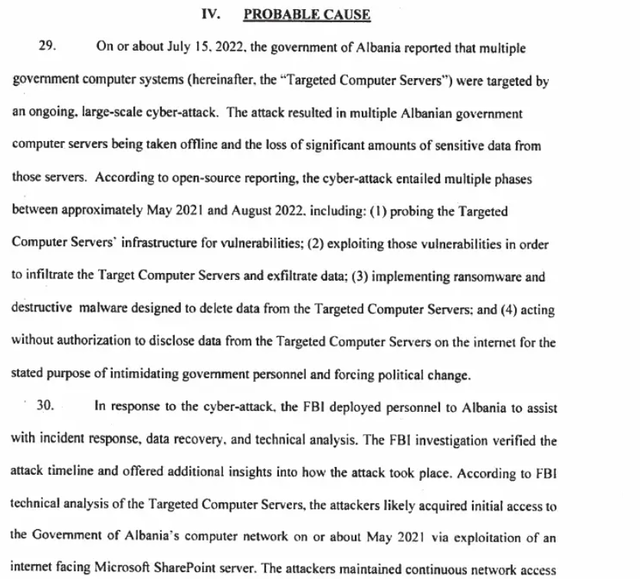
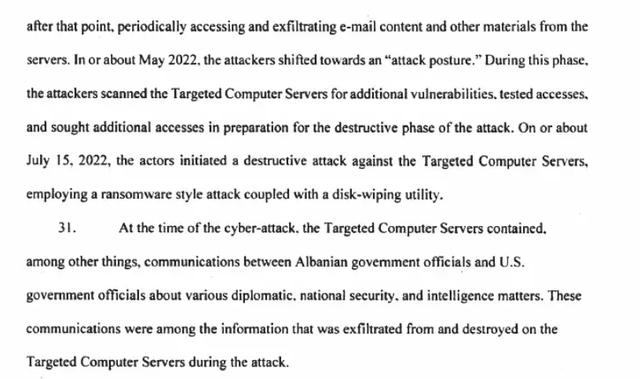
Sa i përket sulmit, raporti thekson se ai ka qenë i organizuar në disa faza. Fillimisht, sulmuesit kanë kërkuar dobësi në serverët e synuar, më pas kanë depërtuar në sistem dhe kanë nxjerrë të dhëna. Në vijim, ata kanë përdorur programe të tipit ransomware dhe mjete për fshirjen e të dhënave, duke shkaktuar dëme të konsiderueshme.
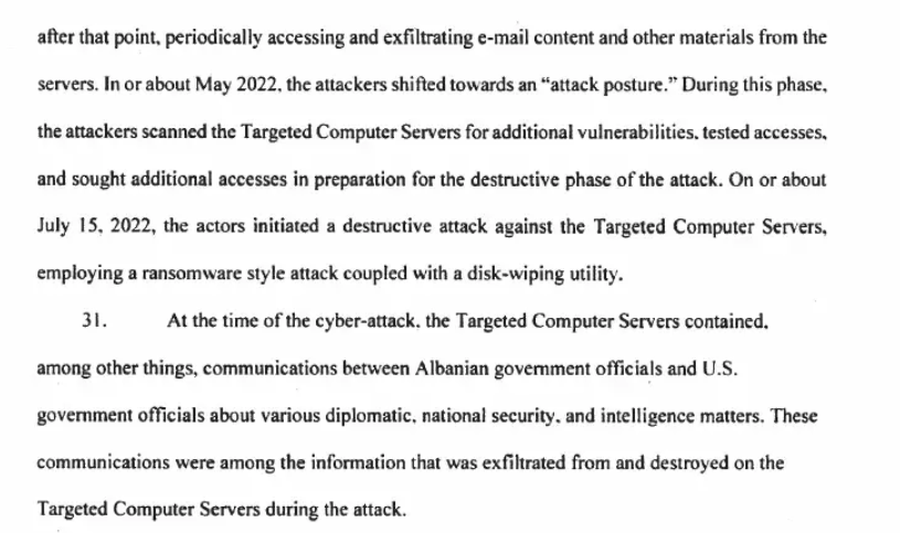
Sulmi kulmoi rreth datës 15 korrik 2022, kur u ndërmor faza shkatërruese ndaj serverëve qeveritarë. Gjatë kësaj periudhe, u komprometuan komunikime të rëndësishme, përfshirë shkëmbime mes zyrtarëve shqiptarë dhe atyre të Shteteve të Bashkuara mbi çështje diplomatike dhe të sigurisë.
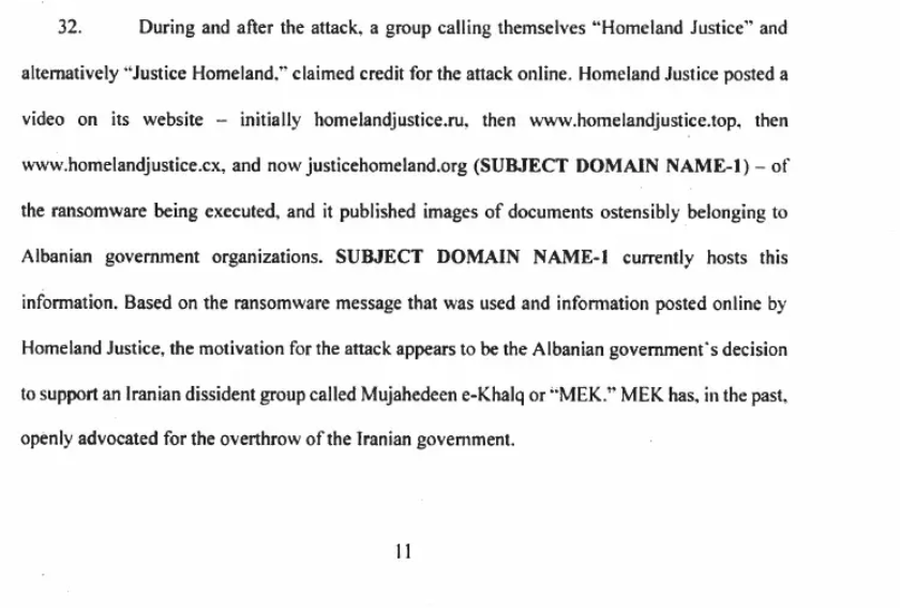
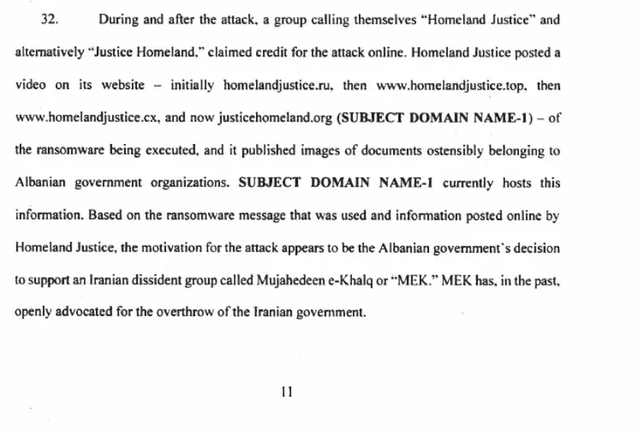
Dokumenti thekson se grupi “Homeland Justice” mori përgjegjësinë për sulmin, duke publikuar materiale në internet përmes disa faqeve të ndryshme. Këto publikime përfshinin edhe dokumente që pretendohej se i përkisnin institucioneve shqiptare.
Sipas analizës së përmbajtjes së publikuar dhe mesazheve të ransomware-it, motivi i sulmit lidhet me mbështetjen e Shqipërisë për organizatën iraniane “Muxhahedinët e Popullit” (MEK), e njohur për qëndrimet e saj kundër qeverisë iraniane.
The report relies on open-source data and FBI technical analysis, providing a factual overview of the attack without making political interpretations beyond the documented findings.
Attempt to sell Albanian data
According to the document, a person associated with the identity "Homeland Justice" has declared that he possesses databases that include Albanian data, including identity cards and other sensitive information, offering this data for sale.
In communications dated around late February and early March 2025, this person claims to have “e-albania and other databases covering Albanian identity cards and other sensitive information.” He has proposed to the potential buyer the purchase of this data.
On March 1, 2025, according to the document, the same person stated that the data offered for sale contained more sensitive information than the materials that were published for free on the internet.
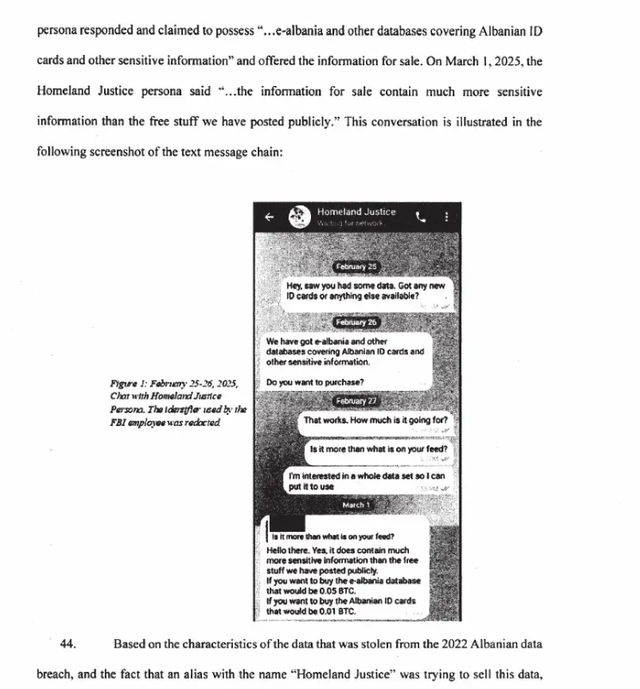
A screenshot included in the document shows a conversation between an individual and the "Homeland Justice" profile.
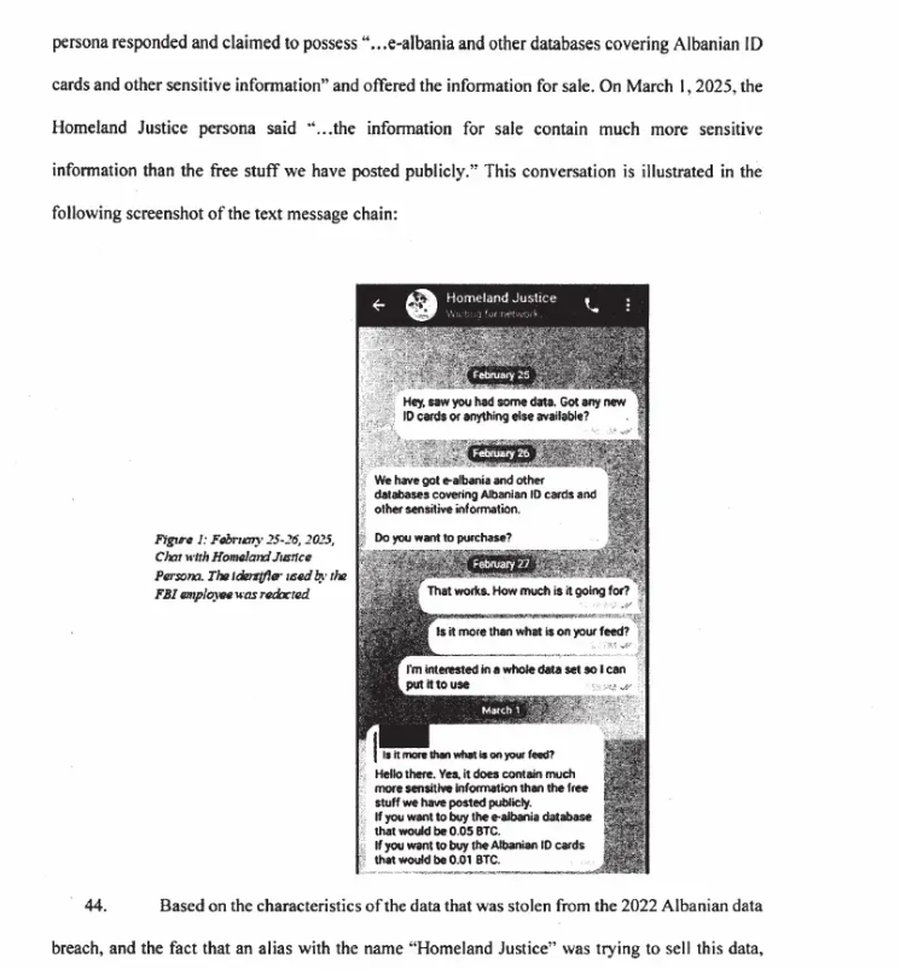
In this communication, the interested party asks about the availability of the data and its price. The response explains that a complete database of “e-Albania” could be purchased for 0.05 Bitcoin, while Albanian identity card data for 0.01 Bitcoin.
The document states that, based on the characteristics of the data stolen during the 2022 attack and the fact that a person named "Homeland Justice" was trying to sell it, there are indications of a connection between the hacking activity and attempts at financial gain. / Pamphlet /





FBI nuk i besojnë as amerikanët.FBI gënjeu Kongresin amerikan për armët kimike në Irak.. Gënjeu Kongresin për Libinë,Sirinë, Afganistanin,Vietnamin...etj...S'kam si t'i besoj një organizatë vrasëse...pa argumente dhe fakte bindëse...
Kur duan vrasin edhe presindentin e vet e kur nuk duan e "gervishin" te veshi.