


 Shkruar nga Pamfleti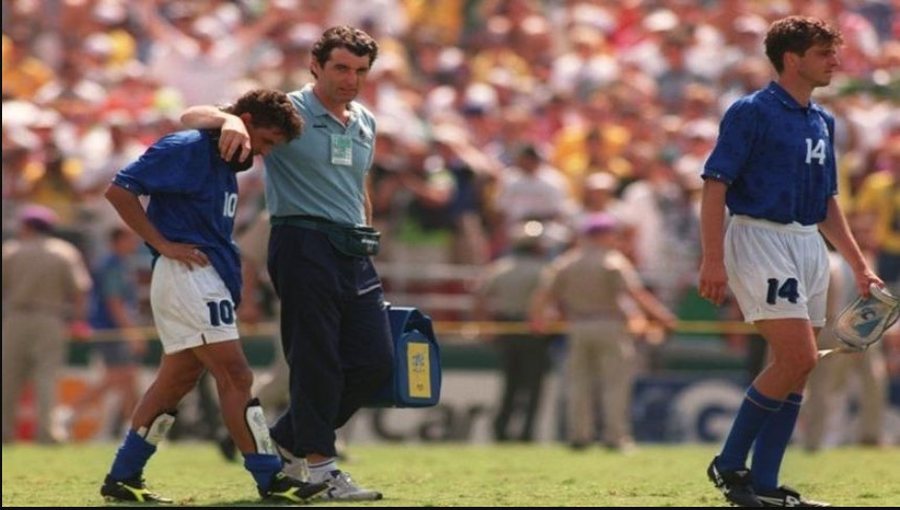
Even the world's most successful athletes are not immune to mistakes at crucial moments. The history of sports knows such cases, such as Roberto Baggio's missed penalty in the 1994 World Cup final or Nick Anderson's four missed free throws in the 1995 NBA finals.
These are actions that are repeated thousands of times during training and are usually performed successfully. However, in situations of extreme pressure, performance can change significantly. A study conducted by a research team at Mississippi State University suggests that the main reason is related to the way the brain and body respond under pressure.
The study and key findings
Researchers analyzed a group of beginner and intermediate basketball players, simultaneously monitoring body movements and brain activity while each participant made 50 shots.
The results showed that in successful cases:
movements were more stable and coordinated;
the feet remained firmly planted on the ground;
the nodes operated in synchrony;
there was less variation in wrist and elbow movements;
brain activity was stable and focused on the task.
Conversely, during inaccurate shots:
the body tried to correct the movement during execution;
the brain was engaged in constant analysis and regulation in real time.
The role of "autopilot" and the effect of pressure
According to researchers, elite athletes typically don't analyze every move during performance. They rely on the automation built through thousands of repetitions, operating on a kind of "autopilot."
This mechanism reduces variability and increases brain efficiency. But under high pressure – such as in crucial competitions – this automaticity can break down. Athletes begin to think more about every detail of the movement, regaining a conscious control that usually belongs to the beginner stage.
This process:
increases uncertainty in movement;
disrupts coordination;
reduces the quality of performance.
How can performance be improved?
One of the study's authors, David Van den Heever, emphasizes that understanding the brain and body's reactions under pressure is essential for improving performance.
According to him, athletes must be trained not only to master the correct technique, but also to understand the moment when they should stop conscious control over movements.
The study suggests that in sports, success at crucial moments depends not only on physical ability or technique, but also on the management of mental processes. Maintaining the automatism of movements remains a key factor for sustained performance under pressure.








Lini një Përgjigje