


 Shkruar nga Pamfleti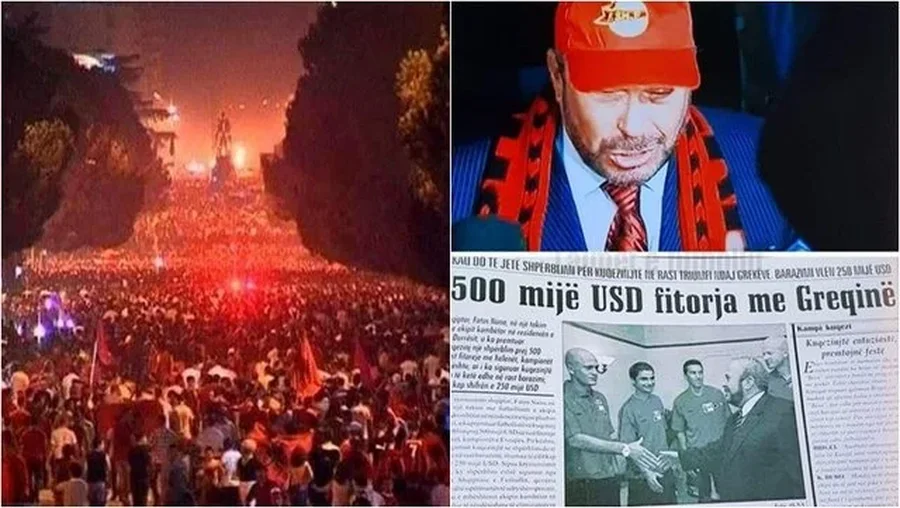
On September 4, 2004, the European champion team, Greece, would land in Tirana.
The "Hellenic" team, after a historic super success by winning the European Championship for the first time against Portugal, would play their first official match for the 2006 World Cup qualifiers at "Qemal Stafa", against the Rossoneri.
That year, the Prime Minister of Albania was Fatos Nano, who watched this match from the VIP stands of "Qemal Stafa" and after the match gave a large prize to the entire team.
A victory and an extraordinary emotion, which will never be forgotten, sealed by two fantastic goals by Edvin Murati and Adrian Aliaj.
A full 500 thousand dollars was the amount that former Prime Minister Nano awarded the national team as a reward for that victory.
The biggest bonus ever given in our country to national team players.
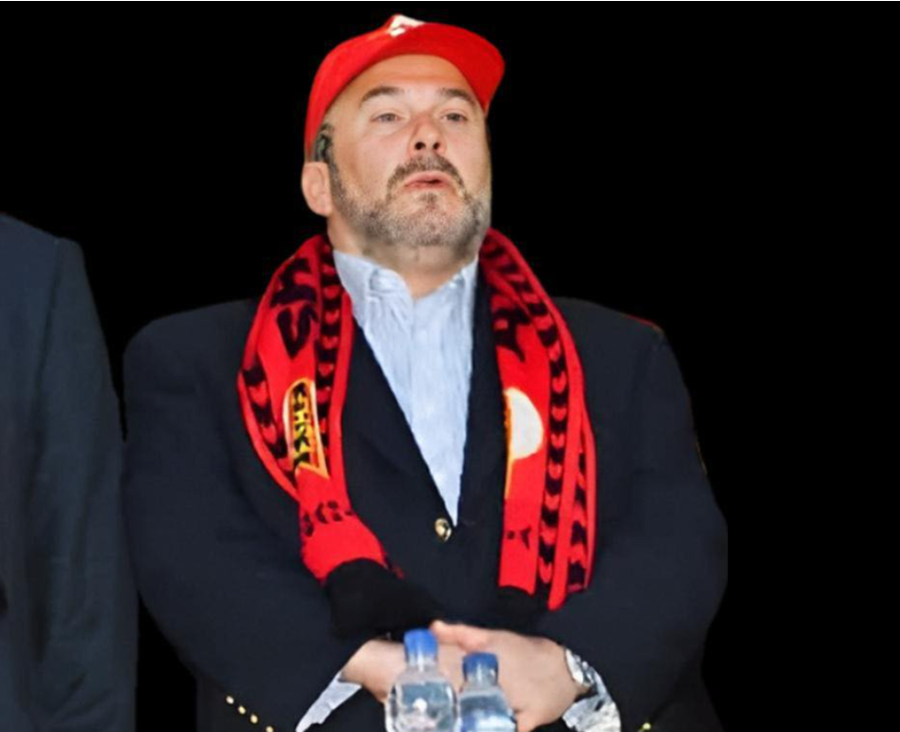
Today, Fatos Nano passed away at the age of 73, a political figure who also helped sports by keeping his word and promise.
Nano was suffering from a serious illness and had been hospitalized for several days to receive the necessary treatment.
Fatos Nano was the founder and first leader of the Socialist Party of Albania.
He was the man who made possible the transformation of the former Labor Party, which came from a communist legacy, into a force that resisted political pluralism, as a significant actor on the Albanian scene.
Nano was the leader of the Socialist Party from June 12, 1991 until 2005, when he retired from politics. His subsequent bid for the post of head of state was not supported by the Socialist Party, which was led by Edi Rama. During his years of engagement in politics, since 1991, he served as the country's prime minister four times.
In December 1990, he was appointed Secretary General of the Council of Ministers, and a month later, Deputy Prime Minister in the government of Adil Çarçani. At the end of February 1991, Ramiz Alia entrusted Nano with the post of Prime Minister, with a defined mandate: preparing the country's transition towards liberal democracy and a market economy.
After the elections of March 31, 1991, Nano was appointed prime minister, a position he held for several weeks, when he resigned due to strikes that had begun across the country.
Nano's undisputed merit in that period was the transformation of the Socialist Party from a party inherited from the communist regime into a social-democratic party with a Western orientation.
The coming to power of the Democrats in 1992 brought a difficult period for Fatos Nano.
On July 30, 1993, Nano was arrested at the Prosecutor's Office and charged with "abuse of office and falsification of official documents related to Italian aid" and 9 months later was sentenced to 12 years in prison.
However, the 1997 riots brought his release from prison and his return to where all socialists wanted him, at the head of the Socialist Party. Three months after his release from prison, he led the socialists to a return to power, which the socialists held for 8 years, but Fatos Nano again had his political ups and downs.
Nano's merit, accepted even by critics, was the restoration of normality to the country economically devastated as a result of pyramid schemes.
Yet he held the post of prime minister for one year, when he decided to resign on September 28, 1998, a little more than two weeks after the assassination of Azem Hajdari.
He left the Government, but continued to maintain control of the party, despite the waves that accompanied the Socialists in 8 years.
He returned as prime minister once again on July 31, 2002, until losing the elections in June 2005, when he was forced to cede power to his imprisoned opponent, Sali Berisha.
From that year on, he lived his days between Vienna, where he stayed with his family, and Tirana, where he came whenever there was discussion about who would be the country's new President.
His desire to become head of state was not fulfilled either in 2007 when Bamir Topi took his place, or in 2012 when Berisha, although he brought him closer, ultimately chose the late Bujar Nishani.



Lini një Përgjigje