


 Shkruar nga Pamfleti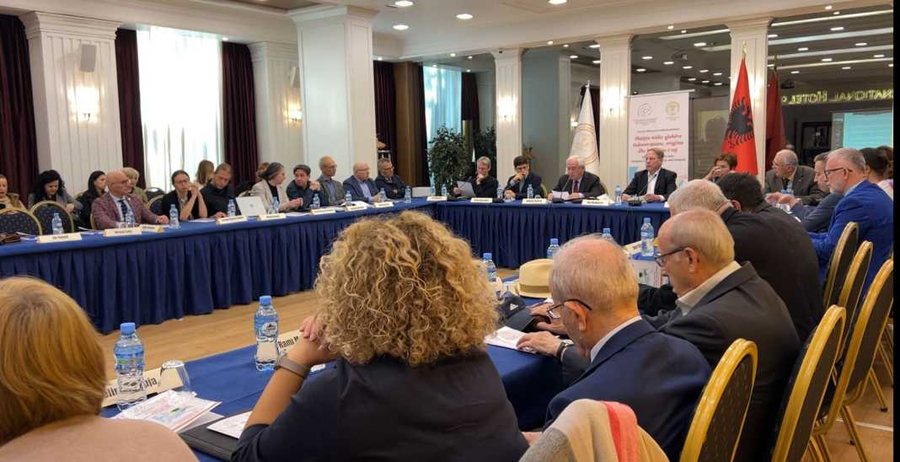
The Albanian language does not yet have a confirmed date of birth, but an article published a year ago in the journal Science defined Albanian as a 6000-year-old language.
It was this discussion and many other scientific findings that brought together researchers from the country and the world at the international conference "Albanian among Indo-European languages, origin and antiquity".
According to the study conducted by Professor Paul Heggarty and 33 other co-authors, Indo-European dates back to about 8100 years ago. He explains that, fundamentally, this family is divided about 7000 years ago from today into several branches, among which is the branch that is the ancestor of modern Albanian.
" Obviously, languages are stages in continuous succession in time, they do not have a date of birth, and therefore there is no 'oldest language'. However, what emerges from our data and results is how much Albanian has moved away from other surviving branches of Indo-European - so the focus here is on what that means and what it doesn't mean ," he said. Paul Heggarty, researcher.
Prof. was part of the discussions. Olav Hackstein, director of the Institute of Comparative Linguistics and Albanology in Munich.
" Recent studies have identified successive layers of prehistoric contacts. The contribution aims to shed light on the earliest layers of areal contacts, when Proto-Indo-European dialects were in contact with each other. A number of important and widespread innovations that distinguish pre-Proto-Tocharian from pre-Paleo-Balkan Indo-European ", said Olav Hackstein, Director of Albanology in Munich.
While researcher Giulio Imberciadori claims that most researchers agree that among other Indo-European languages, Albanian shows a closer relationship with ancient Greek and Armenian (as well as Phrygian) and is therefore part of the so-called "Balkan Indo-European".
According to the president of the Academy of Sciences, Skënder Gjinushi, this table is a further progressive step in the wake of the achievements of the Second Assembly of Albanological Studies, which was organized in Tirana three years ago.
In two days, this scientific table is expected to present data not only about the language, but also archaeological discoveries that are closely related to genetics in Albania and Kosovo, which prove that the long process of ethnogenesis of the Illyrian populations in the Western Balkans began in the 3rd millennium BC. ./ EuronewsAlbania





Lini një Përgjigje