


 Shkruar nga Emin Azemi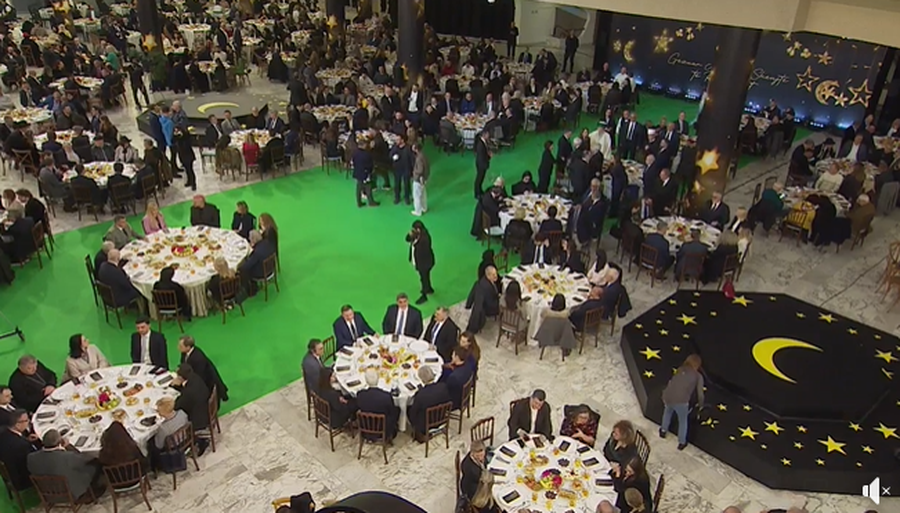
From an ethical perspective, the participation of politicians who do not fast in mass iftars reveals a form of instrumentalization of faith.
Fasting, at its core, is a highly spiritual, private act and an exercise in humility. When politicians, who often have no practical connection to fasting, turn iftars into events with spotlights, cameras and political speeches, they strip this rite of its sanctity. Iftar ceases to be a meal of gratitude and becomes a spectacle.
From an ethical perspective, the participation of non-fasting politicians in mass iftars reveals a form of instrumentalization of faith. They do not come to share the pain of hunger with believers, but to "harvest" emotional legitimacy. This creates a false sense of closeness: they want to appear "like the people" for a moment, while throughout the year they may be disconnected from the real problems of that same people.
Inviting politicians to iftar often serves as a means of showing power. When religious structures invite politicians to the iftar table, a dangerous symbiosis is created. Politicians receive a tacit "blessing," while religious communities receive support or favors. This undermines the critical role that religion should have in relation to power.
As a result, the main message conveyed is not one of peace or solidarity, but one of mass control. Politicians want to show that the "territory of faith" is under their influence. For the simple believer, this can create confusion: instead of focusing on spiritual reflection, he is forced to consume political messages between two bites of bread.
The ethics of fasting require sincerity (Ikhlas). When politics interferes with iftar, this sincerity is replaced by opportunism. This phenomenon is turning Ramadan into a "campaign season", where political partisanship is sought through the iftar plate, insulting the intelligence of the believer who practices fasting with true sacrifice.
These political iftar parades could end the moment religious institutions establish a code of ethics: iftars should remain for believers, orphans, and the poor, while politicians should be invited as ordinary citizens, without protocols, without microphones or cameras, and without the first place at the table.
When we see believers rushing to take pictures with a politician who has come only for protocol, we are willingly admitting that worldly power is more important than equality before God.
Politicians use this "admiration" to clean up their image. An iftar with 500 people serves them as a "moral amnesty." They think that by sitting down at the table, the people will forgive them for their failures, corruption, or negligence during the rest of the year.
When iftar turns into a competition to see who is sitting next to the minister or the MP, fasting loses its value of simplicity. This creates a social hierarchy within a ritual that was created precisely to eliminate these hierarchies. As a result, blind admiration makes people silent, while it is difficult to criticize a politician for broken roads or dilapidated hospitals, when you have just eaten bread with him at the same table. This is the "bite diplomacy" that drowns out the citizen voice. /ea


ju te pamfletit jani antshqiptar ne shrbim te sllavo komistave
Po sa i pelqeka Fetareve politika ????????????
Politicians hajdute Te peshtire dhe a morale , ulen ne iftare luksoze me menu qeveritate e Perdhosin fene .institutions feats dhe imomet e chamive , duhet ti bojkotojne keto iftare me jessamine e limit Te showerise
Po salihi kur do shtroje iftar?