


 Shkruar nga Anne Allmeling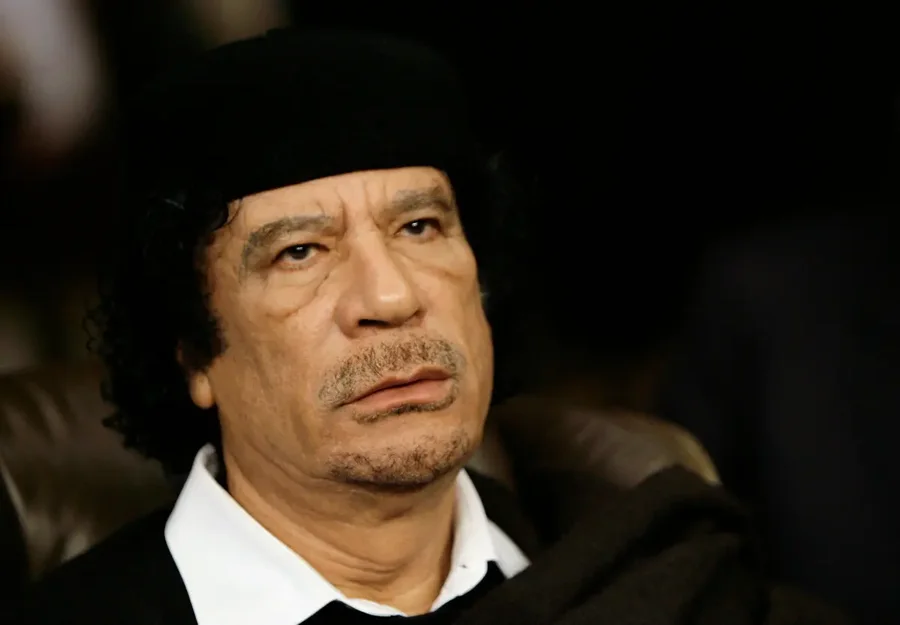
The overthrow of a dictator does not guarantee stability. The experience of Libya shows that external interventions can produce dangerous long-term consequences, an important lesson for Iran as well...
Fifteen years after the violent death of Muammar al-Gaddafi, his son, Saif al-Islam al-Gaddafi, has also been killed in Libya. In a fractured country where militias exercise real control, the incident underscores a harsh reality: the overthrow of a dictator does not necessarily bring a better future.
In theory, the overthrow of an authoritarian regime is seen as a positive step, because it creates the opportunity for a new beginning. In the ideal scenario, it is followed by a period of transition, elections and the building of democratic institutions. In practice, this scenario rarely comes true. According to the analysis, even in the case of Iran and Supreme Leader Ali Khamenei, such a development remains unlikely.
The Middle East has seen the fall of several dictators. One of them was Muammar al-Gaddafi, who ruled Libya for four decades. After mass protests and NATO intervention, he was overthrown and killed in September 2011. However, the end of his regime did not bring the expected stability.
According to the text, about 15 years later, the same fate befell Saif al-Islam al-Gaddafi, 53, who during the last years of the regime had presented himself as the most moderate face of power. His assassination marks not only a key moment for the Gadhafi family, but also the extinction of the hopes of many Libyans for a political “third way” as an alternative to the two rival centers of power.
For more than a decade, Libya has been divided between competing governments and dominated by armed militias. Some people had hoped that Saif al-Islam could play a unifying role. Some Libyans even express nostalgia for the Gaddafi era, not because of the prosperity, but because of the minimal predictability that existed then.
Today, Libya remains politically fragmented, insecure, and plagued by violence. It has also become a transit country for African refugees heading to Europe. Western politicians who authorized NATO's intervention in Benghazi in 2011 to protect civilians, the analysis argues, underestimated the long-term consequences of their decision. Warning examples existed, including in Iraq.
In this context, a Western attempt to oust Iran’s Supreme Leader Ali Khamenei carries similar risks. Khamenei, 86, holds the final say on key matters of the Iranian state. But what would follow his departure remains unclear. One possible scenario is a takeover by the Revolutionary Guards, leading to an even harsher regime.
The West, and especially the United States, must reckon that a military intervention aimed at regime change in Iran could have serious consequences for the population, even though some Iranians hope for such an intervention.
A less risky alternative would be to strike Iran's nuclear infrastructure, weakening the regime without imposing a change of power with unpredictable consequences. According to this assessment, lasting political change can only come from within the country itself. /Adapted from NZZ /





Lini një Përgjigje