


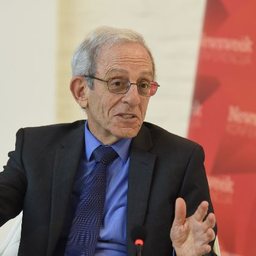
 Shkruar nga Daniel Serwer
Billions of euros spent on a shaky peace. Strategic mistakes in the management of Bosnia and Kosovo are proving that justice dictated from abroad is failing to meet the standards and needs of the peoples of the region.
The Western Balkans are going through a period of turmoil, where the architecture built over decades by the international community is showing serious signs of fatigue and failure. The two main pillars of this presence - the Office of the High Representative (OHR) in Bosnia and Herzegovina and the Kosovo Specialist Chambers (KSCC) in The Hague - are today at the center of harsh criticism.
Amid the announced departures and damaging legal reports, the question that arises is very simple: Are these institutions serving the future of the region, or have they become obstacles to stability and justice?
Christian Schmidt's paradox in Bosnia
The news that the High Representative in Bosnia, Christian Schmidt, is leaving office has been met with a sense of relief by many observers. However, his legacy remains a double-edged sword.
On the one hand, Schmidt should be commended for the courage he showed in 2023 when he promulgated the law that led to the prosecution of Milorad Dodik for defying the authority of the OHR. It was a necessary move to curb the dangerous separatism of Republika Srpska.
On the other hand, his 2022 decision to change the vote counting rules immediately after the ballot boxes close remains an indelible stain on his CV.
Because that action not only created chaos, but also openly favored Croatian ethno-nationalist interests, ignoring the decisions of the European Court of Human Rights (ECHR). Instead of guiding Bosnia towards a system where individual rights prevail over ethnic ones, Schmidt reinforced the country's tribal division. Now that there is talk of his successor, the danger is even greater.
The idea of appointing an American to head the OHR, which once seemed like the ideal solution, today resembles geopolitical “madness.” The Trump administration has already shown an alarmingly transactional approach, lifting sanctions against Dodik in exchange for economic interests.
Therefore, granting dictatorial power to an administration that sees peace as a business would mean the end of Bosnia's European aspirations.
The Hague and the shadow over Kosovo's justice
The situation in Kosovo is no less dramatic. The Specialist Chambers, established under international pressure to try KLA leaders, are facing a crisis of legitimacy. A recent report by the Bar Human Rights Committee of England and Wales (BHRC) has cast serious doubts on the process taking place in The Hague.
The report highlights violations that touch on the very essence of justice: from the denial of bail to the admissibility of questionable evidence, often supplied by the Serbian government.
The principle of “equality of arms” between the prosecution and the defense seems to exist only on paper. As someone who once urged Kosovo leaders to accept the creation of this court, I now feel the weight of a mea culpa.
The justice being delivered in The Hague is not meeting European standards nor the needs of the people of Kosovo for a fair trial. When an institution costing hundreds of millions of euros fails to guarantee impartiality, it ceases to be an instrument of justice. Conviction of former KLA leaders under these circumstances would be celebrated only in Belgrade, while it would seriously undermine the authority of international justice everywhere else.
Towards a dangerous crossroads
Bosnia and Kosovo are two sides of the same coin of international failure. In Bosnia, we have an institution with “monarchic” power that is being used for ethnic bargaining. In Kosovo, we have a court that risks becoming an instrument for rewriting the history of the liberation war.
The solution for Bosnia cannot simply be to transfer responsibilities to the EU. Before the OHR can close, Bosnia needs a new constitution that transforms it into a functioning democratic state.
As for Kosovo, the KHR must be subject to strict and independent monitoring. Justice cannot be bought with millions of euros if it violates basic human rights principles.
If the international community does not reflect on these mistakes, the architecture of peace in the Balkans will remain so fragile that it could collapse at the first geopolitical jolt. Peace without genuine justice is only a prolonged ceasefire.
Note: Daniel Serwer is a professor at Johns Hopkins University and a renowned expert on conflict management and U.S. foreign policy. He has served as a senior diplomat in the Balkans, playing a key role in the peace processes in Bosnia and Herzegovina and Kosovo.




Lini një Përgjigje