


 Shkruar nga Pamfleti
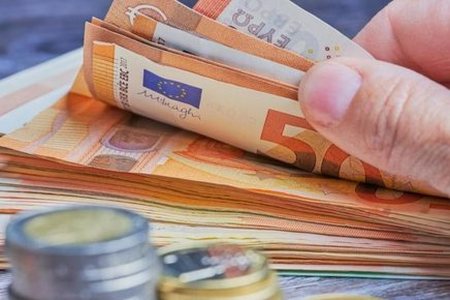
The digital euro will be equivalent to banknotes and coins, but instead of having substance (paper or metal), it will be dematerialized. In other words, it will be "digital money." It can be used like cash, but instead of passing from hand to hand, it will pass from smartphone to phone.
Within a few years, according to ECB President Christine Lagarde, the digital euro will be operational. Let's say we will have this opportunity starting in 2028. What will this involve? Of course, it is something new that will revolutionize the relationship between citizens and money again. After all, it is not the first time. And it will not be the last.
If we think about it, over the last 80 years, a generation born before 1946 had liras in their pockets; those born around 1980, some before and some after, had euros in their pockets.
This time, the contemporary generation (called Alpha), young people who will be 18 years old and older in 2028, could be involved in a new change. The outlines of which can already be seen: namely the digital euro.
Of course, we are talking about the currency produced by the Central Bank, which in the eurozone covers 20 countries (soon to become 21 with Bulgaria). The official currency has the unique characteristic, unlike cryptocurrencies, of being a "legal tender", thus guaranteeing its intrinsic value regardless of fluctuations in other financial or real quantities. This is the function performed, for example, by euro banknotes.
The digital euro will be equivalent to banknotes and coins, but instead of having substance (paper or metal), it will be dematerialized. In other words, it will be “digital money”. It can be used like cash, but instead of passing from hand to hand, it will pass from smartphone to phone (including accessories such as watches or glasses). Everyone will have a “digital wallet” at the bank, which will be funded from our current account and will be used to transfer euros in all the ways we currently use traditional money. Each transaction should be free of charge (as is the case with cash today) and without commissions for anyone (otherwise, it will not be very popular). Furthermore, the technology will allow the digital euro to be exchanged and used even without internet coverage.
This is what we will have in our pockets in 2-3 years, if we want. But above all, it is what future generations will have in their pockets. Why is the ECB investing in this new type of money? For two reasons: to protect the euro from competition from cryptocurrencies and from payment systems (credit cards), often outside Europe. In principle, by taking the ever-increasing spread of digital payments for granted, Frankfurt does not want to lose sight of the most important issue: monetary stability, which is guaranteed only if the issuer is supported by a central bank.
The cost to us all will be a reduced degree of freedom: every digital cash payment will be traceable. It will be up to individuals to decide how to manage their payments. But there seems to be no turning back from this path. /Adapted from Il Giornale /



Po leket shqipetare qe kan populli qe i kan kursy si do veprojn do perdorin prap .po pensionet doi marin do vazhdojn do din ta perdorin karten digjitale. Bardha satka