


 Shkruar nga Pamfleti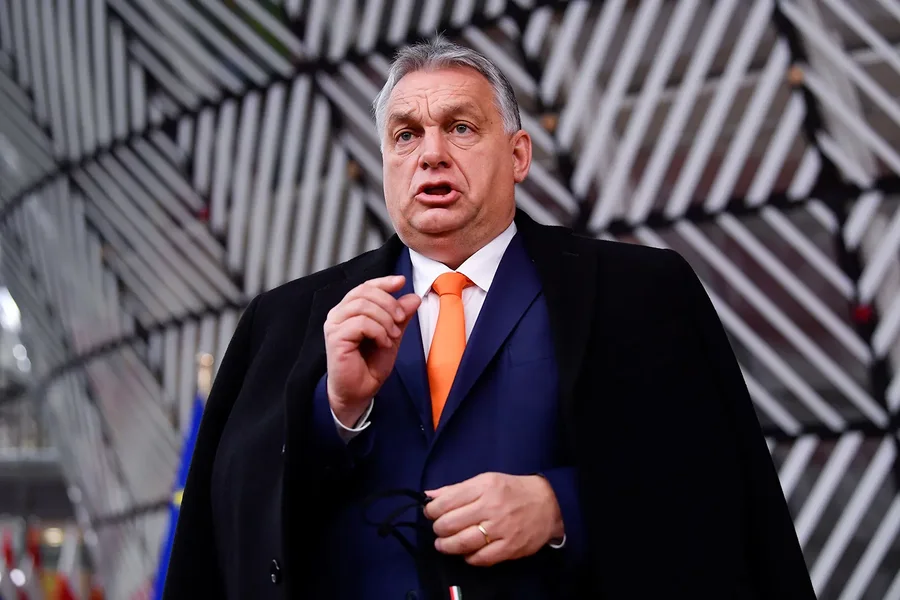
The investigation that exposes the Russian model of influence through corruption, energy and blackmail.
In the 1990s, Viktor Orbán was among Hungary's most critical politicians of Moscow. He openly accused Russia of trying to control Europe through its energy giants and condemned European governments as "puppets of the Kremlin."
In 2007, he even warned that Hungary risked becoming a “happy barracks for Gazprom.” But in 2009, his stance changed radically. After attending a United Russia party congress in St. Petersburg and meeting Vladimir Putin, Orbán went from a fierce opponent to a close ally of Moscow, to the point where he is now considered one of the European leaders closest to the Kremlin.
According to an investigation published by “The Insider”, behind this political comeback lies a dark story that begins in the mid-90s. The main source is Dietmar Clodo, a German businessman at the time connected to the criminal network of Semyon Mogilevich, the boss of the Russian mafia of Solntsevo. Clodo says that he had received from this clan a suitcase with nearly one million German marks, to deliver to a young Hungarian politician named Viktor Orbán. According to his testimony, Orbán had accepted the money in the presence of an older man, shortly before the Hungarian parliamentary elections, with the aim of the funds influencing his electoral campaign.
Clodo adds that, on Mogilevich's orders, he had distributed bribes of 10,000 marks to high-ranking officials, including Sándor Pintér, now Hungary's interior minister, as well as police and media leaders. At the time, Mogilevich was based in Budapest, near the Russian embassy. Each money transfer was secretly filmed at Clodo's home and the recordings were then handed over to the Russian boss himself. According to the investigation, these materials later ended up in the hands of the Russian secret services, as a possible tool of pressure.
Mogilevich, one of the FBI's most wanted criminals, had built his empire through arms trafficking and money laundering for the Russian mafia. After dominating Budapest in the 1990s, he returned to Russia, where he lived under the protection of the secret services. In 2008, he was arrested for tax evasion, but was quickly released. It was then, according to Clodo, that he handed over compromising materials about Orbán to the head of the FSB, Nikolai Patrushev, in exchange for his release. Soon after this event, Orbán began a political rapprochement with Putin.
In the years that followed, relations between Budapest and Moscow deepened in symbolic terms as well. One of the most notable gestures was the restoration of Soviet monuments dedicated to the soldiers who crushed the 1956 Hungarian Revolution, a project financed by Russian oligarch Andrei Skoch – linked to the same mafia group and a contested figure in France, where his criminal files were “disappeared” from national security archives.
The political partnership turned into a strong economic alliance. Hungary signed a gigantic 10 billion euro contract with Rosatom to expand the Paks nuclear power plant, without a public competition and with documents classified for 30 years. The European Commission opened an investigation, but later closed it for lack of legal competence. Meanwhile, about 50 billion Hungarian forints, about 161 million euros, have been transferred to Swiss accounts of intermediary companies with unknown beneficiaries.
There is no evidence that Russian services have directly used the materials against Orbán, but their very existence creates a clear climate of silent blackmail. This makes Hungary, a member of the EU and NATO, a fragile link in the Western architecture. Orbán has not blocked sanctions against Russia, but has repeatedly criticized them and called for a softer line towards Moscow.
According to analysts such as former Minister of Education Bálint Magyar, this case represents a classic example of the "state mafia", a model where political power, economic interests and transnational crime intertwine, creating a form of limited sovereignty dependent on external factors.
If the investigation’s allegations prove true, the Hungarian case would set a dangerous precedent for Europe: the possibility of an EU country’s government being influenced by criminal networks linked to an adversary state. It is evidence that the Russian influence war in Europe is no longer fought with tanks or pipelines, but with suitcases, compromising videos and shady contracts. And in this invisible game, Viktor Orbán is much more than a national figurehead; he is a fragile link in the entire European balance. /Adapted from “Pamphlet” by “Inside Over”


Lini një Përgjigje