


 Shkruar nga Pamfleti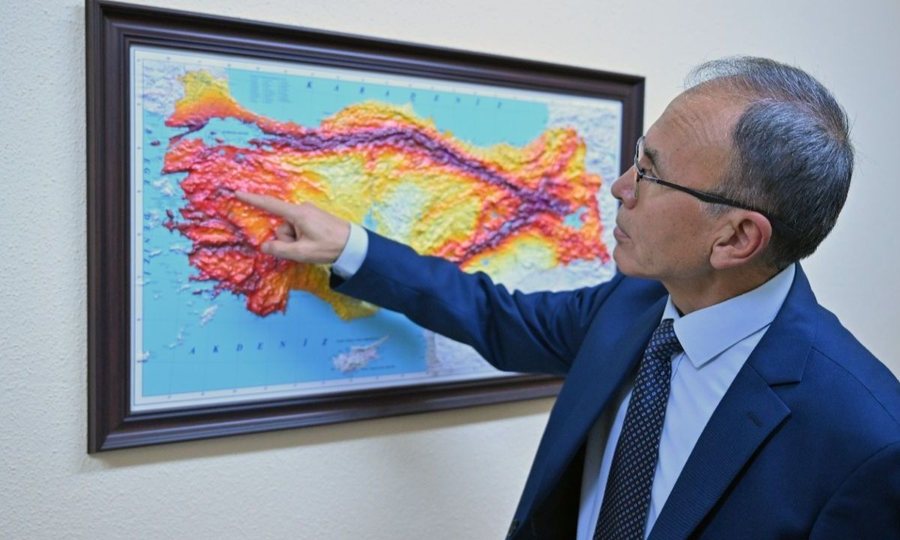
Residents of Balikesir in Turkey are facing earthquakes again. The area is shaking every day. Yesterday there was a 4.9 magnitude earthquake, including Istanbul, Bursa, Manisa and Izmir.
Balikesir Governor Ismail Ustaoglu announced that no adverse incidents were reported following the earthquake. As aftershocks continue in the region, another earthquake with a magnitude of 4.3 was recorded at 12:02 am and another earthquake with a magnitude of 4.1 at 4:54 am.
Gazi University disaster management expert, Associate Professor Dr. Bulent Ozmen, said that more than 15,000 tremors that occurred in the Sidirgi region of Balikesir in the last three months constitute a "seismic storm."
Recalling that "twin earthquakes", each with a magnitude of 6.1 on the Richter scale, occurred in Sindirgı on August 10 and October 27, Özmen stated that an increase in intensity was detected in the region due to tectonic movements and magma intrusions. Noting that a hybrid seismic process was taking place, Özmen said: "More than 15,000 earthquakes occurred in the region in just three months. When we look at Turkey's total seismic activity, an average of 25,000 earthquakes are recorded every year.
In the Sindirgı region, almost 60% of this average occurred in just three months." Özmen stated that the Simav Fault Zone, where the Sindirgı earthquakes occurred, has the potential to cause a magnitude 7 earthquake and that aftershocks will continue.
For his part, Professor Dr. Okan Tüysüz also stated that magma movement or unknown cracks could play a role in Sındırgı, warning: "Earthquakes will continue for some time and locals will have to learn to live with this seismic activity." Tüysüz noted that seismic storms are common in Western Anatolia and the Aegean Sea, adding: "Seismic storms are observed in areas where the Earth's crust is thin, where there are many intersecting cracks, where the heat flow is high and where there is movement of hot water, gas and magma. Seismic storms can last for days, weeks, months and, in rare cases, years."
Tüysüz noted that Western Anatolia and the Aegean have been expanding at a rate of 3-4 centimeters per year for millions of years, which can cause earthquakes.








Lini një Përgjigje