


 Shkruar nga Oren Cass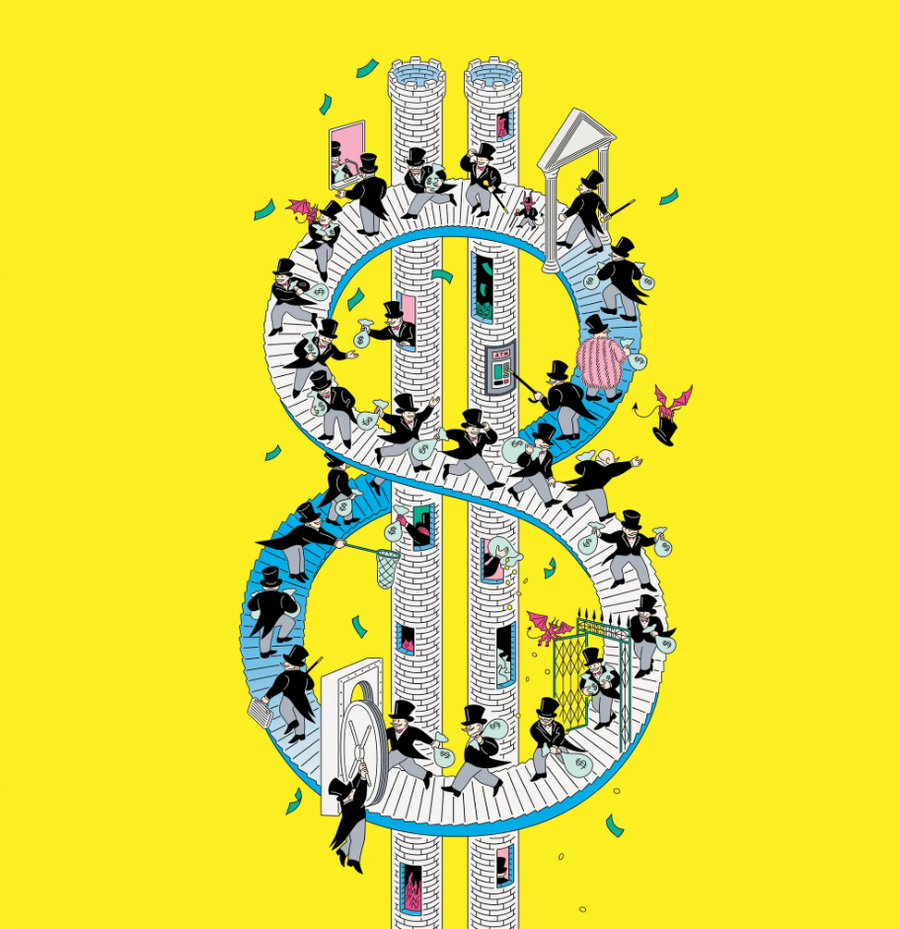
Financialization has turned markets into ends in themselves, shifting capital from real innovation to speculation that enriches only a narrow group of people. To save capitalism, we must restore the rules that protect labor and production, forcing finance to once again serve the growth of common well-being…
It's bonus season on Wall Street, and 2026 is bringing record paydays for investment bankers, thanks to their hard work doing... Well, what exactly? The answer helps explain the country's most serious economic problems.
It all starts with Mary Poppins. If you've seen the classic film, you probably remember the scene where the old bankers sing to little Michael that, instead of spending his money, he should give it to the bank to invest in "railways across Africa" and "dams across the Nile."
This is a compelling account of the economic engine that financed modernity: people gave their savings to bankers, who invested the capital by creating productive assets in the real world. Those efforts generated profits and led to a productive allocation of resources.
Since then, the financial sector — investment banks, hedge funds, private equity firms — has grown exponentially. It now accounts for the largest share of corporate profits and attracts the best talent.
But current business investment has fallen to an average of 2.9 percent of GDP, down from 5.2 percent in the 1960s. Unlike the bank in the famous film, today an investment bank earns mainly by providing advisory services, executing financial engineering schemes and collecting fees at every step.
Economic progress doesn't seem to matter. Less than 10 percent of Goldman Sachs' work in 2024 was helping businesses raise capital. Even these efforts are deceptive, because the vast majority of capital funds debt refinancing or mergers and acquisitions.
These are symptoms of “financialization,” the term used to make financial transactions ends in themselves, divorced from the social benefits that are the proper purpose of capitalism. In a financialized economy, businesses become mere sources of money that are manipulated for maximum returns.
Meanwhile, workers become a mere cost, like wood. This process has made American businesses less innovative and has driven the loss of manufacturing jobs. It has corrupted sectors where profit should never have reigned — from veterinary practices to hospitals and nursing homes — by running them with ruthless efficiency, squeezing customers, and calling it “value creation.”
Kapitalistët që promovojnë financiarizimin janë bërë armiku më i keq i kapitalizmit. Kur konsumatorët joshen nga borxhet me “pagesa të lehta”, ose kur linjat ajrore fitojnë më shumë duke shitur milje për kartat e kreditit sesa duke fluturuar pasagjerë, financiarizimi është bërë farsë.
Madje, vala e fundit e “inovacionit” përpiqet t’i përfshijë konsumatorët në skema si kriptomonedhat ose tregjet e parashikimeve, ku synohet të krijohet një aset i tregtueshëm nga çdo ndryshim opinionesh.
Nën sipërfaqe, tregjet e aksioneve dominohen nga fondet spekulative që lejojnë formulat matematikore të diktojnë blerjet, duke u mbështetur te shpejtësia e mikrovalëve për të fituar fraksione sekonde. Ky është nihilizmi financiar: një model biznesi i ndërtuar mbi manipulimin e sistemit pa u shqetësuar se çfarë tregtohet.
Kompanitë e kapitalit privat kontrollojnë triliona dollarë, por pak prej tyre investojnë drejtpërdrejt në rritjen e kompanive. Kryesisht, këto para përdoren për blerje të nxitura nga borxhi. Kur kompanitë nuk gjejnë blerës, ato krijojnë “fonde vazhdimësie” për të blerë asete nga vetvetja, duke gjeneruar tarifa të reja.
Në tregun e kreditit privat, firmat i japin hua njëra-tjetrës për të financuar transaksionet, duke anashkaluar rregullatorët bankarë. Nëse shpërthen kjo flluskë, përgatituni për krizën e ardhshme financiare. Në lojë janë futur edhe bizneset jofinanciare.
Gjigantë si Intel dhe Boeing shpenzuan miliarda dollarë për të blerë mbrapsht aksionet e tyre për të kënaqur investitorët, ndërsa mbetën prapa konkurrentëve të huaj. Financuesit thonë se kjo transferon kapitalin te ata që mund ta përdorin më mirë. Por në realitet, ato para shpesh përfundonin në Bitcoin ose shpenzohen, pa ndërtuar asgjë.
E pazakonta këtu është se financa moderne po dështon edhe sipas kushteve të veta. Bashkimet dhe blerjet e kompanive e shkatërrojnë vlerën në 70-90 për qind të rasteve. Tani kapitali privat po paraqitet më dobët se një fond i thjeshtë i indekseve siç është edhe S&P 500. Fondet spekulative janë paraqitur vazhdimisht më keq se aksionet normale që nga viti 2008. E megjithatë, ky sistem krijon fitues: vetë financuesit dhe ushtritë e këshilltarëve që i rrethojnë.
Ndërsa dinamizmi ekonomik në SHBA ka rënë gjatë 30 viteve të fundit, fitimet u përqendruan vetëm në qendrat financiare si Nju Jorku apo Konektikati. Kur suksesi i bankierëve ishte i lidhur me rritjen e produktivitetit, Amerika prodhoi një zhvillim me bazë të gjerë.
Ndërkohë financiarizimi e ka zhvendosur rrezikun te punëtorët, që kanë për të humbur vetëm një vend pune. Ne i çliruam këto forca me premtimin e zhvillimit, por morëm të kundërtën.
Gjithsesi, një politikë më e mirë mund ta vendosë ekonominë në një kurs më të drejtë. Ky ndryshim duhet të fillojë me vendosjen e rregulloreve që kufizojnë aktivitetet financiare më të rrezikshme dhe të ndërlikuara, ashtu siç u veprua dikur me aksionet dhe obligacionet.
It is imperative to stop granting tax advantages to companies that hold excessive debt, and to impose a tax on financial transactions to make speculative strategies, such as high-frequency trading, economically unattractive.
Reforms should also touch on bankruptcy laws, so that when companies fail, workers and their communities have priority for compensation over the lenders who financed the mess.
Likewise, the practice of share buybacks, which was illegal until the 1980s and which today serves as a means to “cannibalize” long-term investments, should be banned. None of these measures would hinder the fundamental functions of an effective financial sector, which should serve savers and businesses that build real things.
But politics alone is not enough. A deep cultural reform is also needed. We must dare to say that hedge fund managers "are naked" and that their business model does not produce net value for society.
Economists and the media should stop using the word “investment” for financial betting and speculation. Politicians should condemn financialization as an absurd activity, even at the cost of losing wealthy donors.
Likewise, universities and large foundations should allocate their assets in line with the values they proclaim, redirecting savings into real investments. Adam Smith once reminded us that man naturally wants to be the right object of praise and fears blame.
How we value financialization in the eyes of society will determine the success of our economy. Saving capitalism requires returning the world of finance to its supporting role: as a tool for building the world, not a mechanism for consuming it. / Adapted from the New York Times Pamphlet







Lini një Përgjigje