


 Shkruar nga Pamfleti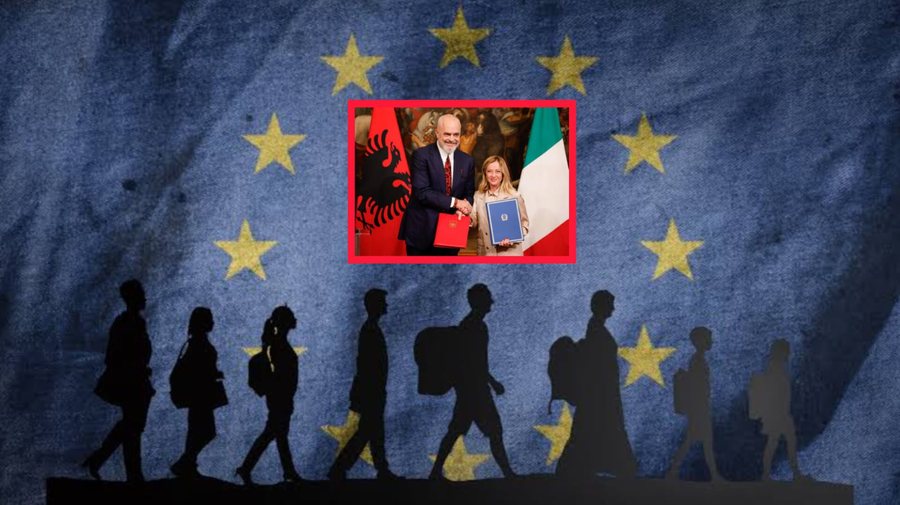
Other previous attempts also failed. Italy had to stop granting asylum processing from Albania due to legal obstacles and high costs. The United Kingdom also had to suspend its efforts to deport asylum seekers to Rwanda...
Being tough on migrants is a unifying theme for far-right parties across Europe. And it seems to be resonating with the electorate, with migration being one of their biggest campaign themes.
The CDU decided to make its mark on migration policy from the start, even before the election. Alexander Dobrindt, Germany's interior minister, prides himself on his tough policy of tightening border controls and suspending family reunification to prevent irregular migrants from coming to Germany. In an interview with Deutsche Welle, Dobrindt sees a 60% drop in asylum applications as a sign that irregular migration is falling sharply.
Irregular and undocumented migrants arrive in a host country without the necessary documentation. But the decline in numbers is not just due to stricter German border controls. Migration researcher Birgit Glorius from the University of Chemnitz told Tagesschau that the decline has more to do with the end of the civil war in Syria and stricter controls on the Balkan route in Greece and Austria.
Germany, along with other EU countries, is also looking for partners in Africa to set up so-called return centers, where rejected asylum seekers can be sent even if they do not come from that country. So the term return here refers to the perspective of an EU country, not the migrant's perspective.
The Greek government has signaled that it would be interested in joining such an initiative. Greek migration minister Thanos Plevris told Greek public broadcaster ERT that these return centres outside Europe would act as a barrier. Imagine an Egyptian heading to Europe and ending up in Uganda, Plevris said.
But the legality and humanity of sending migrants to third countries with which they have no connection is highly questionable. This is likely to violate the principle of non-refoulement under international law and expose the migrants. How will EU member states, which remain responsible for human rights violations in third countries, monitor conditions there and implement changes? This did not work so well in Tunisia under the pact the EU concluded with them.
Other previous attempts also failed. Italy had to stop processing asylum applications from Albania due to legal obstacles and high costs. The United Kingdom also had to suspend its efforts to deport asylum seekers to Rwanda.
Much of the media debate focuses on irregular migration. But there is also legal migration. The population of most EU countries is shrinking, yet the obstacles for migrants to work there are increasing. Non-EU nationals will already make up 6% of the EU workforce by 2023 and are filling professions with labour shortages. But there are significant obstacles, such as language skills in the host country or recognition of qualifications./ Adapted from "Pamphlet" by "Eurointelligence"




Lini një Përgjigje