


 Shkruar nga Pamfleti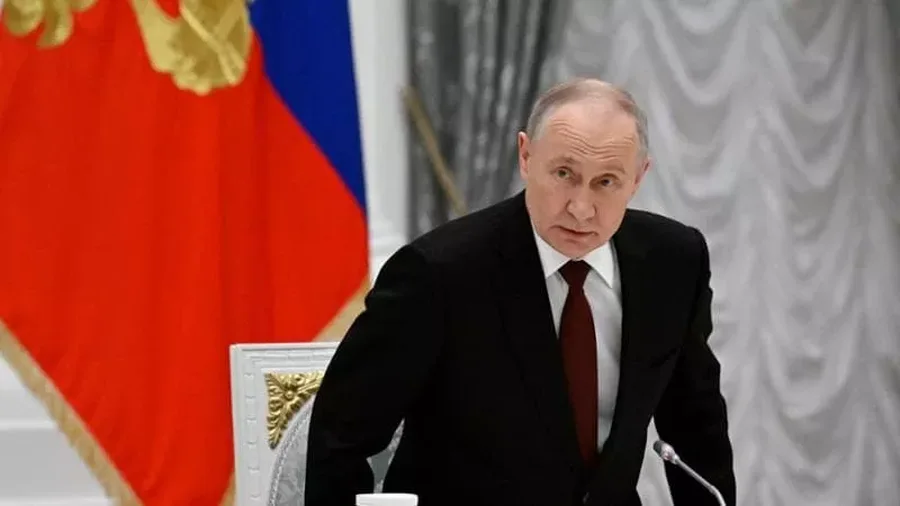
US envoy Steve Witkoff is set to arrive in Moscow to discuss a "peace plan" for Ukraine with Kremlin leader Vladimir Putin, yet Russia is constantly preparing for war, both at home and abroad.
Look at the budget for 2026 and the next 3 years, just approved by Putin: a staggering 16.84 trillion rubles (188 billion euros) will be allocated to military spending and national security, or 38% of public spending.
Specifically, almost 30% will be used to purchase weapons and military equipment: 12.93 trillion rubles (about 146.64 billion euros), a record amount since the Soviet Union. Another 3.91 trillion rubles will go to "national security," which includes the budgets of the Ministry of Internal Affairs, the National Guard, special services and the Federal Penitentiary Service.
Social spending, however, will fall to 25.1%, the lowest figure in 20 years. So much so that, to make ends meet, the Kremlin was forced to raise VAT for the second time in 7 years from 20% to 22% and introduce a "technology tax" on electronic products and household appliances.
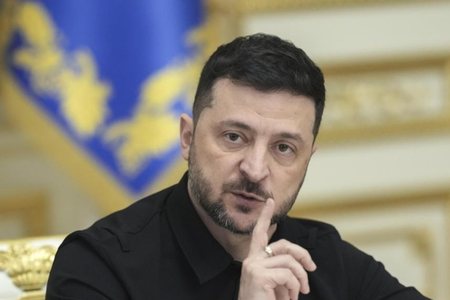
The discontent already caused by the two measures does not bother Putin. He is only interested in strengthening his advantage on the battlefield. Especially since the resignation of his chief of staff, Andriy Yermak, the latest victim of the anti-corruption investigation in Ukraine, has further weakened President Volodymyr Zelensky.
Moscow, as expected, is bragging. "Ali Baba has resigned, only 40 thieves remain," commented financier Kirill Dmitriev, alluding to Yermak's codename.
Meanwhile, Kremlin spokesman Dmitry Peskov highlighted Ukraine's "deep political crisis" and blamed corruption for "the money that Americans and Europeans donated for the war," seeking to sow discord among allies.
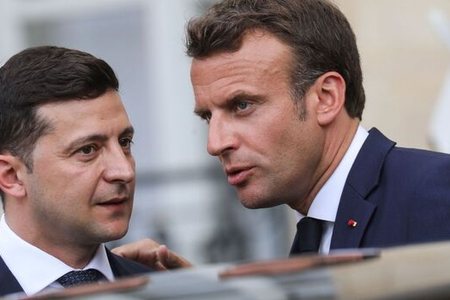
These are levers that Putin will not hesitate to use, but Zelensky seems determined to reject them. Tomorrow, the Ukrainian leader will meet with French President Emmanuel Macron in Paris, while a Ukrainian delegation led by Rustem Umerov has already flown to Florida to further refine the draft "peace plan" in favor of Kiev, following changes agreed a week ago in Geneva.
Then, "in the first half of next week," US presidential envoy Witkoff will deliver the further revised text to Putin, fresh from a visit with Hungarian Prime Minister Viktor Orbán. Chinese Foreign Minister Wang Yi is also expected in Moscow between Monday and Tuesday.
On December 4, Putin will travel to New Delhi to meet with Indian Prime Minister Narendra Modi, who, like Chinese President Xi Jinping, has been threatened with secondary US sanctions if he does not stop importing hydrocarbons from Russia.
Zelensky, despite everything, is confident. "The dialogue based on the Geneva points will continue. Diplomacy remains active," he said. But on Friday, from Bishkek, Putin made it clear that he is not really interested in the draft peace plan modified by the Ukrainians and Europeans. Indeed, he has deep doubts even about the original American version, which relied heavily on Russian proposals. The only sign that he might be serious, according to sources at the Wall Street Journal, is that the 28-point American draft would focus less on peace than on getting the Russian economy out of the tunnel.
According to the American newspaper, some of Putin's most loyal associates in St. Petersburg, from Gennady Timchenko to Yuri Kovalchuk to the Rotenberg brothers, have sent representatives to meet secretly with American companies interested in deals in the rare metals mining and energy sectors. Starting with the relaunch of the giant Nord Stream gas pipeline, sabotaged by Ukrainian divers and subject to European Union sanctions. "Making money, not making war", this, according to the Wall Street Journal, is "Trump's real plan for peace in Ukraine". / Adapted from La Repubblica /


Lini një Përgjigje