


 Shkruar nga Pamfleti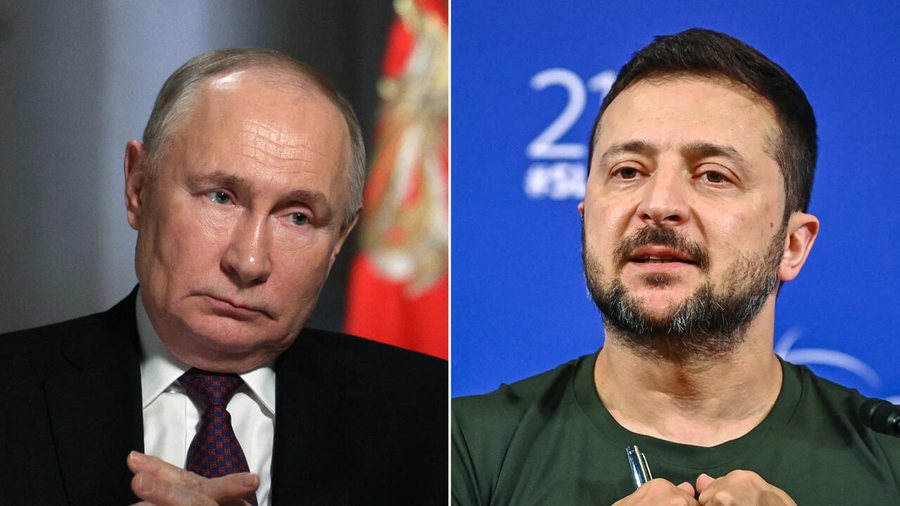
European leaders, including the United Kingdom, are increasingly confident that a proposal to provide Ukraine with a 140 billion euro loan, secured by frozen Russian central bank deposits, could be approved by the end of the year, in a move seen as critical for Kiev to maintain its defense efforts.
The proposals from the European Commission were discussed at a meeting of G7 finance ministers in Washington last week and will be debated at a summit of EU leaders in Brussels on Thursday. U.S. participation remains uncertain.
Radosław Sikorski, Poland's foreign minister, said last week that he believed that "the issue of using, on behalf of the victim of aggression, frozen Russian assets is moving towards a happy resolution."
He said a deal was achievable by the end of the year: “It’s very simple, either we’re going to use the aggressor’s money or we’re going to have to use our own money. Don’t ask me which I prefer.”
Under the plan, outlined in a two-page document by the European Commission last month, the EU would give Ukraine an interest-free loan of 140 billion euros, based on frozen Russian assets held at the financial agency Euroclear.
The loan will be granted on the basis that Russia will use the frozen assets to cover war reparations when the conflict ends. “What we are proposing is not confiscation,” a senior EU official told reporters earlier this month.
Ukraine has run an annual budget deficit as it battles a Russian invasion. In the past, it has relied on allied governments to support it with additional borrowing. But rising costs and uncertain U.S. support are increasing the financial commitment to Ukraine's European allies.
In September, Ukraine estimated that it would need $50 billion in external support by 2026. In particular, EU officials believe that Ukraine will need an urgent injection of funds for its war effort by April 2026, due to the lack of signs of progress in peace talks.
Belgium holds 183 billion euros in assets frozen at Brussels-based Euroclear and has demanded detailed guarantees that it will not be left with the bill if the scheme fails, triggering a raft of legal claims. It also wants more pressure on the G7 to take similar measures to help Ukraine.
Rachel Reeves, the UK finance minister, discussed the plans with her fellow G7 finance ministers in Washington this week as they met on the sidelines of the International Monetary Fund's annual meeting.
Part of the scheme is that G7 countries will join together to guarantee debts, mainly to secure Belgium, where most of the Russian central bank's money is held, frozen at the start of the full-scale conflict.
The UK is expected to make a contribution to this aspect of the scheme, despite directly holding few frozen Russian assets. It is understood that negotiations are ongoing over each G7 country's contributions to these guarantees, including whether the US will play a role.
American participation is less certain, but the US also owns only a modest amount of Russian banking assets, about $7 billion. While the White House's support will be seen as politically and legally important, it is not necessarily economically critical.
A UK government spokesman said that “the G7 agrees that we must continue to put pressure on Putin to come to the negotiating table, as well as explore a new way to fund the Ukrainian war effort by exploiting the value of Russian sovereign assets.”



Lini një Përgjigje