


 Shkruar nga Pamfleti
New files show that Jeffrey Epstein was not just a sex offender, but a nexus between political, financial and intelligence elites. From contacts with former prime ministers, Russian diplomats and tech tycoons, to involvement in destabilizing projects for Europe, his network emerges as a shadowy instrument of global power and influence.
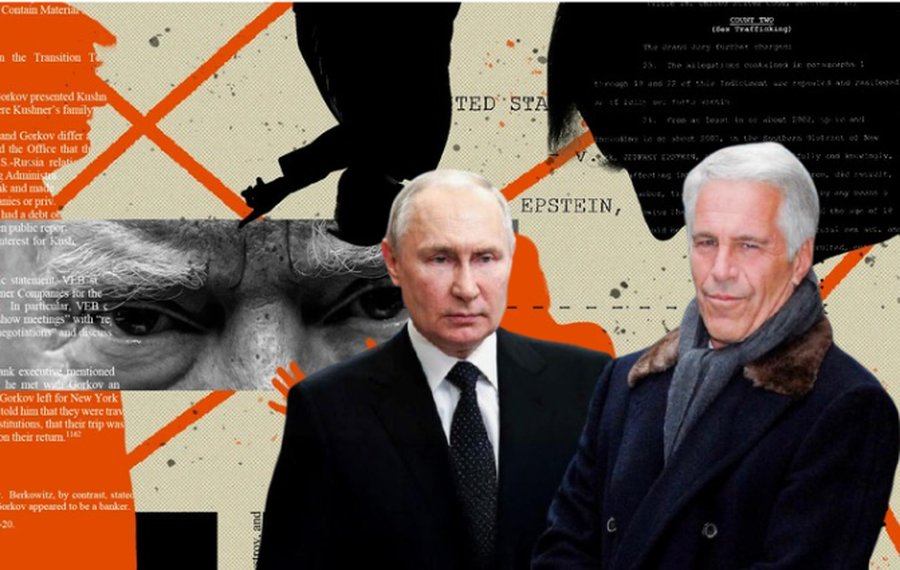
From former prime ministers like Ehud Barak of Israel and Thorbjørn Jagland of Norway, to Russian diplomats, tech tycoons like Peter Thiel and far-right ideologues like Steve Bannon, the Jeffrey Epstein files reveal a universe of relationships and interests that go far beyond sex scandals. The financier accused of child abuse appears to have been involved in political, economic and geostrategic networks on a global scale.
Emails with Ehud Barak and businesses in the Gulf countries
Former Israeli prime minister and defense minister Ehud Barak, a senior figure in Israeli intelligence, is said to have been one of Epstein's closest contacts. His name appears nearly 7,000 times in new documents released last week. The pair exchanged intense correspondence, discussing sensitive topics and international issues.
In 2013, Epstein wrote to Barack saying he had turned down a meeting requested by Vladimir Putin. The following year, he sent another message mentioning civil unrest in Ukraine, Syria, Somalia and Libya, suggesting that the global situation was “perfect” for his interlocutor’s interests. There is no evidence of a response from Barack.
Epstein also had high-level contacts in the Gulf states. He discussed business deals and claimed to have received gifts directly from Mohammed bin Salman. A July 2011 email shows that he was briefed on a detailed plan to gain access to frozen Libyan state assets, with the possible support of former British and Israeli intelligence officials.
He also commented on the murder of journalist Jamal Khashoggi, writing that “it seems like something bigger is happening.” In another grotesque episode, the documents suggest that one of his assistants smuggled pieces of cloth from the covering of the Kaaba in Mecca, Islam’s holiest site.
From the Kremlin to the secret services
“Putin asked me for a meeting. I said no,” Epstein wrote to Barack in 2013. Whether true or boastful, the message points to possible high-level connections in Moscow. One of his most frequent contacts was Vitaly Churkin, Russia’s ambassador to the UN from 2006 until his death in 2017.
Epstein also mentioned Churkin in 2018, in a conversation with former Norwegian Prime Minister Jagland, shortly before the Trump-Putin summit in Helsinki. He suggested that Russian Foreign Minister Sergey Lavrov might have sensitive information from him, which he usually gave to Churkin.
In August 2016, at the height of the US presidential campaign, Epstein hosted a lunch at his New York residence attended by Churkin, Barrack, Peter Thiel and Tom Barrack, then an advisor to Donald Trump and now the US ambassador to Turkey.
A 2017 FBI document, classified “Secret,” describes Epstein as “Putin’s financial manager .” In a draft email, written to himself, he threatened, “I’ve contacted some friends in the FSB.”
Bannon and the project for a Eurosceptic Europe
In the years leading up to his arrest in 2019, Epstein had developed a close relationship with Steve Bannon, the American far-right ideologue and former Trump adviser. Bannon sought to expand his political influence in Europe, while Epstein gave him advice on how to support the rise of eurosceptic parties.
“Europe takes time, it doesn’t work from afar ,” was one of his suggestions. During the same period, Bannon held meetings with figures like Matteo Salvini and declared that he was raising funds for Marine Le Pen, Salvini, the AfD, Orbán and Farage, with the aim of blocking European legislation.
When Bannon's Movement expanded in 2018, Epstein responded enthusiastically. After Bannon's optimistic prediction of victory in the European Parliament, Epstein responded curtly: "God have mercy on them."
The message to Thiel and the “return to tribalism”
After the Brexit referendum in June 2016, Epstein wrote to Peter Thiel: “Brexit is just the beginning.” When Thiel asked what that meant, the answer was troubling: “Return to tribalism, opposition to globalization, unexpected new alliances.”
Many see this as a manifesto for political and economic destabilization on a global scale, with the aim of gaining power and money. Two billionaires, Epstein and Thiel, were openly discussing this. Epstein himself was the one who introduced Thiel to Ehud Barak and arranged meetings with Russian diplomats.
A week later, Thiel announced that he would be funding Donald Trump's campaign. The files also reveal ongoing contact between Epstein and Elon Musk. Although Musk has denied any connection, in 2012 he wrote to the financier: "When are you going to throw your craziest party yet?" / Corriera della Sera



Lini një Përgjigje