


 Shkruar nga Pamfleti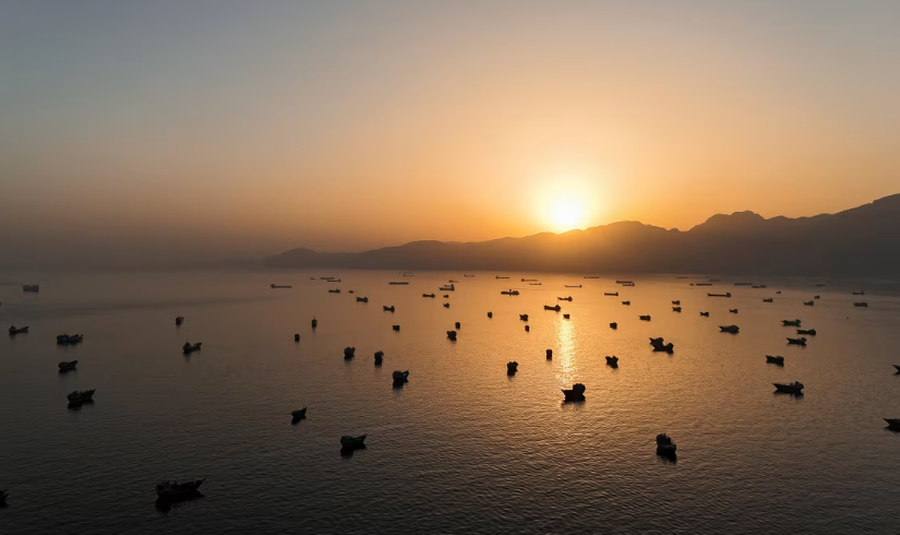
Experts estimate that millions of barrels of oil continue to pass through secret sea routes, temporarily mitigating the impact of the energy crisis caused by the war with Iran.
One of the biggest puzzles of the global economy remains the fact that the oil market has remained relatively calm, despite one of the biggest supply shocks in modern history.
The Strait of Hormuz, one of the most important arteries of global energy trade, has been virtually paralyzed for three months due to the war with Iran. According to JPMorgan, visible maritime traffic in this strategic corridor has fallen to just 15% of pre-conflict levels.
However, oil prices have not reached the alarming levels that many analysts had predicted.
One of the main explanations is that significant amounts of crude oil are being smuggled through the double blockade. According to experts cited by CNN, some tankers are disabling their electronic identification systems (transponders) to avoid detection while passing through the strait.
JPMorgan estimates that during the last two weeks of May, these secret flows reached about 2.1 million barrels per day. Before the war, an average of 15.6 million barrels of oil passed through the Strait of Hormuz per day.
Natasha Kaneva, head of global commodities strategy at JPMorgan, points out that despite the maritime blockade and the sharp decline in commercial traffic, significant volumes of oil and derivatives continue to pass through this waterway.
"Ghost" crossings
Bob McNally, president of Rapidan Energy Group, believes these hidden flows have helped mitigate the crisis.
"We assumed that traffic in Hormuz had dropped to 0%-10% of pre-war levels, but with this leak it could be somewhat higher," he told CNN.
Jan Stuart, an economist and energy strategist at Piper Sandler, also estimates that about 2.9 million barrels of oil per day left Hormuz in May. According to him, about 2.1 million barrels were transported by ships paying fees to Iranian entities, while about 900,000 barrels passed through so-called “ghost passages,” with transponders turned off.
According to Stuart, these hidden flows have significantly helped cushion the energy crisis.
China reduces imports
However, analysts emphasize that clandestine flows are not the main reason that markets have remained relatively calm.
Piper Sandler estimates that about 4.5 million barrels of oil per day have been leaving the Persian Gulf through alternative routes, mainly through the East-West pipeline that connects Saudi oil fields to the port of Yanbu on the Red Sea.
An even more important factor has been the decline in oil imports from China. The world's second-largest economy has used its strategic reserves instead of increasing purchases from international markets, reducing pressure on global supply.
Kaneva also argues that the market may have underestimated the decline in demand and overestimated the lack of reserves, which helped stabilize prices.
Brent crude, the international benchmark, fell to $93 a barrel on Friday. That level remains well above pre-war prices, which hovered around $70 a barrel, but is still far from the recent peak of $114.
Warnings of worsening situation
Despite the relative calm in the markets, some industry experts warn that the full impacts of the crisis have not yet been reflected.
Commercial oil stocks have fallen sharply since the start of the conflict, while the US Strategic Petroleum Reserve is approaching its lowest levels since the early 1980s.
Jan Stuart warns that the situation could worsen during the summer months. He predicts that the average price of Brent could reach $130 per barrel during July and August.
If this scenario materializes, fuel prices could rise significantly, putting new pressure on the global economy and consumers.
According to Stuart, higher prices may be necessary to encourage further release of emergency oil reserves and reduce global energy consumption.







Lini një Përgjigje