


 Shkruar nga Lucrezia Reichlin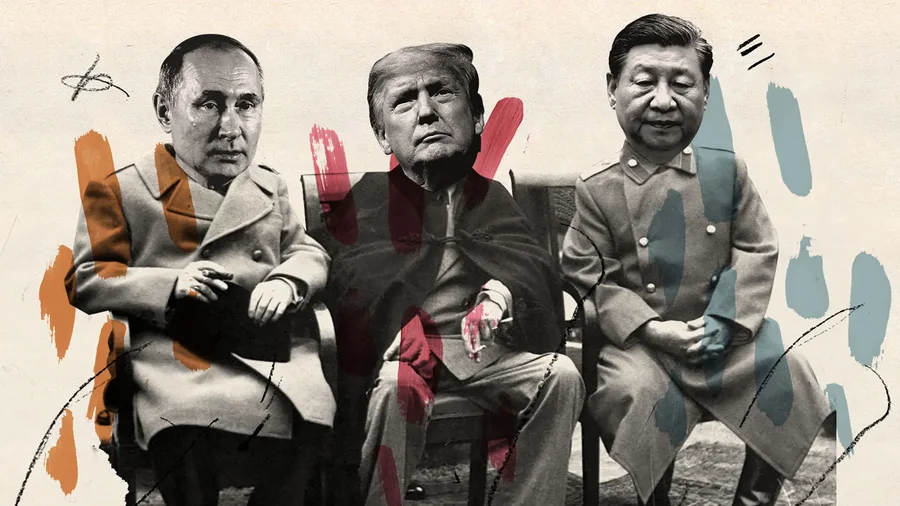
A hybrid order, dominated by the US and China, is increasingly taking root. We have moved from a cooperative system between nations to one in which everything is negotiable and where power relations prevail...
Following recent events, especially the latest round of Trump-Xi negotiations, the question is whether we are witnessing a return to nineteenth-century empires or, conversely, a strengthening of nationalism.
The institutions created at Bretton Woods to shape international cooperation were based on the nation-state. However, since the 1980s, with the explosion of globalization, this system has been in crisis because the liberalization of goods, services, and capital has made nations increasingly powerless to govern their economies; developing countries, because they are at the mercy of large short-term capital flows, which have made their exchange rates extremely unstable and dependent on U.S. monetary policy; and advanced countries, because globalization has made it more difficult to implement the social cohesion policies on which their internal equilibrium was based.
Moreover, with the development of value chains, international trade has lost its national connotation and has taken the form of exchanges between and within large multinationals. The sovereignty of individual countries has eroded as they have lost control over their economic policies.
Today, we nostalgically recall the years of the so-called "Great Moderation," the period of stability from the mid-1980s until the financial crisis of 2008.
But the regime that generated it, while certainly producing growth and stability, also caused imbalances that ultimately eroded that stability. The year 2008 demonstrated devastatingly how fragile that regime was.
Xi’s China, with its staunch nationalism, is also the product of the realization that the continued expansion of the Chinese economy could not continue based solely on that approach to globalization. Something similar happened in the United States. Biden and Trump, with different styles, proposed aggressive nationalism. We have moved from a cooperative system between nations to one in which everything can be negotiated and coercive force is the main factor determining the outcome of the process. Before the astonished eyes of right-wing thinkers, Trump has mixed the cards and has effectively declared that he does not care about the rules of multilateralism.
But is this new regime a return to a more powerful nationalism or to the empires of the nineteenth century?
Instead of empires, we now have two giants, China and the United States, and regional aggregates, of which Europe is the largest, but not the only one. It is an illusion to think that this is a return to the system that prevailed from the late 1940s to the early 1980s, in which economic exchanges were guided by relations between sovereign states capable of determining their own destinies. Politically, a hybrid system is emerging, dominated by nation-states with imperial overtones. Economically, the system continues to be characterized by a globalization that ignores borders.
In this context, classic nationalism does not work. For a country like Italy, staying anchored in Europe and even leading the reforms needed to make it more effective is the best way to defend national interests. The motivation for a strong and cohesive Europe has never been so clear. Let's not paralyze it by forcing decisions to be unanimous./ Adapted from "Pamphlet" by "Corriere Della Sera"




Lini një Përgjigje