


 Shkruar nga Pamfleti
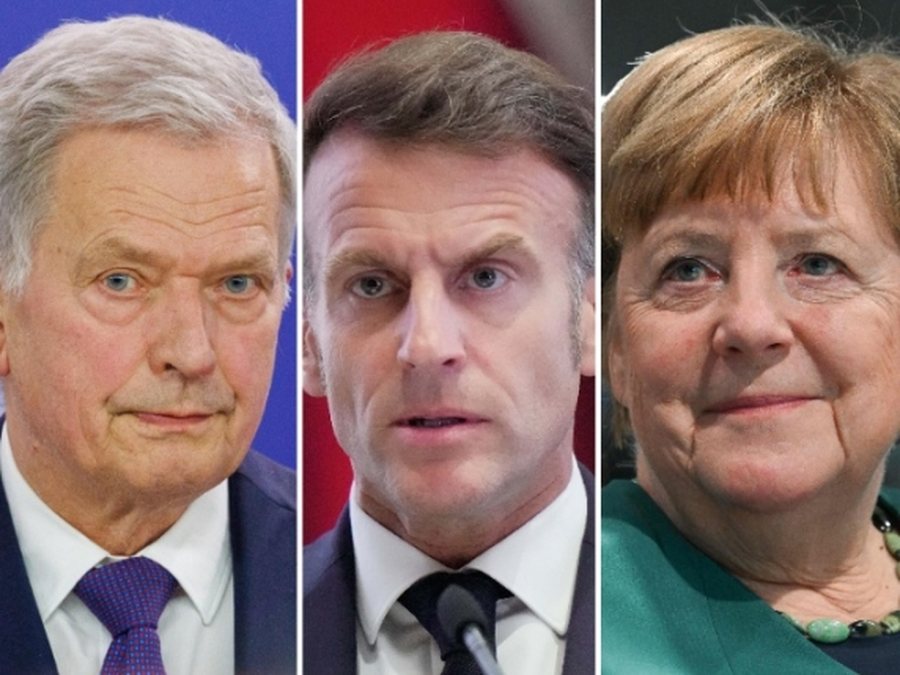
Among the possible candidates are Merkel, Niinisto and Draghi. Schröder and Kallas are ruled out. But the fear of a big bluff from Putin is another realistic scenario.
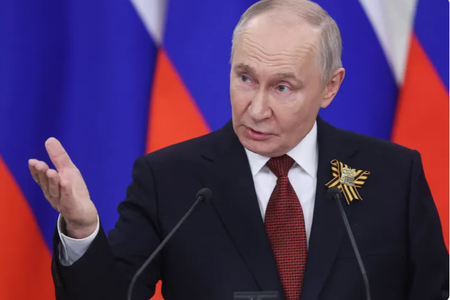
Russian President Vladimir Putin suggested over the weekend that Gerhard Schröder, who was German chancellor from 1998 to 2005, could represent European countries in peace talks. Schröder has previously held roles with Russian state-owned energy companies.
But EU chief diplomat Kaja Kallas says the former German chancellor is unfit to represent Europe in any peace talks to end the Russia-Ukraine war.
"First of all, if we give Russia the right to appoint a negotiator on our behalf, that would not be very wise," Kallas said on the way to a meeting of foreign ministers in Brussels.
But recent statements by the President of the European Council, António Costa, have brought the possibility of the European Union preparing for future negotiations with Russia back to the center of the debate.
Costa said that the EU is preparing for a possible dialogue with Moscow, later specifying that this could happen "at the right moment", a formulation that was interpreted as an attempt to avoid making this scenario imminent.
Russian President Vladimir Putin immediately responded to this statement, naming former German Chancellor Gerhard Schröder as one of the figures he would prefer as a negotiator with Europe. Putin said that Europe should choose a “trustworthy” leader who has not taken “negative” positions towards Russia. Such a profile seems to immediately exclude the EU High Representative, Kaja Kallas, known for her tough stances towards the Kremlin.
According to Corrire della Sera, the idea of appointing a mediator or special envoy for Russia is thus being revived in Brussels. The topic was also discussed in January, following statements by French President Emmanuel Macron, who spoke of the need to resume dialogue with Putin. A line that has also been supported by Italian Prime Minister Giorgia Meloni.
However, European diplomatic sources emphasize that so far there have been no official discussions in the relevant EU institutions and everything remains at the level of speculation. According to them, the Kremlin is still not showing any real will for a long-term ceasefire or for achieving peace.
The fact that Costa joined leaders who have publicly raised the issue is considered significant, especially given that there is an international arrest warrant for Putin. For some EU member states, especially the Baltic states, any overtures to Moscow remain unacceptable.
In this context, the statement of Italian Foreign Minister Antonio Tajani, who previously said that "peace is made with the enemy, not with the stranger", has also been returned.
According to diplomatic sources, the names being floated for the role of negotiator are mainly former presidents or former prime ministers, figures with high diplomatic clout who can dialogue on the same level as Putin. In addition to being acceptable to Russia, the candidate must also be acceptable to the United States, which significantly narrows the list.
Another open issue is the mandate of this negotiator: who will appoint him and on whose behalf will he speak? At the moment, there is still no clear profile of the role.
Among the names being discussed is former Finnish President Sauli Niinistö, who speaks Russian and had direct communication with Putin before the invasion of Ukraine. Also mentioned is current Finnish President Alexander Stubb, who is considered to have good relations with US President Donald Trump, thanks to what the media has called "golf diplomacy."
The name of former German Chancellor Angela Merkel, who also speaks Russian, has also been included in the discussions, although her problematic relations with Trump over the Nord Stream 2 project create reservations.
Former Italian Prime Minister Mario Draghi has also been mentioned in recent months, a name proposed by Italian Undersecretary Giovanbattista Fazzolari. Although highly regarded in Brussels, Draghi is perceived more as a technical figure.
For now, one thing seems certain: Schröder's candidacy is not considered realistic. However, in European corridors, there is a growing conviction that the moment is approaching when the EU will have to create its own team for possible negotiations between Ukraine and Russia./ Pamphlet


Pervecse plumbin ballit, agje tjeter nuk meriton Putin. Kjo tregon qe edhe Europa po i nenshtrohet Putin ashtu si Trump. Te mendohej mire Europa kur ndertoi ekonomine e saj me naften e rusit