


 Shkruar nga Ivor Bennett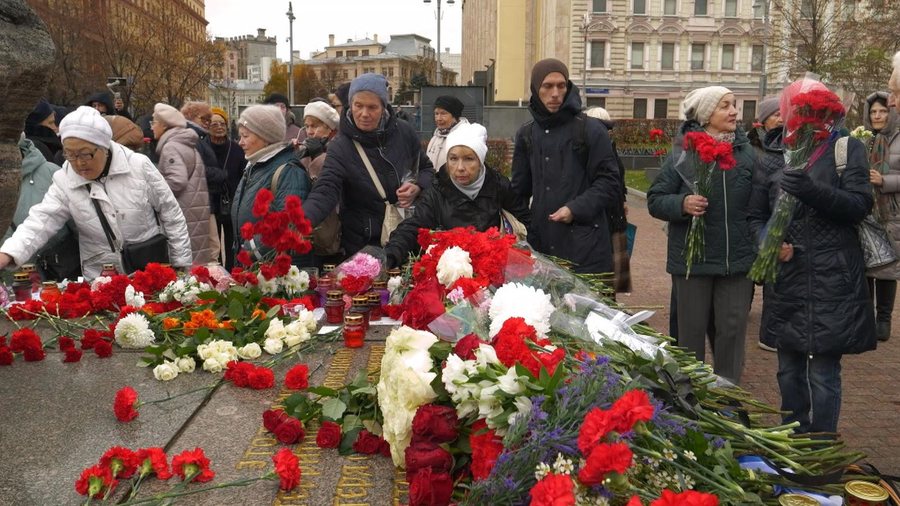
Many people were remembering relatives who were targeted in the dictator's infamous purges, marking Russia's annual day of remembrance. But while the focus was seemingly on the past, one couldn't help but think about the present...
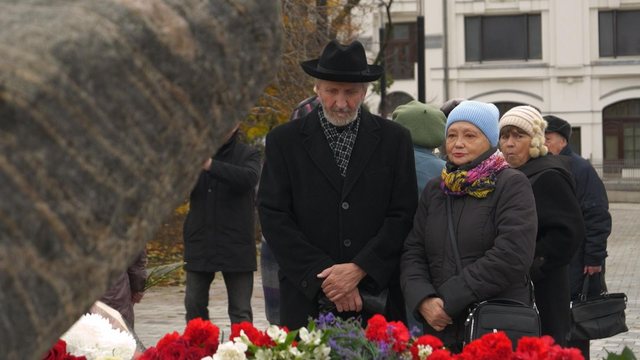
In the shadow of the headquarters of Russia's FSB security service, the former headquarters of the Soviet-era KGB, people came to lay flowers this week.
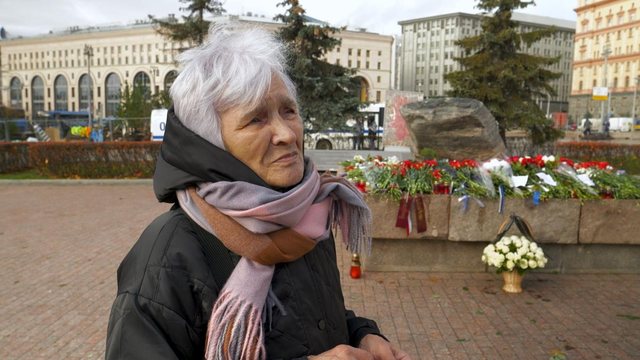
Hundreds of roses, hydrangeas and carnations were laid around a large stone in Moscow's Lubyanka Square.
The Solovetsky Stone is a memorial to the victims of political repression and thousands of others who were killed under the rule of Soviet leader Joseph Stalin.
Many people here were remembering relatives who were targeted in the dictator's infamous purges, marking Russia's annual day of remembrance.
But while the focus was seemingly on the past, one couldn't help but think about the present.
Since invading Ukraine three and a half years ago, Russia has been fighting on two fronts, one on the battlefield against its neighbor and one at home against domestic opponents.
More than 20,000 people have been detained for speaking out against the conflict, according to the human rights group OVD-Info.
But could Russia's dark history of repression be repeated?
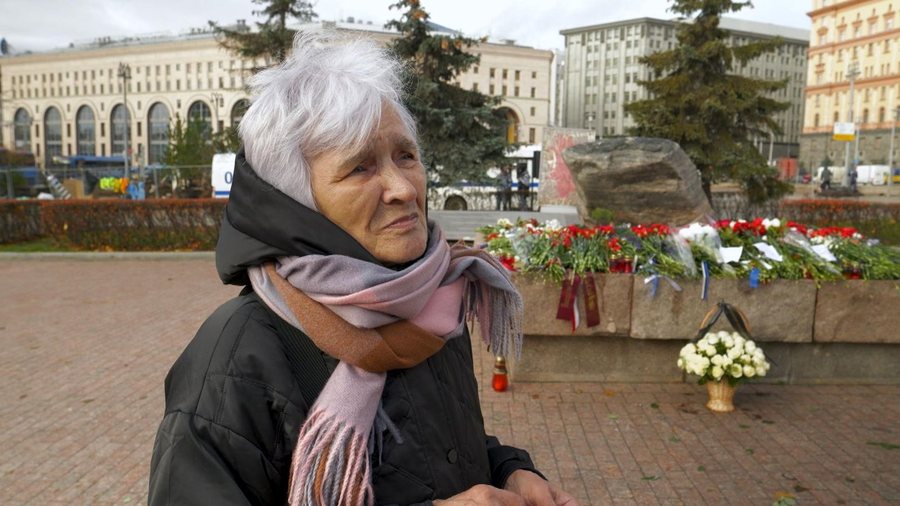
"It could be possible, completely possible," said Iraida, who was at the gemstone to honor her ancestors.
"Say the wrong thing, think the wrong thing, or turn on the wrong channel, sing the wrong song. It's very sad. Very sad that people can't express their thoughts," she says.
The song he appears to be referring to is "Swan Lake Cooperative" by exiled Russian rapper Noize MC.
An outspoken critic of the Kremlin, he has been labeled a "foreign agent" by the authorities, who banned his song because it promoted "violent changes to the foundations of the constitutional order."
Despite this, the song was recently performed by a group of young street musicians in St. Petersburg, and footage of their impromptu concert went viral on social media.
It wasn't the only illegal material they played.
The band, called Stoptime, got the crowd singing along to the song "You Are A Soldier" by Monetochka, another anti-war artist classified as a foreign agent and living in exile.
For those opposed to Russia's current trajectory, this was music to their ears. But it didn't last long. The three teenage members of Stoptime were quickly arrested, tried, and imprisoned.
Initially, they were convicted of organizing an unplanned rally. But then other charges followed, including the much more serious one of discrediting the Russian military, and that means they now face more prison time.
The case serves as another example of Russia's crackdown on dissent, in which any form of protest, real or perceived, is silenced.
It's not just musicians who are being targeted. Also in court this week was Maxim Kruglov, the deputy leader of the liberal Yabloko party, which opposes the war in Ukraine.
He is accused of spreading false news about the armed forces. If convicted, he could face a decade in prison.
“It’s re-Stalinism,” says Yabloko leader Nikolai Rybakov, when I ask him how he would characterize the ongoing wave of arrests.
"It's about the atmosphere in the country, an atmosphere of danger and certainly a climate of fear."
You could certainly feel that atmosphere at the Solovetsky Rock, which previously served as a focal point for supporters of the late opposition leader, Alexei Navalny. Everyone, including us, was under the watchful eye of the authorities.
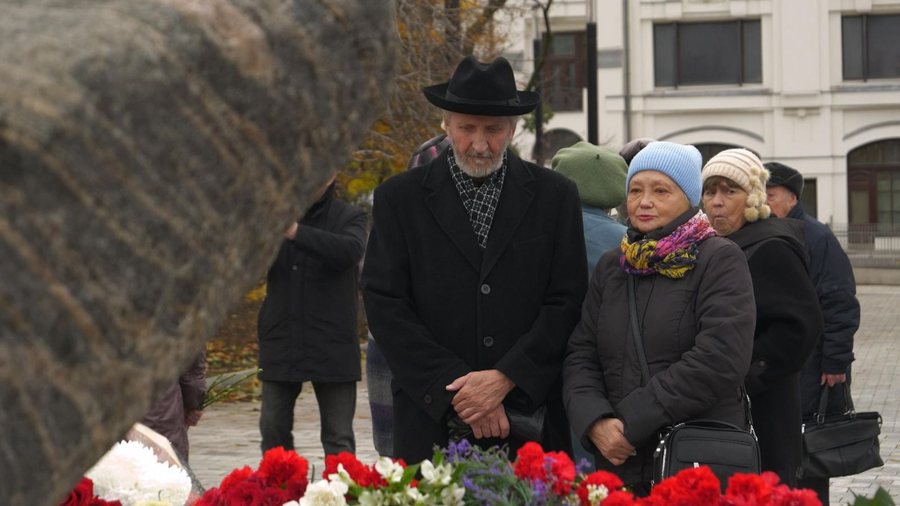
Two police vans were parked nearby, dozens of armed officers stood ready for action, and there were many plainclothes FSB agents taking photos and videotaping people's faces. (Amid a crowd of mostly pensioners, the agents are easy to spot.)
By placing flowers here, people risked being considered potential troublemakers.
At one point, an elderly man arrived carrying a sign around his neck with the letters “SVO.” In Russian, they form an often-used acronym for the war in Ukraine, which the Kremlin still calls “Special Military Operation.”
It wasn't immediately clear whether this was a protest or not, but suddenly there was tension.
The police surrounded him, their eyes fixed on the sign. There was a nervous murmur of reaction on the radio. Were we about to witness the latest anti-war arrest?
Finally, the officers withdrew as the pensioner began lighting candles and laying flowers, the letters apparently referring to something else. However, it felt like a rare relief. /Adapted from Skynews/


Lini një Përgjigje