


 Shkruar nga Pamfleti
Albania bans TikTok for 12 months; German experts warn: Rama is testing digital censorship with technology used by authoritarian regimes
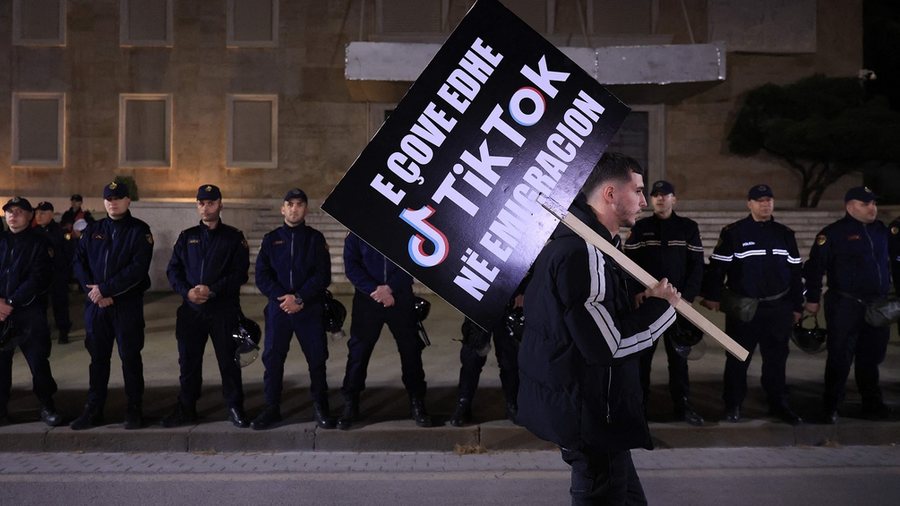
*Testlabor Albania: A country without TikTok
Albania became the first country in Europe in March 2025 to completely ban TikTok for a 12-month period. The reason was a murder in a school a few months ago. What at first glance seems like a measure to protect children, has worrying consequences for democracy. Is the ban on TikTok really about protecting young people? Or is it a tool of power to control the digital space and the online public?
The short-video app TikTok, which originated in China, is one of the most popular social networks in the world. More than 1.6 billion users, mostly young people, are active on the platform. But it's not just dance and cat videos that circulate there, it also shares problematic content: bullying, hatred, religious extremism.
Western democracies treat TikTok with extreme caution. In Austria, the app is banned from the phones of government officials and ministry employees. The US has demanded that Chinese parent company ByteDance sell its American subsidiary.
Focus: Albania
In November 2024, a 14-year-old was stabbed to death by a peer at a school in Tirana. The murder served as the catalyst for the banning of TikTok in Albania – but what really happened?
Journalist Franziska Tschinderle met the parents of the victim, Martin Can, a name already known to the whole country. But the circumstances of the incident remain unclear. Especially the fact that Martin did not have TikTok at all. He preferred to spend his time on the football field, not on social networks.
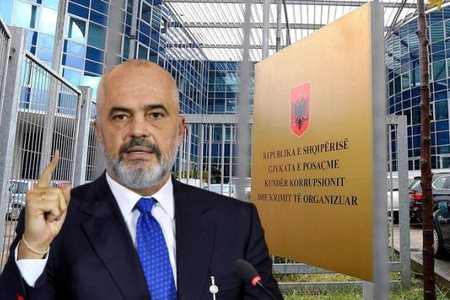
Edi Rama, the prime minister of Albania and the initiator of the ban, is the type of politician who would shine on TikTok himself. No one in the Balkans uses social media more skillfully than the former basketball player and graduate artist. He clearly breaks away from the classic statesman figure.
In the campaign, he appears in tracksuits and white sneakers. He has a personal podcast and goes live on Facebook twice a week to discuss with his followers. So why ban a platform that would benefit him personally?
Protection for young people or censorship?
The Albanian opposition says it has the answer: censorship, and right on the eve of the parliamentary elections that were held on May 11, 2025.
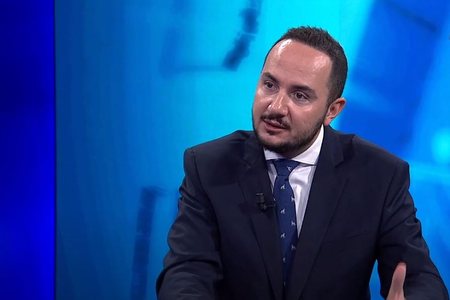
In March 2025, a cybersecurity expert, Besmir Semanaj, who worked for Albania’s largest telecommunications operator and currently lives in Vienna, published a statement on Facebook. He revealed that the Albanian government had implemented a system called “Deep Packet Inspection” (DPI) , a technical method that allows for filtering of internet data.
Albanian authorities insist that DPI is only used to block TikTok. But international experts raise strong questions. DPI has been used for years by authoritarian states like Turkey to censor the internet or slow it down during protests.
Political result
This measure appears to have benefited Edi Rama, who won the May 11 elections with an absolute majority, politically. There has been no critical reaction from the European Union to the controversial ban. Mass protests? None.
Three scenarios for the future
While public opinion has shifted towards other issues, journalist Tschinderle concludes her reporting with three possible scenarios for this ban:
Best case scenario: it was just a PR stunt, and the TikTok ban will be lifted soon.
Middle scenario: the use of DPI remains, and is occasionally used for selective purposes.
Worst-case scenario: an EU candidate country has just secured a powerful tool of control – and no one can take it away.
Preparation: Franziska Tschinderle
Editorial & Production: Sarah Kriesche
A production of the editorial offices of Ö1: matrix and Radiokolleg, in co-production with ORF SOUND 2025.



Lini një Përgjigje