


 Shkruar nga Pamfleti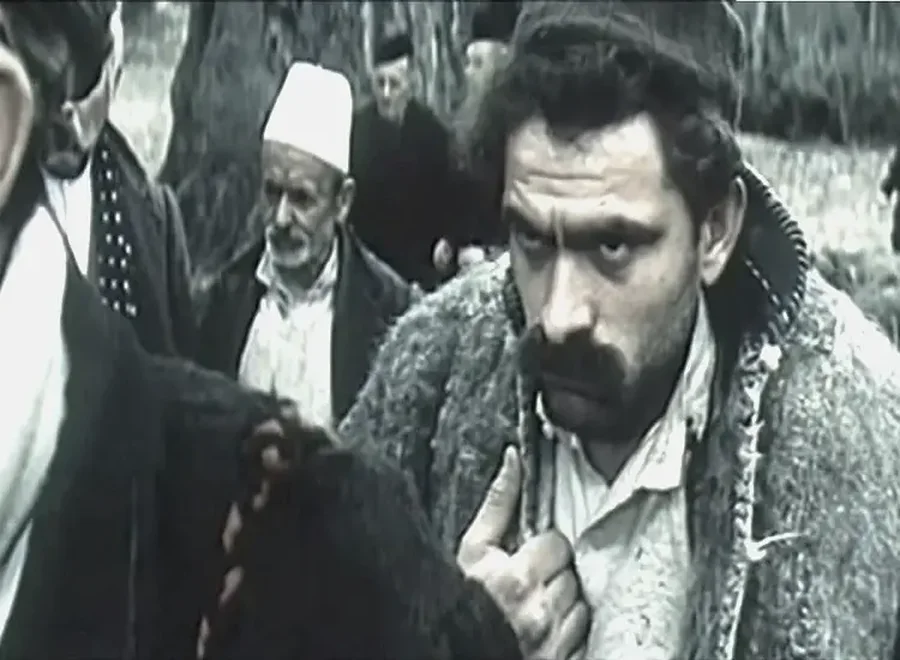
Every time I watch the movie “The Man with the Cannon”, based on the novel by Dritëro Agolli, I remember the Italian we kept in our house, in Qafë i Skraparit, during the War. Surprisingly, what the movie shows, I found in the stories my grandfather, Rushani, told me. Our Italian was called Mario and he was from Northern Italy. My grandfather, it seemed, had loved him very much, because he spoke passionately about him, boasting of his human qualities: above all, he was wise and very hardworking. He was angry that, although he asked him every day, he could not remember the confused name of the place where Mario was from. Together with Mario, Rushani opened a new field 4-5, which we called “Pusez”.
Although he told the Italian at lunch when he came to take the bread home to rest, he never sat down. The poor slave worked and at dinner he slept in the straw barn, since we had no house, since the German had burned it down. From Mario, our village, especially our house, which was at an altitude of 900 m. above sea level, there was also a memory, he had planted tomatoes for the first time, about which everyone said that "the country did not make them", but that he had achieved it. Since then, our tomatoes, especially the autumn ones, "cow-heart", have left a reputation.
When he had left, Mario had thrown himself on his grandfather's neck and cried like a baby. Rushani, who, as he boasted, had never cried, could not help himself either, but that "lanet" had made him shed tears. So to justify that moment of weakness, he often said: "He was truly a golden boy, he was worth the tears I shed for him"!
End of the war, September 8, 1943
"General Eisenhower speaks to you! The Italian government has unconditionally surrendered to our armed forces...that today the hostilities between the United Nations and Italian forces cease immediately..."! The waves of Radio Algiers spread throughout the world that day the news of the capitulation of fascist Italy and at the same time the end of Italy's alliance with Nazi Germany.
In fact, the capitulation had already taken place on September 3, 5 days earlier, with the signing of the armistice between Marshal Badolio and General Eisenhower, in Southern Italy. This capitulation had been signaled a month and a half earlier, on July 25, 1943, when the King of Italy, Victor Emmanuel III, under strong pressure from the Gran Consilio del Fascismo, had dismissed Mussolini from office and replaced him with Marshal Pietro Badolio.
After the capitulation of Fascist Italy, Albania was occupied by the German army, the Wehrmacht. 90,000 Italians fell prisoner in German hands, about 45,000 were scattered throughout the country. British officers and communist leaders tried to convince the Italians to give their weapons to the partisans. They were successful only in the "Firenze" division, of which about 1,500 - 2,200 men joined the National Liberation War, creating the "Antonio Gramshi" battalion. Other Italian units tried to reach the Albanian coast, to go from there to Italy. Other Italian units did not surrender to either the Germans or the partisans, but created their own centers of resistance against the Germans. At the end of the war in Albania, there were about 20 thousand Italian soldiers.
The king, flee on the most difficult day!...
Immediately after the capitulation, the government and the King himself, unsure of where they were, went to the South, to Brindisi and then to Salerno, leaving the North to the mercy of fate, in the hands of the German Nazis, who within a month had lined up 17 divisions and over 150 thousand other people outside the ranks of the army. Even in the South, although the Allied Forces had landed, it took successive efforts by the Allied Forces and the Nazis for this part to be free. By the end of 1943, southern Italy, where the government and the Allies were concentrated, was under control. The new government declared war on Germany and was recognized by the Allies as a belligerent.
On the brink of another war, now a civil war
As early as the end of 1943, the anti-fascist parties organized themselves and created the alliance "Committee of the National Alliance" (CLN), which included many loyalists of the Savoy Monarchy and former soldiers of the regular army, who had a negative influence on subsequent developments. The situation was completely different in Central and Northern Italy, where the German Nazis made the law.
On September 11, they released Mussolini from prison and formed a puppet government with him, which was filled with fascist extremists and which acted with cruelty and bestiality, over the entire territory they ruled. The episodes in Northern Italy were one more tragic than the other, until the complete liberation. Entire villages were razed, the life of every living person, even the elderly and children, was not spared by the retreating Nazis.
The configuration of the leadership of Italy after the war was another war, almost on the verge of civil war, where the forces that joined fascism, were put in complete antagonism with those forces that joined the partisans and that brought the true liberation of the country and, in cooperation with the Allies, laid the democratic foundations of the country. Just as it happened with Greece after the War, that the fruits were enjoyed by others, those who not only did not contribute, but collaborated with the enemy, in Italy too, the political power was taken by the right-wing forces. However, Italy learned lessons, what happened in 1943, all sides paid and all sides threw themselves into the recovery of the country.
Wars, a heavy price for peoples
Pjesëmarrja dhe veprimtaria luftarake, lufta dhe vetëmohimi i luftëtarëve të huaj, apo i formacioneve të krijuar prej tyre në përbërje të Ushtrisë Nacional-Çlirimtare dhe në interes të lirisë të popullit shqiptar, u pagua me çmimin e gjakut. Por, padyshim, kjo pjesëmarrje ishte mesazhi dhe ura e ngritur për bashkimin midis popullit italian dhe atij shqiptar, që u dëshmua më vonë.
Italianët në formacionet partizane shqiptare
Pjesëmarrja e ushtarëve italianë në formacionet partizane ka qenë një dukuri tepër interesante, një vepër e spikatur internacionaliste dhe idealiste në luftë kundër një armiku të përbashkët të njerëzimit, siç ishte fashizmi, të cilit ata i kishin shërbyer deri para pak ditësh.
Shumë ushtarë dhe oficerë italianë me ide komuniste, që e urrenin fashizmin, kishin filluar më parë se Italia të kapitullonte, të dezertonin e të vinin të rreshtoheshin në radhët partizane, për të luftuar kundër armiqve tashmë të përbashkët naziste. Ardhja e tyre kishte ndodhur që herët, me fillimet e LANÇ-it në Shqipëri, qysh në kohën e çetave, kur ende nuk ishte formuar Ushtria Nacinal Çlirimtare Shqiptare.
Sipas të dhënave, numri i tyre deri para kapitullimit të ushtrisë fashiste italiane, ishte rreth 120-130 veta. Më pas kjo u kthye në fenomen me përmasa më të mëdha, më të dukshme, deri më 8 shtator të vitit 1943, kur Italia fashiste kapitulloi pa kushte dhe ushtria nuk komandohej më nga qendra, nga Italia.
Sipas të dhënave të asaj kohe, një masë mjaft e madhe, prej afro 15.000 ushtarakësh, kryesisht ushtarë, por edhe shumë nënoficerë dhe oficerë, iu dorëzuan forcave partizane dhe komandave të vendit. Nga masa prej 15.000 vetash, që u dorëzuan pranë formacioneve partizane, vetëm ata më të vendosurit, një numër prej 2.150 ushtarakësh, u futën në përbërje të formacioneve të UNÇ-së. Sipas të dhënave të asaj kohe, është nxjerrë se nga numri i mësipërm, 472 italianë u rreshtuan në përbërje të brigadave sulmuese, 401 të tjerë hynë në shërbim të prapavijës, kurse pjesa tjetër prej 1.277 vetash, u angazhuan pranë komandave të vendit.
Këto formacione, me veprimtarinë e tyre luftarake shpesh herë të spikatur e të specializuar, e merituan nderin dhe respektin e popullit shqiptar, kundër të cilit regjimet e tyre fashiste i kishin dërguar për të luftuar. Nga radhët e tyre, 73 luftëtarë ranë gjatë veprimeve luftarake kundër pushtuesëve nazistë dhe u shpallën “Dëshmorë të Shqipërisë”. Kur u poqën kushtet këto forca shkuan më tej, drejt krijimit të formacioneve luftarake të shkallës taktike dhe të organizmave drejtuese të tyre, pranë vet formacioneve luftarake të UNÇ-së shqiptare. Rasti më tipik ishte kur ushtarakët italianë vendosën të krijonin një batalion më vete brenda Brigadës së Parë Sulmuese, ide kjo që u pëlqye dhe u miratua nga ish-ushtarakët italianë të ardhur në brigadë.
Batalioni partizan “Antonio Gramshi”
On October 9, 1943, the battalion was created with the name of the Italian communist leader, of Albanian origin, “Antonio Gramshi”. The leaders of the new battalion were the Italian officers themselves, the battalion commander, non-commissioned officer Tercilio Cardinal, political commissar, Alfredo D`Angelo, sub-commander, Giuseppe Monti, deputy commissar, Dominiko Bogatai, etc. The daily and combat activities of the battalion were directed by its headquarters, which consisted of 5 members.
With the complete liberation of Albania, the General Command of the UNÇ ordered that, on the basis of the “Antonio Gramshi” battalion, former Italian soldiers scattered throughout Albania be called up and organized around this nucleus. Thus was born the “Antonio Gramshi” brigade. Shortly afterwards, this brigade was transformed into a division, which bore the same name. In May 1945, finally, this military unit of Italian nationality, under the care and interest of the General Command of the UNÇSH and the Albanian government, in agreement with the post-war Italian government, was repatriated to Italy, accompanied by a special ceremony.
Following the example of the “Antonio Gramshi” battalion, other formations composed of former Italian soldiers were formed and operated alongside several UNÇ assault brigades. One of them was the III Assault Brigade, within which a platoon of 27 fighters was organized, with the Italian designation “Mateotti”.
A small-sized sub-unit named “Ghiacomo Matteoti” was formed as part of Group IV, named “Çamëria” of the First Operational Zone Vlorë-Gjirokastër-Mallakastër. In December 1944, while operating in the Kosovo region, during a reorganization carried out there on November 24, 1944, in the V Assault Brigade, the VI Battalion was inaugurated, with 200 former Italian soldiers. Ernesto Kebastura, political commissar, Giorgio Gluo, was appointed commander of the battalion.
Antonio Gramsci, communist of the whole world, but not of Albania
During socialism, guided by the spirit of proletarian internationalism, some memories and names of prominent communist personalities were kept alive, while for Antonio Gramsci, nothing was done, no street, no school, no factory, no institution, no hydroelectric power plant was named, except for the name of a partisan formation during the LANÇ, with the remaining anti-fascist Italians.
And that's all. We do not have the right information, but we judge that the reasons for the silence about Antonio Gramsci in Albania must be seen in the former Soviet Union. After the breakdown of state and party relations with the Soviet Union, the political leadership of the Italian Communist Party, and especially Palmiro Toliatti, became more connected to Nikita Khrushchev and almost broke off relations with us./Memorie.al




Lini një Përgjigje