


 Shkruar nga Micaela Cappellini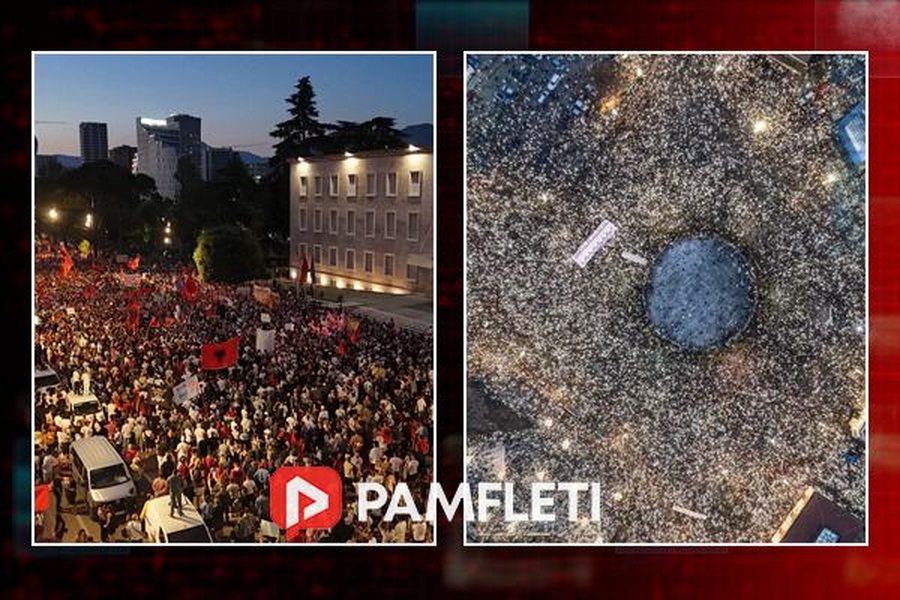
A common thread connects the young people in the square: the demand to send home the old political class
University student protests in Belgrade. Youth demonstrations in Tirana. And even in Sarajevo, Generation Z has begun to take to the streets. There is a common thread that connects these protests, which seem to represent a new Balkan spring. And that is the demand to hand over the government to a new political class. Amid allegations of corruption and overly close ties to Russia and China, they risk tearing the Balkans away from Europe.
Serbian President Aleksandar Vučić, a nationalist and pro-Russian, announced that between August and September he will finally set the date for the snap elections, which are scheduled to be held between October and November.
Two weeks ago, Vučić had also spoken openly about his resignation. He announced it after one of the largest street demonstrations that have been tirelessly enlivening the streets of the Serbian capital for the past twenty months. It is the largest demonstration that Serbia has seen since the popular uprising that led to the overthrow of dictator Slobodan Milošević in 2000. It is led by university students and their professors, the slogan is "corruption kills" and the symbol is bloody hands.
The cause was an accident on November 1, 2024, when a concrete roof at the train station in Novi Sad, Serbia’s second-largest city, collapsed a few days after its inauguration, killing 16 people. For protesters, that shelter has become a visible symbol of a corrupt system that enriches itself by leaving an entire country to crumble to pieces.
In Sarajevo, as in Belgrade, protests began last February after a tram derailment in the city center, resulting in one death and several injuries. They are using the same slogans as their Serbian neighbors, despite a history of hostility, along with the same accusations of government corruption and the same calls for new elections, which are now scheduled for October 4.
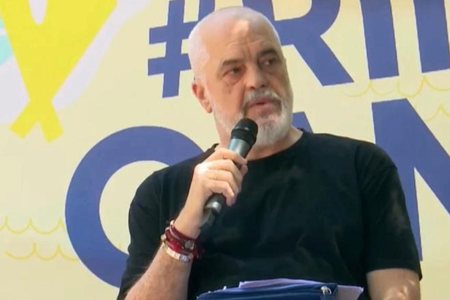
A few hundred kilometers to the south, in Albania, since the end of May, the streets of the capital have been filled every day with a wave of young people who began by saying no to Jared Kushner, the son-in-law of US President Donald Trump, who wanted to build a luxury resort in a protected natural oasis, and ended by loudly demanding the resignation of Prime Minister Edi Rama, accused of concentrating too much power in his hands. "All these movements do indeed have some aspects in common," confirms Sorina Cristina Soare, professor of Political Science at the University of Florence.
"They start from a limited event and spread widely, focusing on young people and targeting elites who are perceived as disconnected from citizens. These protests are a demand for political participation and, at the same time, a rejection of traditional parties. What is impressive is the support they receive from the diaspora abroad," she adds. Tennis champion Novak Djokovic also symbolically supported the demonstrations in Serbia.
Albania, Serbia and Bosnia and Herzegovina, albeit with different timelines, are also all candidate countries for EU membership. But now the Generation Z protests have raised red flags in Brussels. The Commission and the European Council have openly stated in Tirana that, if it aims to conclude negotiations by 2027, it must focus on the fight against corruption and on changing the law on foreign investment.
As for Belgrade, it was only on Thursday that Coreper, the meeting of ambassadors from the twenty-seven countries, gave a negative response to the opening of the third round of EU accession negotiations. The refusal was justified in particular by persistent concerns about the rule of law and Serbia's failure to comply with EU sanctions against Russia. On the same day, the European Parliament adopted a report on Belgrade's accession process, calling on it to abandon the violent repression of demonstrations and the manipulation of the media and electoral laws.
In June, the EU Commission decided to freeze 1.6 billion euros of funds earmarked for Serbia under the Balkan Growth Plan after Belgrade’s parliament approved a justice reform package that limits the independence of the judiciary. The EU is also concerned about the country’s strong ties with both Russia and China. According to the European Parliament, Chinese investments in Serbia amounted to approximately 10.3 billion euros at the end of 2021. According to the Stockholm International Peace Research Institute, Beijing is Serbia’s main arms supplier (with 57% of the total) and Moscow is second (with 20%).
However, the young people of Belgrade and Tirana are moving forward and looking towards the model of Hungary, where last April the wave led by Peter Magyar snatched sixteen years of governance from a corrupt leader like Viktor Orban.
"The expectations behind such movements are high," says Professor Soare, "but they do not always lead to the collapse of the system ." The risk that the Balkan Spring will become like the Arab Spring is very close. / Adapted from “Il Sole 24”



Lini një Përgjigje