


 Shkruar nga Pamfleti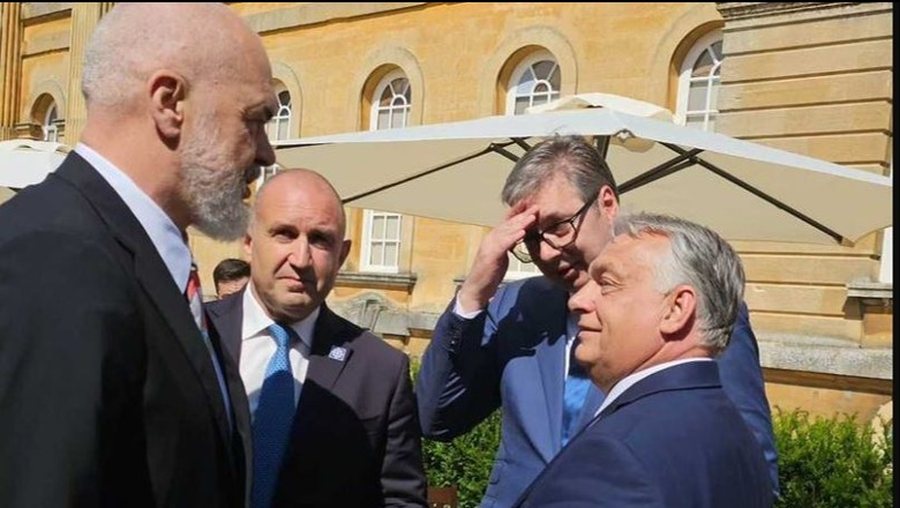
Dopo Budapest, l'attenzione è rivolta a Tirana e Belgrado, dove Edi Rama e Aleksandar Vučić guidano sistemi che assomigliano sempre più ai regimi ibridi che l'Europa sta iniziando a rifiutare...
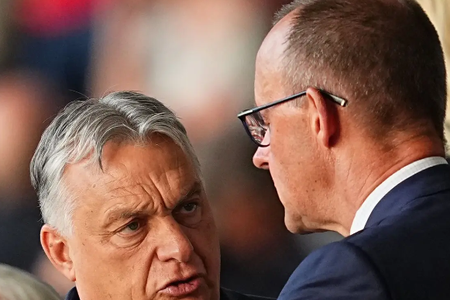
Lo dice Viktor Orbán! E con lui non è caduto solo un primo ministro. È crollato un mito. Un modello è collassato. La propaganda secondo cui il potere a lungo termine, il controllo delle istituzioni, i media asserviti e la paura mascherata da "stabilità" sono ricette per una capitolazione eterna è crollata.
Non lo sono!
Orbán è stato il volto più spregiudicato di un regime ibrido in Europa: elezioni con decoro democratico, potere con istinti autocratici; con la bandiera in mano, con lo Stato in tasca; parole per il popolo, governo per la cricca. Per anni è stato spacciato per invincibile. Nemmeno uno statista. Nemmeno uno stratega. Come un leader che "tiene a galla il Paese". In realtà, è stato il classico esempio di un governante che confonde le vittorie ripetute con il diritto di governare senza limiti.
Ed eccoci qui oggi: rovesciato alle urne. Nuotato dai carri armati. Non dalle rivoluzioni. Non dalle molotov. Ma dalla stanchezza del popolo nei confronti di un regime che aveva iniziato a marcire dall'interno.
Questa è la fine di ogni regime ibrido. Non crolla per mano di forze esterne. Si decompone dall'interno. Dalla corruzione. Dall'arroganza. Dall'avidità. Dalla malata convinzione che lo Stato sia una proprietà e il cittadino uno stupido spettatore costretto a mangiare propaganda a colazione, pranzo e cena.
Quindi la domanda che sorge spontanea dopo Budapest è brutalmente semplice: chi sarà il prossimo?
Perché Orbán non era un caso isolato. Era il modello. E i Balcani sono pieni di allievi di questo modello. Alcuni più raffinati. Altri più brutali. Alcuni in abiti europei. Altri con ostentazioni nazionaliste. Ma l'essenza è la stessa: impadronirsi dello Stato, tenere in ostaggio le istituzioni, riempire gli schermi di propaganda, umiliare l'avversario, presentarsi come insostituibile e chiamare tutto ciò "volontà del popolo".
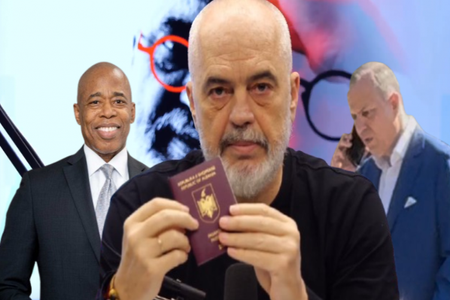
In questo specchio annerito, Edi Rama e Aleksandar Vučić non sono semplicemente due leader diversi. Sono due versioni balcaniche dello stesso istinto di potere.
Rama è la versione leggermente più moderna, con un vocabolario occidentale, un packaging estetico, pose globaliste e un raro talento nel vendere la centralizzazione come visione. Parla di Europa, ma governa con la logica del controllo verticale. Promette uno stato moderno, ma ha instaurato un sistema in cui partito, governo, amministrazione, propaganda e immagine personale si fondono in un'unica massa. In apparenza sembra gestione. In sostanza è concentrazione.
Questa è la sua forza. E la sua debolezza.
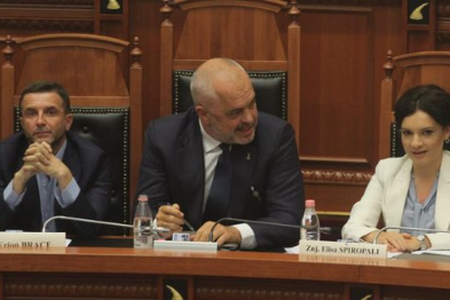
Regjimet hibride nuk kanë nevojë të mbyllin parlamentet. U mjafton t’i zbrazin ato. Nuk kanë nevojë të ndalojnë mediat me ligj. U mjafton t’i mposhtin ata me propagandë, favore, presion ekonomik dhe polarizim. Nuk kanë nevojë të asgjësojnë drejtësinë. Mjafton të tentojë ta rrethojë sa herë që ajo afrohet te qendra reale e pushtetit.
Komisioni Europian, në raportin e tij të vitit 2025 për Shqipërinë, njeh progres në reformën në Drejtësi, por njëkohësisht thekson se korrupsioni mbetet i përhapur në shumë fusha dhe se kapacitetet institucionale ende kanë boshllëqe serioze. Freedom House e klasifikon Shqipërinë si “Partly Free”, ndërsa profili i saj në Nations in Transit e vendos te kategoria “Transitional or Hybrid Regime”.
Ky është paradoksi i Edi Ramës: ai flet gjuhën e Europës, por pushtetin e administron me reflekse ballkanike të centralizimit. Ai e shet veten si modern, por sistemi që ka ndërtuar varet nga një vertikalitet politik ku partia, qeveria, administrata, komunikimi publik dhe interesi shtetëror përzihen në një trup të vetëm. Kjo është fytyra shqiptare e regjimit hibrid: jo autokraci brutale, por kontroll i zgjuar; jo mbyllje totale, por deformim konstant i garës.
Në Beograd, tabloja është edhe më e zhveshur. Aleksandar Vuçiç është sot një nga rastet më tipike të liderit që ka ngritur një regjim personalist nën ambalazhin e procedurave demokratike. Freedom House e mban Serbinë “Partly Free” dhe e kategorizon në Nations in Transit si “Transitional or Hybrid Regime”. V-Dem e përmend Serbinë si rast të autokratizimit të zgjatur dhe e ka trajtuar prej vitesh si shembull të degradimit të demokracisë zgjedhore.
Por teoria në Serbi tashmë është bërë krizë në terren. Përplasja mes studentëve, protestuesve dhe policisë në Beograd, në një valë mobilizimi antiqeveritar po zgjat prej më shumë se një viti. Më 2 prill 2026 Vuçiç i ftoi partitë për bisedime ndërsa protestat vazhdojnë, një tregues se presioni shoqëror nuk po shuhet. Në shkurt 2026, pati shqetësime se ndryshimet në gjyqësor mund të dëmtojnë ofertën europiane të Serbisë, në një klimë ku kritikët flasin për presion mbi prokurorët dhe gjyqtarët.
Vuçiç, si Orbán, e ndërtoi sistemin e tij mbi tri kolona: kontrollin e narrativës, kultin e stabilitetit dhe delegjitimimin e çdo kundërshtari si armik i shtetit. Por këto modele kanë një dobësi fatale: sa më shumë zgjaten, aq më shumë e ngatërrojnë shtetin me liderin dhe pakënaqësinë sociale me komplotin. Në atë pikë, regjimi pushon së qeni elastik. Dhe kur regjimi humbet elasticitetin, ai mund të duket i fortë në ekran, por në terren plasaritet.
Orbán is living proof that the machinery of power does not equal social consent. For years he controlled the Hungarian political landscape, changing the rules, making convenient alliances with cultural nationalism and geopolitical fears, and yet he lost. Why? Because hybrid regimes don’t just fall when the opposition is strong; they fall when society gets tired of living within a system where everything has only one owner.
This is the real danger for Rama and Vučić. Not the mechanical defeat in the next elections, but the exhaustion of the model. In Albania, this exhaustion is seen in the gap between the propaganda of success and the distrust of the political elite. In Serbia, it is seen in the return of the road as a political instrument, in the nervousness of the government and in the fact that the regime talks more and more about order, because it has less and less moral legitimacy to talk about democracy.
Of course, Albania is not Hungary and Serbia is not identical to either. There are differences in structure, international orientation, level of control and institutional architecture. Rama remains clearly more anchored in the West than Orbán and Vučić, while Albania has a Euro-Atlantic profile that strongly distinguishes it from Belgrade’s double game and Orbán’s long flirtation with Moscow. But this geopolitical difference cannot solve the domestic democratic problem. A government does not automatically become less hybrid just because it adopts pro-EU rhetoric.
In essence, the hybrid regime is a sophisticated deception: it maintains the decorum of democracy to justify its emptying. There are elections, but no fair competition; there are institutions, but no real balance; there is media, but no healthy pluralism; there is law, but no equal application; there is stability, but no accountability.
And that is precisely why Péter Magyar's victory means much more than a rotation in Budapest. It is a signal to the entire region that propaganda is not invincible, that the state machine cannot replace citizen consent, and that even the most sophisticated systems of control wear themselves out. Orbán was not overthrown by a coup, but by the ballot box. This makes his defeat all the more serious, all the more significant.
The message for Tirana and Belgrade is brutal in its simplicity: long rule is not a test of strength, but a test of character. And usually, that's where it fails. Because when a leader starts to believe that he himself is the state, then his political end has begun, even if he still has the numbers.
The end of hybrid regimes does not come like lightning. It comes like consumption. It comes like public disgust with arrogance. It comes like rejection of the idea that there is no alternative. It comes like fatigue with the leader who speaks for the people, but governs for his circle. It comes slowly, but quite suddenly.
Hungary just showed it.
E chi nei Balcani non leggerà questo segnale, domani potrebbe prenderlo come un verdetto./ Opuscolo


pastrohet territori nga kermat e lena mbi dhè dhe era e qelbur e hajduterise arrogante
Nuk ka te krahasuar populli hungarez me ate shqiptar! Ky i joni i pelqen te rrije para tasit me fasule, ndaj ky vend eshte kthyer ne kenete. Dhe nuk besoj se do ndryshoj gje.
Populli Hungarez eshte nje rrote kurve. Pse? T'i qurrash buze qumesht nuk e di se cfare u kane bere Ruset Hungarezeve ne vitet 1956-57 kur i masakruan, i shtypen e i terrorizuan.Si ka mundesi qe nje popull te harroje poshterimin Rus e te mbeshtese langon e ruseve per 16 vite? Ne vitet e rinise tone Hungaria ishte damkosur me emrin film Hungarez (porno movie), dmth me moral shume te ulet. I kemi njohur neper Europe ne Emigracion se cfare marke jane. Pike. Mos harro se ambvasadat e tyre kane bere shume zullume ne Shqiperi ne dobi te Ruseve. Meso histori e shkence e do filtrohesh nga syte e mendja o malok qe e ke mendjen te fasulja. Kosovaret koqe malokesh kur dalin, thone hajde hajme nje fasul e Shqiptaret pijne raki e meze e shijojne jeten.
Do zoti e ka radhen rama. Nuk ka dyshim qe ram eshte km me i korruptuar ne europe dhe me gjere