


 Shkruar nga Pamfleti
As in the legend of Rozafa, getting out of the crisis requires some kind of sacrifice. In politics, this sacrifice can be giving up some part of power, political ego or party maximalism...
The political situation in Kosovo over the past year has been characterized by a continuous cycle of crises, which have hindered the establishment of political stability and the normal functioning of the government. Political processes have followed a pace where any attempt at institutional building seems to be quickly undone by clashes between political actors.
Following the parliamentary elections held in February 2025, the political scene faced immediate difficulties in forming a new government. Political fragmentation and the lack of compromise between parties made it impossible to create a stable parliamentary majority. As a result, the country headed once again towards new elections.
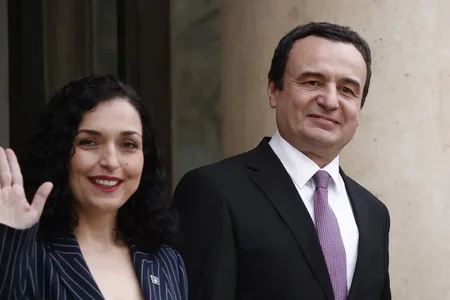
In the December 2025 elections, the situation seemed to take a clearer political direction. Prime Minister Albin Kurti managed to secure a parliamentary majority that enabled him to form a government in early 2026. After a long period of political uncertainty, the formation of a government was seen as an opportunity for institutional stability and a return to focus on reforms and development.
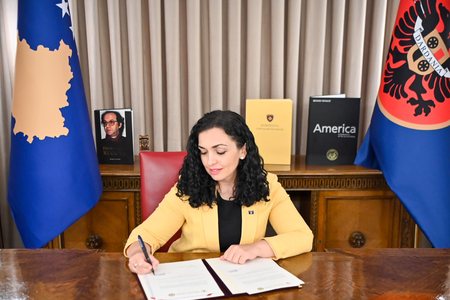
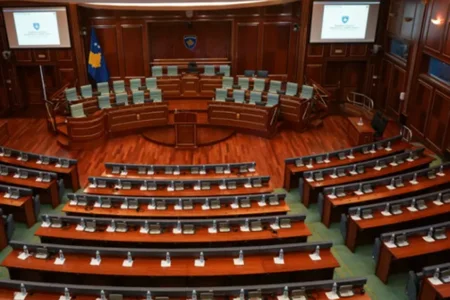
However, the crisis did not end there. The process of electing the country's president turned into another point of conflict between political forces. The lack of consensus and the rigid positions of the parties created a new institutional blockade, risking sending the country to elections again. In this way, the building of institutions found itself facing another political collapse.
This whole story leads to an interesting parallel with the legend of Rozafa Castle. Metaphorically, Kosovar politics seems to be experiencing a similar process: institutions are built, but political clashes tear them down before they can be consolidated. Each election cycle or attempt at political stability often ends with a new crisis, creating a vicious circle of crises.
Beyond the mirror of the problem, the legend seems to offer us the solution. But unlike the legend, “sacrifice” in modern politics is not related to individuals, but to political compromise. The strong insistence of all parties not to give up ground, whether in the name of power, party interests or electoral calculations, has made it difficult to build a minimal consensus on the functioning of institutions.
In this context, the main challenge for the political class in Kosovo remains the ability to break out of the logic of constant confrontation. As in the legend of Rozafa, getting out of the crisis requires some kind of sacrifice. In politics, this sacrifice can be giving up some part of power, political ego or party maximalism.
Without such a compromise, there is a risk that Kosovo will remain in a recurring cycle of crises, where institutions are built during the day and collapse again at night./ Pamphlet


Lini një Përgjigje