


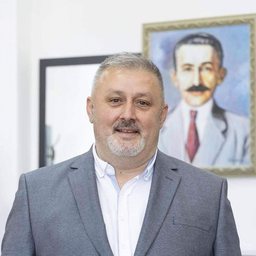
 Shkruar nga Arsim Sinani
From raki cafes to institutions: how new leaders are challenging the cycle of failure and helping the state function...
For many years, Kosovar politics has produced what can be metaphorically called the logic of raki cafes: informal agreements, political bargaining, and decisions that arise at cafe tables rather than in institutions. This culture of improvised politics created an elite that treated the state as an extension of social and clientelistic networks.
In this sense, Kurti's rise to power was perceived by many as an attempt to break this political culture and shift decision-making from informal bargaining to institutional procedures.
However, the paradox today is that this effort produced a fragmented and often reactive opposition, which still operates with the old logic of raki cafes, where politics is built more on reaction and anger than on strategy for the state. A kind of mess that has become institutional logic.
Today, Albin Kurti is doing the Republic of Kosovo a great honor by dismantling the old barracks of the state-rejecting logic of today's opposition. This honor that you are doing to the citizens will be reflected in the coming years, because this can foster the emergence of more rational thinking and, with it, the emergence of other new political parties.
Vjosa Osmani's political logic: maintaining the position at all costs
The figure of Vjosa Osmani has long been built on the narrative of reform and institutional integrity. We have seen beautiful speeches, elegance in thoughts, beautiful colors of clothes and smiles and handshakes. Of course, there are also concrete results, some international recognitions, important meetings, etc. But the recent political crises have raised the question: has maintaining the presidential position become a political priority for Vjosa Osmani and the people around her?
It seems that Vjosa Osmani got into trouble: probably driven by the luxury of power and the people around her, she focused more on her own self-esteem than on the interest of the state and citizens. She will maintain her power even by interpreting the Constitution with nervousness, because she does not accept not being president. Osmani apparently saw herself in the mirror and attached more importance to herself than to the citizen.
And in politics, it is not allowed to elevate yourself above the state and keep power only for yourself. The people give and take power. Here Vjosa crossed the rainbow, because he did not have the strength to maintain the right judgment in critical moments.
Critics argue that the interpretation of the Constitution was made in a flexible way to maintain political balance and institutional position, thus reflecting a strong egocentric dimension that comes to the fore in this crisis. The Constitution was violated by President Osmani and this apparently returns the president directly to the political ring, right and in opposition, after April. Something that will dynamize the political scene of Kosovo.
Lumir Abdixhiku and the fatigue of the traditional opposition
The leader of the LDK, Abdixhiku, today finds himself in a difficult political situation. After a long period of LDK dominance in Kosovo politics, the party seems to be facing an identity and strategy crisis.
Abdixhiku, who after the catastrophic defeat and formal resignation was re-elected with 51% in the LDK with many question marks, is now ready to do anything to come to power. This could lead him to alliances with Vjosa Osmani and others, to secure the political position and influence, lost in the party, among the citizens. Many interpret this strategy as an attempt for political survival, in a scene where the electorate has shifted and where the traditional opposition is losing ground. But the LDK is heading towards closure as an idea, without Rugova, after independence, this party has no perspective, no ideas, no vision.
Identity crisis in the Democratic Party of Kosovo
After the last election cycles, the PDK is facing a clear crisis of political and ideological identity. The party that for years built its profile on the narrative of war and state formation is today in a moment of strategic uncertainty.
Bedri Hamza's leadership is seen by some analysts as weakened by recent political developments, such as the loss in the national elections and the personal political blow in Mitrovica.
In this context, the lack of support for Andin Hoti, the son of the political thinker Professor Ukshin Hoti, has been interpreted as a signal of a crisis of ideological orientation within the party.
Because Ukshin Hoti's legacy – politics as a philosophical, strategic and emancipatory project – is often taken as a reference point to measure the level of Albanian politics today. Hamza's disregard of this tradition with a Titoist language creates the perception that his politics is moving away from the intellectual dimension and is returning to older forms of political organization, of meaningless resentments.
Some critics see this trend by Hamza as a symbolic return to the logic of the political apparatuses of the Josip Broz Tito era, where party bureaucracy and internal calculations take precedence over strategic vision.
Another dimension of the debate is also related to the deviation from the political line represented by Hashim Thaçi, when PDK articulated a more pragmatic strategy of state formation and international dialogue. According to some critical assessments, Hamza's current approach is installing an opposition logic that often enters into unnecessary confrontation with the government of Albin Kurti, even when logical compromises are offered, which can be interpreted as rational for the interests of Kosovo. PDK should not be rejecting, but when leadership is lacking, this is what happens.
The role of Vetëvendosje in stabilizing the state
What will happen is that the Vetëvendosje Movement will maintain leadership, will reduce the opposition rejecting the Constitution and institutions to the lowest numerical level. The nervousness of the opposition that rejects the institutions will sink this mentality even further.
The current leaders of the opposition are entering a new cycle of failure and a dead end. VV will strengthen the state and institutions, because Kosovo cannot survive the crises that Kosovo is going through without positive changes in mindset, actions and ideas for a stable and non-captured state, which VV practically articulates.
This crisis is being stabilized by VV's idea that no one should reject everything, and that the functioning and development of the Republic of Kosovo continue normally, in institutions, not in raki cafes, where decisions are made.
Vetëvendosje is also doing Kosovo a favor, by paving the way for a responsible political generation.
The logic of raki cafes is falling, Kurti knows this logic well and has precisely brought the opposition to a drunken state and without any logic./ Pamphlet


Pse llogjike kane keta qe hajne ushqim ne uturakun e serbeve e cojne njeri tjetrin ne Hage per pushtet? Pse llogjike kane keta qe nuk i perfill kush pervec shtetit ame qe i mbeshteti pa rezerva te fitojne pavaresine e luften dhe i bejne karshillek serbi a kalamani nje dreq e di. Dardanet kane qene e jane me te bukurit e te gjatet e races Shqiptare ku i gjejne keta spurdhjake qe i vene ne krye. Fanesha e mencme Tonyplake ka pas thane: "Po s'ma mushe syun s'ma mush as paidhin."