


 Shkruar nga Diplomatico | Pamfleti.net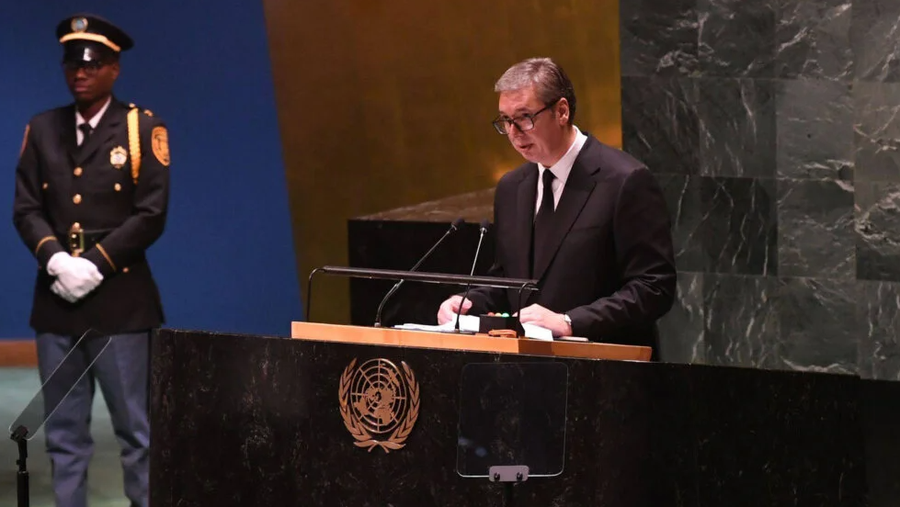
The Serbian president goes to New York to lobby against Kosovo's statehood, while Albanian diplomacy remains silent in the face of a campaign that risks upsetting the balance in the Balkans...
Aleksandar Vučić is preparing one of the most aggressive diplomatic offensives of the last decade on the international stage, and his appearance at the UN General Assembly in New York is not just a ceremonial trip.
Against the backdrop of a tense Balkans, with increasingly cold relations between the West and Serbia, but with a Serbia that continues to play with two goals; Russia and the EU, this visit comes at the right time for Belgrade and a dangerous one for Kosovo and Albanian politics in the region.
Marko Đurić, one of the most aggressive figures in Vučić's diplomatic camp, publicly warns of a "change in the attitude of part of the world towards Kosovo."
In plain language, this is a declaration of diplomatic war: Serbia will try to convince insecure, undecided, or economically manipulated countries to change their position on recognizing Kosovo's independence.
This is not new, but it is now more coordinated and dressed in the costume of the international victim.
Serbia sees itself as the only state in the region that is "attacked by the lies of the West," while under the guise of military neutrality it maintains close ties with Moscow, purchases weapons from Russia and China, and uses energy and economic corridors as bait for African and Asian countries to draw them into its diplomatic orbit.
In this context, Pristina is the enemy that Serbia is trying to sell as an international threat. Vučić's appearance in New York is expected to aim not only to "dismantle" the narrative of Kosovo's independence, but also to attempt to set this issue as a dangerous precedent for the sovereignty of states, an analogy that Belgrade uses to gain support from countries that have internal territorial conflicts.
What will Albania do?
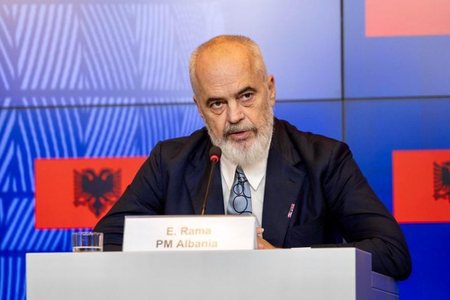
Here lies the question that Albanian diplomacy has not yet dared to articulate out loud. Instead of leading an active and synchronized front with Pristina, Albanian foreign policy is lagging behind in the global game. Edi Rama's government, although close to decision-making centers in the West, is not using the power it has in multilateral diplomacy to oppose Belgrade's efforts.
Silence and non-engagement are not neutrality, but a passive contribution to the consolidation of the Serbian campaign.
This situation requires a joint diplomatic offensive between Tirana and Pristina. It requires engagement in the US Congress, in the chancelleries of Western Europe, and above all on the ground, in the countries of Africa, Asia and Latin America, where Serbia is acting to stop or withdraw recognitions of Kosovo. In this battle, there is no place for empty pride and formal protocols. There is a place for aggressive diplomacy, for facts, for documents, for historical evidence and for a clear political language that defends the truth of Kosovo and its right to exist as a state.
Vučić does not go to the UN to make peace. He goes to break alliances, to relativize the crimes of the past and to present Serbia as a “moderate state” that is being punished by a hypocritical West. If this narrative gains ground, then Kosovo, and with it the entire Albanian project in the region, will suffer serious strategic blows./ Pamphlet


Lini një Përgjigje