


 Shkruar nga Arben Llangozi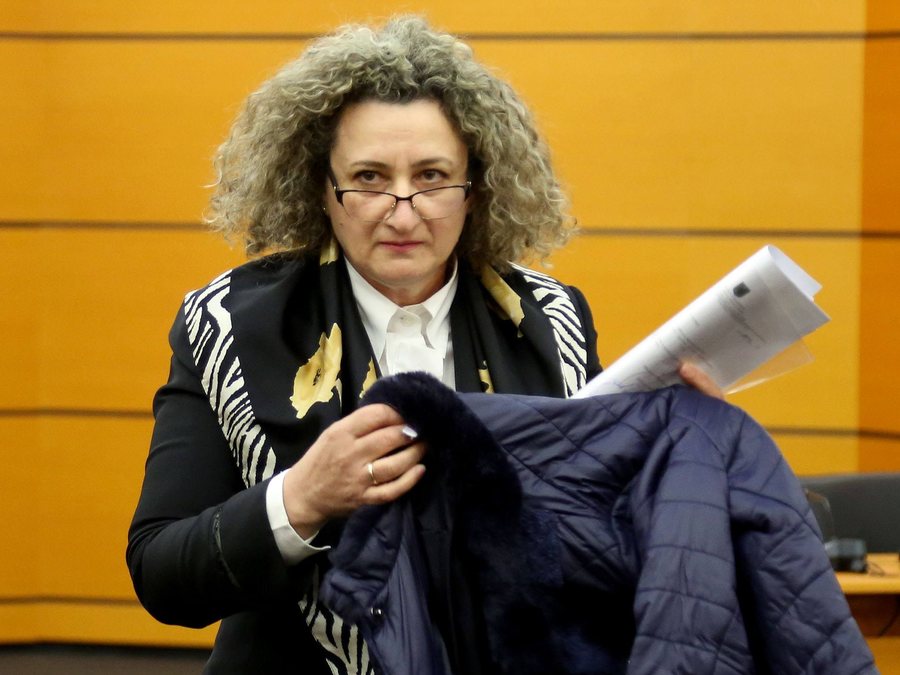
This issue cannot be closed. Any attempt to relativize it is complicity in the violation. Justice either acts, or publicly admits that it has failed...
A serious development for public trust in justice was made public today, January 20, 2026. The General Prosecutor's Office announced that it has completed the in-depth verification of GJKKO judge Irena Gjoka and has forwarded the report to the High Judicial Council (HJC), the body that is expected to decide whether or not to continue in office.
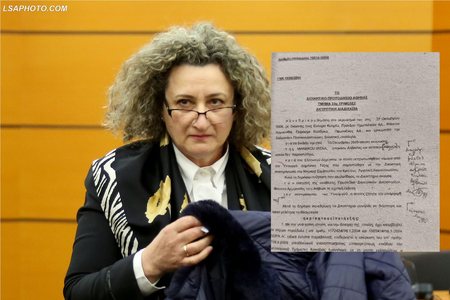
According to media reports on the content of this verification, Gjoka was convicted in Greece (in 2005) for issues related to documents/"visa forgery", while in the self-declaration forms it was reported that she had given negative answers to convictions by foreign authorities.
This is the moment when the issue is no longer a political debate or "camp clash", but a real test of the rule of law: does the law apply equally to every official, especially to those who judge others?
It is fully proven that the judge of the GJKKO, Irena Gjoka, has been convicted in the Greek state by a final criminal decision, as well as deported from the territory of Greece. Equally proven is the full knowledge of the subject herself, as she has issued powers of attorney for legal representation in relation to these decisions and criminal cases in the Greek state.
The scandal erupted uncontrollably and "played a trick" on former vetting member Valbona Sanxhaktari, who favored this subject during the re-evaluation process.
Serious sources from within the KPK confirm that, in addition to the favorable decision-making, acts have been removed from the re-evaluation file of the re-evaluation subject Irena Gjoka in collaboration with Genta Bungo, turning the vetting process from a cleansing instrument into a political protection mechanism.
What bargains, promises or guarantees were exchanged, how much money Irena Gjoka paid to pass the vetting remains an issue that only justice, if it still exists, can shed light on.
The scandal was also exposed to internationals, who came to "learn" how justice is built, but who have turned a blind eye to this case, giving Albania the worst example of double standards. Their silence is as serious as Irena Gjoka's violation.
Another blatant failure before this case is that of the State Intelligence Service, which not only failed to highlight this major scandal, but was covered up by the public exposure on social networks of their collaborators, where KPA member Ina Rama was also publicly mentioned as a SHISH collaborator.
The scandal deepens even further with SPAK, which has produced more media spectacle than real investigation. The greatest irony is that the work of prosecutors was controlled and evaluated by a judge who does not meet the legal criteria to exercise the function.
Meanwhile, the complete silence of the scoundrel Artur Metani, the head of the ILD, is not a surprise, despite the fact that it constitutes a scandal in itself. No disciplinary investigation, no reaction, despite the fact that the violation is public, documented and flagrant. I believe you heard him in parliament publicly declare that there is no investigation into Irena Gjoka.
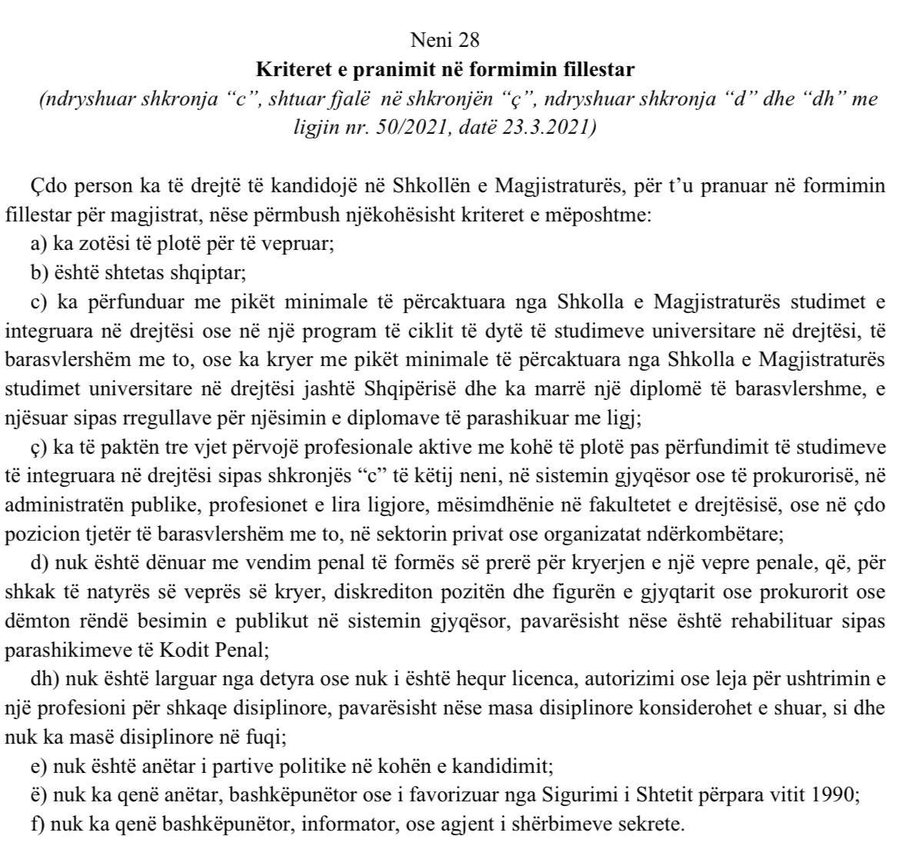
Law No. 96/2016, Article 28, point “d”, is clear: a person convicted of a final criminal decision cannot be accepted and cannot exercise the function of a judge, regardless of rehabilitation. Under these conditions, Irena Gjoka's stay in office is illegal, and consequently any decision given by her is legally vulnerable and invalid.
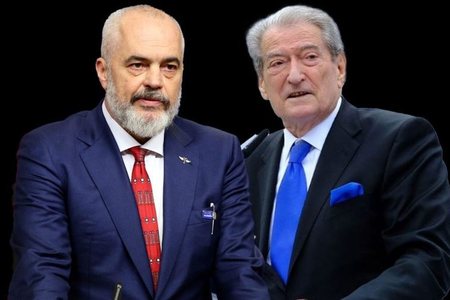
This applies not only to the Sali Berisha case, but to every security measure, seizure or judicial decision issued by her. The process was not regular, it was not legal and it was not impartial.
The suspicions that the High Judicial Council has been influenced are strong. This institution has become a symbol of nepotism, where family promotions and personal interests have replaced merit. The case of the member of the High Judicial Council who promoted her brother's daughter-in-law Ema Shaholli is just one example of this family promotion practice. She was promoted to the Administrative Court of Gjirokastra, then to Vlora, to Lushnje, and finally to the Administrative Court of Tirana.
The scenario being prepared is well-known, the existence of the criminal decision will be acknowledged, but it will be claimed that "the file has been destroyed" or that "the decision has not been executed."
This justification contradicts the law and practice, as proven by the case of Kreshnik Hajdari, where the lack of a file due to Greek archival law did not prevent the conviction from being established and he was sentenced by the special court with a final decision.
This is not a political debate nor an individual conflict. This is institutional collapse, deliberately allowed by the structures that were supposed to guarantee the law. Silence, manipulation and protection of illegality have turned justice into an instrument of power and bargaining.
This issue cannot be closed. Any attempt to relativize it is complicity in the violation. Justice either acts, or publicly admits that it has failed.





Kjo është drejtesia shqiptare,qe bejne keta te korruptuar,hajdute e kriminelë.