


 Shkruar nga Giulio Ucciero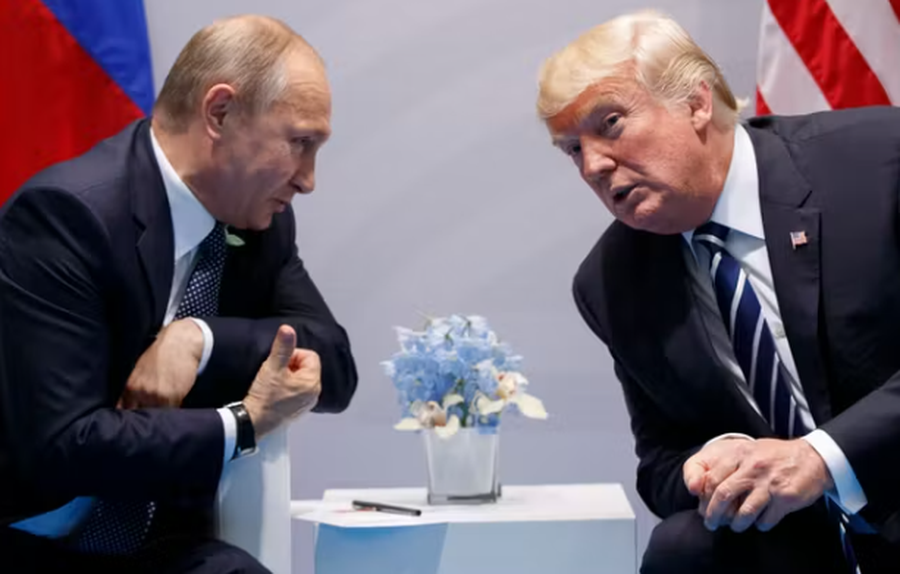
Former Italian ambassador to Moscow and the Emirates, Giorgio Starace, analyzes the failure of the Kremlin's calculations and Washington's new strategy looking towards China. As the war in Ukraine hinges on Starlink technology and the expected summer offensive, Europe must find the balance between common defense and the pragmatic need for dialogue with Russia...
"Donald Trump is having a hard time implementing his ideas, but it must be understood that his priority is not Iran, but China." Giorgio Starace, former Italian ambassador to the United Arab Emirates, Japan and the Russian Federation, completed his mission in Moscow in 2024.

Author of the book "Difficult Peace: Diary of an Ambassador in Moscow" (2025), he analyzes the complex international scenario for HuffPost: According to him, Russia is realizing that the war does not have a clear end, while the EU should start thinking about dialogue.
Ambassador, Trump declares that "hostilities" in Iran are over. What is the real objective of the American president?
The United States plays three cards. First, world primacy in oil production (a goal achieved by both Trump and Biden). Second, the use of energy as a lever for expanding military power, where control of sea lanes like Hormuz is vital. And third, technological dominance.
So Iran is not the main target?
The absolute priority of the US remains to contain China. The strike on Hormuz aims to destabilize the Chinese economy, although Beijing has been cautious by building up six-month reserves and increasing imports from Russia.
However, Trump's plans don't seem to be fully coming to fruition...
There is a kind of coherence in his vision, but effective implementation is lacking. The US is facing a crisis of the ruling class and a lack of coordination between the White House, the Pentagon and the State Department. There is no longer a figure like Kissinger to harmonize these poles.
Is China taking advantage of this situation?
Xi Jinping may suffer short-term economic losses, but politically China is emerging as a stabilizing power. Beijing is taking advantage of the shift in American military attention to the Gulf to bolster its ambitions in Taiwan.
How is the war affecting the balance of power in the Persian Gulf?
Trump's unilateral moves, supported by Israel, have forced Arab monarchies to seek alternatives. Saudi Arabia and the Emirates have strengthened ties with China. The Emirates are paying the highest cost of the conflict with Iran, which is damaging the projects of President Mohamed bin Zayed. Meanwhile, Kuwait and Oman remain hostage to insecurity in Hormuz.
The Emirates left OPEC. Was it a sovereign decision or US pressure?
The Emirates have friction with Saudi Arabia. They are the player exerting the most pressure - apart from Israel - to reduce Iran's potential. Riyadh is more cautious. Leaving OPEC allows the Emirates more freedom of maneuver in the market. But it is an exaggeration to say that this came only from American pressure.
How would you describe the relations between Israel and the Emirates?
They share a common enemy: Iran. However, unlike Netanyahu, who seems doomed to perpetual war, the Emirates have much to lose from long-term destabilization. The war has hardened the stance of the Abu Dhabi sheikh, but at the end of the day their priority is regional stability.
Trump recently spoke with Putin. How important is the war in Iran to Russia?
Putin is a seasoned chess player. Iran is just a pawn on the negotiating table with Trump. As long as the US remains bogged down in the “swamp” of Hormuz, Russia benefits economically. However, Putin has a problem: the war in Ukraine, which was supposed to last two weeks, has dragged on for years. It revived NATO and awakened the “Protestant spirit” of Europe.
What do you mean by “Protestant spirit”?
The Nordic and Baltic countries now have the main voice in Brussels. These countries do not want concessions and do not allow the opening of dialogue with Russia. Moreover, the war has become highly technological. Starlink support for Ukraine is crucial.
If Elon Musk were to give in to White House pressure to limit this service, the fate of the front would change radically. Meanwhile, the Kremlin's summer offensive is expected. If it fails, it will greatly affect the morale of the Russian leadership.
What is the mood inside Russia?
In the suburbs, the high salaries of soldiers have created a kind of economic support. But in big cities like Moscow - where I was recently - people have realized that this war does not bring a clear result. Of course, patriotic pride should not be underestimated, but war fatigue is being felt.
How should Europe behave in this new reality?
We must abandon the “teenage illusion” that our defense is America’s duty. We need a strong European military deterrence, but without forgetting rationality. Kaja Kallas’s statements that cooperation will never return to the way it was before are understandable positions for the Baltics. But powers like Germany, France, and Italy have other priorities. Building a “New Iron Curtain” is not in anyone’s interest.
After 4 years of war, have you understood Putin's strategy?
His plan stems from a Russian neo-revanchism. He sought a return to the G8 with more weight. But the costly gamble of the war in Ukraine is severely limiting his ambitions./ Pamphlet from “Huffington Post Italia”


Lini një Përgjigje