


 Shkruar nga Mero Baze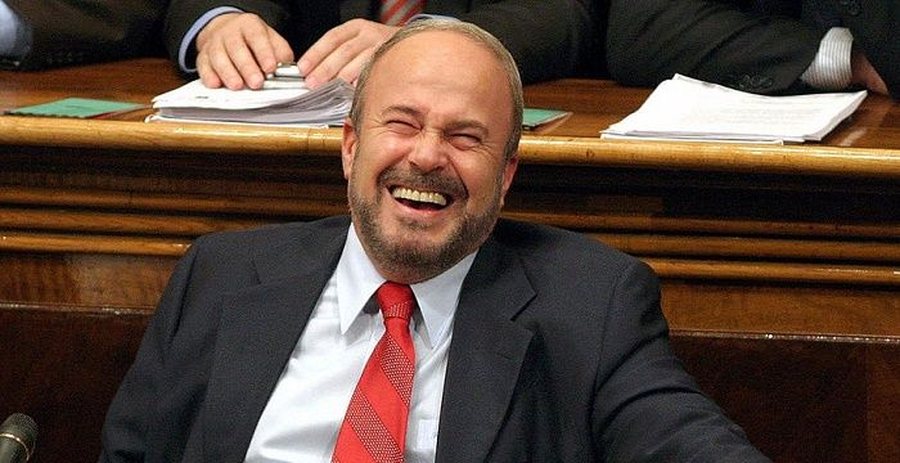
Fatos Nano's first great merit was that he returned the political race to the former Labor Party, which had ruled the country for 50 years as a centralized party and party-state...
The historic leader of the Albanian socialists, Fatos Nano, passed away today, leaving behind a political legacy that puts both his party and his opponents in a difficult position.
Fatos Nano's first great merit was that he returned the political race to the former Labor Party, which had ruled the country for 50 years as a centralized party and party-state.
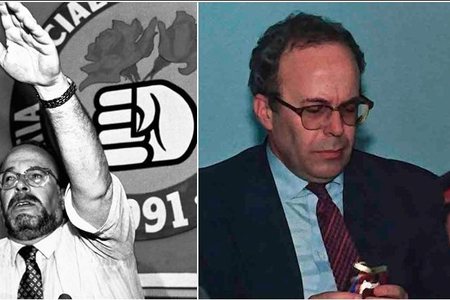
With the profound transformation he made to the Socialist Party in 1991, introducing into it the cream of Albanian leftist intellectuals, with his battle from prison for the change of the SP, in the face of Berisha's diversions, and with the battle to regain the leadership of the Socialist Party in an open competition in 1999 against former Prime Minister Pandeli Majko, he definitively democratized the Socialist Party, making it a party of free voting and a party with democratic institutions.
While suffering political imprisonment by Sali Berisha since 1993 in the Bënça prison in Tepelena, he began from there a battle for party reform and radical changes in its leadership, after the stolen elections of May 26. He did not cower like Sali Berisha is doing today, even though those were the worst elections in the history of Albania in a century, but turned his eyes on his party and changed it.
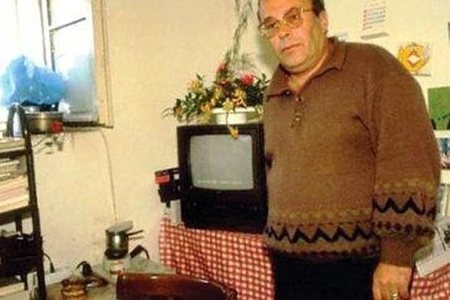
Being from prison, he was facing Berisha's puppets within the SP who had Ilir Meta as their leader and a conservative wing that had to integrate with the new rhythm of the Socialist Party. And he managed to do it. I spent over three hours in his cell in Bënça prison in July 1996 and, in a way, knowing Berisha very closely, the only feeling I had when I left the cell was that Berisha was more imprisoned in villa no. 4 in the Brigades Palace than he was in dungeon no. 4 in Bënça prison.
Upon coming to power through a plebiscite in 1997, he was the first Albanian leader to use his absolute majority to distribute power. Under the slogan “We will give power, we will build a state,” he built a truly broad coalition with all shades of former opposition and civil society, beginning the profound renewal of the Socialist Party.
After the serious events of September 1998, after the assassination of Azem Hajdari, he avoided civil war by resigning, and although Berisha brought his coffin to the office and anathematized him as a murderer, an accusation that years later was said to be politically motivated.
He remained chairman of the Socialist Party a year later, thanks to a real battle with Prime Minister Pandeli Majko with a narrow margin of votes and a transparent competition before the eyes of all Albanians, making the Socialist Party a laboratory of democracy in Albania.
Two years later, in 2001–2002, Fatos Nano would launch a new battle against his party’s government, and would highlight for the first time the importance of the parliamentary group in the country’s political life, managing, through a battle lasting several months for “catharsis,” to create a parliamentary majority against Ilir Meta and topple him from power. So, within ten years, he took over the Labor Party and transformed it into a party with democratic institutions, free elections, a close race for president, a close race for prime minister, and clear rules of the game.
He returned to the prime ministership in July 2002, after managing to elect Alfred Moisiu as president, along with Berisha. Moisiu's election followed a disappointing round of presidential elections for diplomat Artur Kuko, but Fatos Nano did not abandon the process and gave the opposition a chance to submit its name.
This was also a period of peace between him and Sali Berisha that lasted until the spring of 2003. Together they built several rules for key institutions such as the Constitutional Court, the Supreme Court, the CEC, etc., which, even with prescribed rules, were politically balanced.
His rule was accompanied by deep structural reforms, and he remains the prime minister who made the first successful concession in Albania, the Rinas airport and the first Durres-Tirana electric railway that Berisha canceled. All his successors have found such reforms problematic due to the predetermined competition, while he allowed real competition. Under his leadership, the country's new banking system was built, state-owned banks were privatized and a number of foreign banks were introduced, modernizing the country.
He also modernized the customs and tax system, but without success in the battle against corruption in them.
An incorrigible liberal and disregard for official rules and protocol, he occasionally created scandals with the press and public opinion due to his personal attraction. His courage to divorce and remarry in 2001 was a cultural standard in the political hypocrisy of patriarchal Albanian society.
Surrounded, like any prime minister, by servile and corrupt people, he became isolated and disconnected from reality, while entering the 2005 elections certain of winning an absolute majority. In this euphoria, he ignored electoral tactics and left room for Berisha to create a tactical alliance that increased the number of deputies through what is called the “Big Dushku”, where in the same electoral zone one deputy from the majoritarian system and one from the proportional system emerged, transferring votes to small parties according to a party discipline.
Fatos Nano ignored these tactics and ignored his allies, allowing them to announce their own candidates. Thus, in 2005, Berisha won 18 mandates from the leftist split and took power after an alliance with a party allied with Fatos Nano, Lufter Xhuveli's Agrarian Party.
From that moment on, he left Albanian politics and went about his private life and businesses. He twice became an aspirant for the position of President of the Republic, where both parties pretended to respect him, but in reality did not want him as president. After that, he withdrew into his work and after 2013 he consolidated a private relationship with Edi Rama, occasionally suggesting his own ideas and opinions.
A few years before the end of his life, he gave one of the best interviews of his life, reflecting on his prison and the ugliness of the persecution of opponents, emphasizing that he was not worried by his imprisonment, but by the fact that Sali Berisha lived every hour with his prison and dealt with every prosecutor, judge or institution that had Fatos Nano's life in its hands, and he considered this as a curse on his political opponent.
He left today, in peace with himself, his family, his children, the women he loved and who loved him, and above all with the Socialist Party, which it can be said without fear that he transformed into the first democratic institution in this country.


Lini një Përgjigje