


 Shkruar nga Pamfleti
20 proposals for profound reforms in politics...
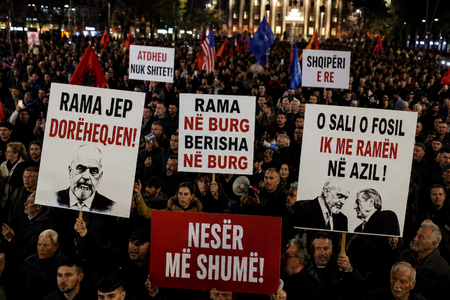
Now that citizens are in the squares and politically active, which is a great joy for Albanian society, the emancipated part, perhaps has even more patience to listen to proposals for reforms in the political, economic, social, administrative, etc., which I have previously presented in my books!
Institutions that have excluded citizens, forcing them to take to the streets, are not needed by anyone except those who have privatized them.
Institutions must be opened to citizens once and for all, not out of fear of overthrow, but as the normal state of a society in the century of Artificial Intelligence, where some are still clannish and primitive in mindset.
On the political level
20 proposals
No one can hold the position of Prime Minister more than once and for more than one term.
Deputies are elected directly by the people, nominally!
A candidate for deputy nominated by a party and a candidate declared by citizens have the same obligations and rights in the candidacy process.
The President of the Republic can also be proposed by the citizens, but in any case the one to be elected requires three-quarters of the number of deputies. If the deputies are unable to elect him, then the election is held by popular referendum on the candidacies already presented.
No person who holds a mandate in the central bodies of a political party, who already holds a public office, and who has not resided in that area for at least five years may be a municipal councilor.
To recognize the right of citizens to vote based on their free choice, wherever everyone has a property, a place of residence.
Decentralize municipal power, ensuring that each municipality has the authority to cover only specific urban areas, as well as create municipalities for each group of rural residential centers, regardless of the number of permanent residents.
Municipal councilors are elected directly and nominally (not by list) by citizens.
No one may perform two functional (non-electoral) duties in the public service or receive a second salary or honorarium for functional duties.
Local and national referendums are also demanded by citizens, without drastic restrictions, and for strategic and primary issues, especially when local government cannot decide, referendum becomes the legal form of decision-making according to the great principle of subsidiarity.
Justice is reformed by establishing a citizen jury for serious crimes, corruption, and organized banditry.
The functions of the magistrate who is directly elected by the citizens are defined.
With a certain number of citizens, or by decision or initiative of the President, the Assembly can be dissolved and new elections organized. The same goes for municipal councils.
The collective responsibility of elected bodies is established, both in criminal and public terms, and is judged by the Supreme Court.
All public administration employees are declared public officials and cannot be appointed or dismissed by the minister or persons with political functions. They report to the general secretary of the institution and are appointed through national competitions by a jury without conflict of interest, and are dismissed only by court decisions, if appealed.
Every public official bears personal legal responsibility for any offense or omission related to his functions, regardless of who ordered him to act or not to act.
Every citizen has the right to sue the state for any harmful consequences that have come to them due to the faults of the state and public servants.
The websites of public institutions are declared public media and are regulated by a special law.
The use of any public means in the election campaign is absolutely prohibited. Every candidate for an elective position finally surrenders the mandate to exercise an executive duty.
The election campaign is ensured to be free of charge and without incurring any social costs for any candidate.


Lini një Përgjigje