


 Shkruar nga Kreshnik Spahiu
The first round showed that there is no clear winner, but here are five ways in which local elections in Kosovo differ from those in Albania.
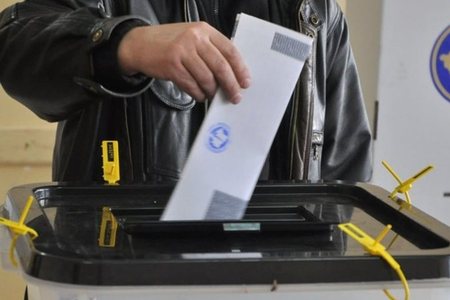
Yesterday, Kosovo voted for local government elections or as defined in the Constitution of Kosovo, for 38 municipalities.
The municipal elections were envisioned as the key to resolving the political crisis, depending on the result achieved by VV or the opposition.
This could precede early elections to bring Kosovo out of the historical paralysis of a parliamentary life that has not functioned for 9 months.
The first round showed that there is no clear winner, but here are five ways in which local elections in Kosovo differ from those in Albania:
1. Runoff system
Kosovo has a runoff system: no one is declared the winner unless they pass 50% + 1 vote.
For this reason, most municipalities will hold a second round.
In Albania, it is enough for the first candidate to have one more vote than the other to be declared the winner. Theoretically, in Albania it could happen that if 10 candidates are running, the winner could be declared with even 11% of the votes, it is enough to be the first over the others who receive less than 10%.
2. Political pluralism
Kosovo has a much broader political pluralism than Albania.
The first results show a large distribution of votes:
• LVV – 3 municipalities
• LDK – 3 municipalities
• PDK – 2 municipalities
• AAK – 1 municipality
• Initiative – 1 municipality
• Serbian list – 8 municipalities
Meanwhile, in Albania, for 35 years the political race has been closed between the SP and the DP, with no other significant winner.
3. The fate of new parties
In Kosovo, new parties dare to compete with their candidates, regardless of the outcome.
In Albania, around 30 small parties merge or join the Democratic Party, losing their political identity.
Not competing in local elections deprives them of the opportunity to break the establishment, even in small or peripheral areas.
4. The diaspora vote
In Kosovo, immigrants also vote in local elections; while in Albania, 1.8 million citizens live abroad without the right to vote.
In some municipalities such as Malisheva, Junik, Gjakova and Dragash, the diaspora vote is expected to have an impact on the final result.
5. Different behavior in local and central elections
In Kosovo, citizens often vote differently for the government and differently for the municipality.
In Albania, the opposite happens: whoever wins the government usually wins the municipalities as well.
For this reason, in Albania it is known in advance who will win in Tirana, Durrës, Berat, Vlora, Fier or Gjirokastër for many years in a row.
Kosovo remains more pluralistic and politically unpredictable compared to Albania's two-party system.
Meanwhile, in Albania, the elections have turned into a closed race, where low voter turnout is a consequence of a predetermined political fate.
Don't be surprised if only 25% of voters participate in the upcoming elections in Tirana because the people have no interest in a race where it is known in advance who will win.





Lini një Përgjigje