


 Shkruar nga Pamfleti
High taxes on fuel remain the main factor keeping prices at high levels in Albania.
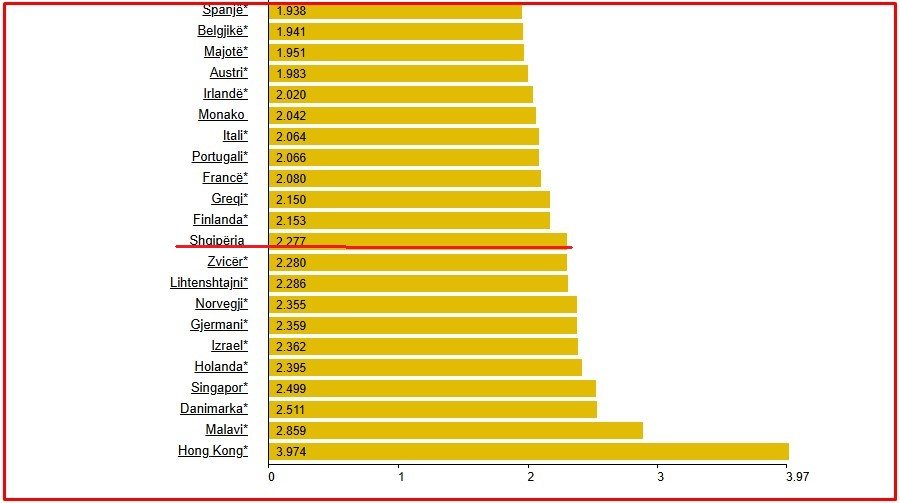
Albania ranks 11th in the world for fuel prices, according to data from Global Petrol Prices.
Following the escalation of the conflict in the Middle East and the increase in tensions following the war in Iran, international oil markets immediately reacted with strong fluctuations, adding pressure on retail prices in many countries. In Albania, this pressure was reflected on a market that was already characterized by high price levels, mainly due to the fiscal burden.
According to the latest data, gasoline in Albania costs $2.27 per liter. This level places the country next to economies with much higher per capita incomes, such as Germany, the Netherlands, Denmark or Norway. At the same time, the price in Albania is higher than in countries such as Italy, France, Greece or Belgium. This contrast becomes even stronger if we consider the income level of Albanian families, which makes the cost of fuel relatively heavier for the monthly budget.
The main reason why fuel is so expensive in Albania is related to the high level of taxes. About 60 percent of the final price consists of taxes and duties. Oil is taxed at 37 lek per liter of excise duty, 27 lek per liter of circulation tax, 3 lek per liter of carbon tax, while VAT is also applied to the final price at a rate of 20 percent. This means that a significant part of the price paid by the consumer is not directly related to the cost of the product in international markets, but to the domestic fiscal structure.
Compared to Kosovo and North Macedonia, the tax burden alone makes the price of fuel in Albania about 40 lek per liter higher. But the effect does not stop at the initial level of taxation. When the price of oil increases on international stock exchanges due to war, geopolitical uncertainty or fear of supply disruption, the value of VAT collected on each liter automatically increases. So, the state benefits not only from fixed taxes per liter, but also from the increase in the taxable base.
This is where domestic market developments are linked to war and global markets. Whenever conflicts escalate in key regions for oil production and transportation, the market reacts not only to the actual lack of supply, but also to expectations of risk. The price of oil can also increase simply from the uncertainty that supplies may be interrupted. Albania, as a fuel-importing economy, transmits this shock almost entirely to the end consumer. When this shock is combined with a heavy tax regime, the effect at the pump becomes stronger than in many other countries.
If a liter of diesel is sold for 150 lek, the government benefits from a certain level of VAT. When the price increases to 180 lek, the VAT collected for the same amount also increases. This shows that in periods of price increases, the burden on the consumer increases in two directions: from the international market and from the way domestic taxation works. For this reason, the debate on fuel prices in Albania is not only related to developments in world oil exchanges, but also to the fiscal policy applied to them.
Ultimately, the high price of fuel in Albania is the result of a combination of two factors. The first is the pressure coming from the war, geopolitical tensions and fluctuations in global energy markets. The second is the high tax structure in the domestic market. Without this combination, the effect of international crises on the Albanian consumer would be more limited. /Pamphlet




Lini një Përgjigje